Dashboard: Dashboard · synthesis: _LANDSCAPE-SYNTHESIS · grid: _MARKET-PROBLEM-MAP · lens: _OPPORTUNITY-LENS · matrix: _CROSS-COMPETITOR · sibling scans: _landscape/estimating-takeoff/note (pre-contract cost) · _landscape/claims-delay/note (the dedicated claims/forensic tools — cross-referenced here, not re-profiled) · tone: raken/dossier · format: _micro-entrants/cohort.
Why this category matters: it is our target buyer’s existing software
Every other scan looked at tools sold to ops, the GC’s PM, IT, or the field. This one looks at the software the commercial / quantity-surveying office already runs — the buyer and the P&L line our whole thesis aims at. If our wedge (recover money from change/claims = area 15; price the next job from cross-firm history = area 21) is real, it has to be real against the tools already on the QS’s desk. So the question here is sharper than “is there whitespace”: it is “do the tools my buyer already pays for stop where I say they stop?” — i.e. do they value variations and reconcile cost-vs-value but decline the adversarial step of quantifying and recovering a delay/disruption claim, and do they reuse only the firm’s own cost history, never the market’s?
The category splits into four generations, and the boundary between them is our wedge:
- Pre-contract estimating with a commercial tail — RIB CostX, ConQuest, Cubit, RIB Candy. These price the job before it starts (covered as a category in _landscape/estimating-takeoff/note); the post-contract commercial features (variation tracking, valuations, EVM) are a tail on an estimating engine, not the core. Included here only where that tail is substantive (CostX, Candy).
- Post-contract commercial management / CVR — the legacy core — Causeway Commercial, Eque2, RedSky, Cleopatra. Desktop or on-prem-heritage suites that run the contractor’s commercial department: budgets, subcontract orders, valuations, variations, cost-value reconciliation, final accounts. Little to no AI. This is the literal incumbent on the QS’s desk.
- Cloud-native commercial / CVR challengers — Planyard, Payapps (now Autodesk), Chalkstring, StoneRise, Xpedeon, Site Samurai. Newer, browser-first, friendlier UX, OCR/automation but mostly not AI-native; they re-platform the same job (valuations, payment applications, CVR, variations) for the cloud.
- AI-native QS entrants — Gather Insights (QS AI Agent), and the new AI cost-benchmarking tools Gauge, Rate QS, BenchIt. These are the only ones reaching toward our two columns — and they are the ones to watch.
The single most important line in this scan: the commercial-management tier handles variation valuation and final account but stops before delay/disruption entitlement — that next rung lives in a different category of tool (the dedicated claims/forensic engines: ClaimLogic, ForensicPM, Magra, Masin AI — see _landscape/claims-delay/note), sold partly to the same QS/claims buyer but not bundled into the commercial suite. Variation valuation ≠ delay/disruption entitlement, and in this market they are sold by different vendors. The one tool actively trying to bridge that gap from the commercial/site-record side is Gather Insights — and it too stops at notice-drafting, short of quantum.
Per-tool mini-profiles
Causeway (Causeway Commercial / Project Accounting + CATO) — the QS incumbent
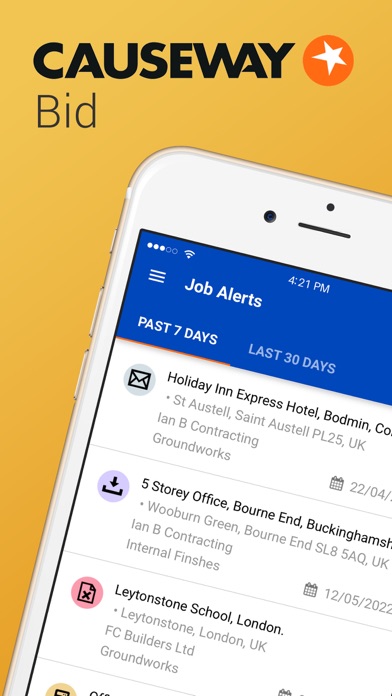
Causeway is the archetypal UK QS-office incumbent, sold as two stacks: CATO (cost planning, on-screen measurement, BoQ production, estimating, with a benchmarking module) for cost consultants/PQS, and Causeway Project Accounting + Commercial Management (valuations, variations, subcontract orders, final accounts, and CVR with real-time cost/budget/value tracking) for main contractors. It does the full post-contract money workflow up to and including final account, and markets “benchmarking” inside CATO — but that benchmarking is the firm’s own measured data, not cross-firm. Pricing is undisclosed/modular (contact-sales). Crucially it markets data-driven automation, not generative AI — no shipped LLM features found. It reaches our exact buyer and owns the valuation→final-account workflow, but stops there: no delay/disruption entitlement engine, no cross-firm cost loop.
Eque2 (EVision / Construct / EValuate) — ERP-attached UK commercial suite
Eque2 wraps construction commercial management around an accounting core: EVision on Microsoft Dynamics 365 Business Central and Construct on Sage/Xero, with EValuate for estimating/tendering. It runs “tender to final account”: estimating, then post-contract CVR and job costing, valuations, variations, subcontractor order-to-invoice matching, budget control, applications for payment. Buyer = main contractors / housebuilders’ commercial and finance teams. The only shipped AI is AI-powered invoice recognition (OCR/classification) — book-keeping automation, not commercial intelligence. Same boundary as Causeway: full variation/CVR/final-account workflow, no claims-entitlement quantification, single-firm data only.
RedSky (Summit) — construction ERP with a dedicated CVR module
RedSky/Summit is a modular construction ERP for UK contractors/developers uniting finance + commercial + operations. It ships a dedicated, customisable CVR module, comprehensive subcontractor management (CIS compliance, automated HMRC reporting), and internal/external valuation and subcontractor-liability workflows. Buyer = contractor finance/commercial. Pricing contact-only. No AI features documented. A clean example of the legacy core: deep on CVR/valuations/subcontract accounting, silent on claims entitlement and on any cross-firm data.
Cleopatra Enterprise — EPC cost engineering (the non-UK comparator)
Cleopatra is a project cost-management / total-cost-management SaaS for EPC firms, owners, engineering firms (process, energy, infrastructure) — cost estimating, project controls, cost control, benchmarking, and explicitly “claims or change management.” It is the one tool here that names “claims” inside a cost-control product, but in the EPC change-management sense (scope-change cost capture), not UK-style delay/disruption entitlement quantum, and its benchmarking is the firm’s/owner’s own estimating history. Not sold to the UK PQS; SaaS, pricing undisclosed; no AI mentioned. Included as the cost-engineering comparator that shows even the most “claims-aware” commercial tool stays at change-cost capture, not entitlement recovery.
RIB CostX & RIB Candy — estimating engines with a commercial tail
RIB CostX is primarily 2D/BIM takeoff + estimating + BoQ for QSs/estimators/consultants, with a post-contract tail (variation tracking via auto-revisioning, subcontractor comparison, project-cost “benchmarking”); not marketed as AI. RIB Candy (ex-CCS, civils/heavy-construction) is a fuller integrated platform — first-principles estimating, planning with a time-cost-resource critical path, valuations, cost control, EVM, subcontract adjudication, variation tracking, cash-flow — i.e. genuine commercial management for civil contractors, but no public API and no shipped AI. Both reach the QS/commercial buyer and handle variations + valuations; neither quantifies delay/disruption entitlement, and “benchmarking” is single-firm. (Estimating side covered in _landscape/estimating-takeoff/note; here they anchor the “estimating-with-a-commercial-tail” generation.)
Planyard — cloud-native CVR / QS challenger
Planyard is the clearest cloud-native challenger to the legacy core: a live commercial-management layer above the accounting system doing CVR, client + subcontractor valuations, variations (change orders), final accounts, subcontractor payment applications, plus procurement/tender management and OCR invoice processing. Published pricing, 14-day trial, JCT-contract framing, UK + US sites — a modern, self-serve version of exactly what Causeway/RedSky sell. AI = OCR automation, not commercial intelligence. Its docs do not describe any delay/disruption claims module — it manages variations and project cost in real time and stops there. The best evidence that the cloud re-platforming of the QS job still draws the line at variation/final-account, not entitlement.
Payapps (an Autodesk company) — payment-application valuation, now absorbed
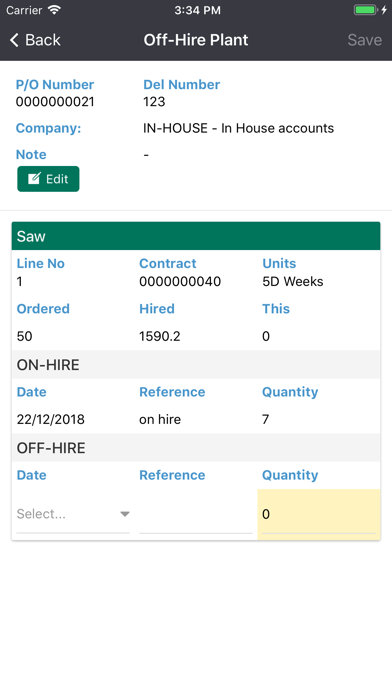
Payapps automates payment applications / progress claims, variations and retentions between contractors and subcontractors (NA name: GCPay, adds lien-waiver exchange). Narrow but sticky: the interim-valuation/AfP exchange that sits at the heart of the monthly QS cycle. Autodesk acquired it (announced early 2024) to fold payments into Autodesk Construction Cloud — making this the fourth proven absorption of an independent commercial/doc tool by a distribution-owner (after Pype→Autodesk, Fonn→Access, Disperse→OpenSpace). No AI features marketed; ~$5.9M ARR pre-acquisition per third-party. Confirms the pattern: a single-workflow commercial tool’s exit is to be bought by the platform, not to scale into the claims layer.
Gather Insights (QS AI Agent) — the bridge case, and the one to watch
Gather is an AI site-diary / construction-records tool whose QS AI Agent is the closest mover in this whole category to our wedge. It reads 100% of structured site-diary/shift records and detects compensation-event triggers mapped to contract clauses (NEC3/NEC4/JCT/FIDIC), flags early warnings, surfaces cumulative impacts manual review misses (“40% more change events”), and generates clause-referenced draft notices and a chronological narrative from the records. It is pitched explicitly to contractors to “recover variations faster,” integrates with CEMAR/Thinkproject (per its own materials/webinars), buyer = QS / commercial managers / contractors, ~£500/licence/month. But it stops one rung short of our wedge: by its own product copy it produces identification + early-stage notices + a support narrative and does not quantify claim quantum, perform delay/disruption calculations, or run the recovery process — and it does no cross-firm cost benchmarking. It is doing the front half of the Commercial Event (capture record → detect the event → draft the notice) for our exact buyer; it has not done the money half. This is the single most thesis-relevant find in the commercial-QS tier, and the nearest neighbour to our motion from the commercial side (as Gather is to area 15 what ConstructionDailyReport.ai is to it from the field-capture side).
Gauge / Rate QS / BenchIt — AI cost benchmarking, all single-firm by design
Three 2024-25 AI entrants directly in area 21 — and the most important shared finding is that all three are explicitly single-firm. Gauge (gauge.co.uk): SaaS benchmarking for QSs/cost consultants, AI to organise/structure historical project-cost data and generate insights, data owned by and confined to the user firm, tiered pricing. Rate QS (rateqs.com): turns a firm’s own private historic tender returns/cost plans into a searchable rate library with AI BoQ-line classification, tender levelling, outlier detection — and explicitly markets “not cross-firm” / private-data-only as a security feature; Free/Solo/Practice/Enterprise tiers, API on Enterprise. BenchIt (benchit.app): “your private construction cost database,” AI scans pricing docs, benchmark internal projects against each other and “industry standards,” data belongs to the user org, no public API. None pools cost across firms into a compounding market dataset — they automate the organisation of a firm’s own history, which is the single-firm pattern Kreo/Togal/Gauge all share. Area 21’s cross-firm loop remains empty even where new AI money is being spent on benchmarking.
Comparison
| Tool | Builds | Buyer | AI angle | Variations vs claims-recovery | Cross-firm cost (21)? | Read |
|---|---|---|---|---|---|---|
| Causeway (Commercial/CATO) | Post-contract commercial mgmt + CVR + final account; CATO cost-planning/measurement | PQS / cost consultant / main-contractor commercial | Data automation, no generative AI | Variations + CVR + final account; stops before delay/disruption entitlement | No (single-firm CATO benchmarking) | LEGACY-INCUMBENT (the buyer’s desk; slow on AI) |
| Eque2 (EVision/Construct) | Tender→final account on D365/Sage/Xero: CVR, valuations, variations, subcontract | Contractor / housebuilder commercial + finance | AI invoice recognition only (OCR) | Variations + CVR + final account; no claims entitlement | No (single-firm) | LEGACY |
| RedSky (Summit) | Construction ERP with dedicated CVR module, subcontract/CIS, valuations | Contractor / developer finance + commercial | None documented | Valuations + CVR; no claims entitlement | No | LEGACY |
| Cleopatra Enterprise | EPC cost estimating + project controls + cost control + “claims/change mgmt” | EPC firms, owners, engineering (not UK PQS) | None mentioned | Change-cost capture (EPC sense); not UK delay/disruption quantum | No (single-firm/owner history) | ADJACENT-EPC (cost-control comparator) |
| RIB CostX | 2D/BIM takeoff + estimating + BoQ, with variation/auto-revision tail | QS / estimator / consultant | Not AI-marketed | Variation tracking tail; estimating-led, no claims | No (single-firm “benchmarking”) | ESTIMATING+tail (see estimating note) |
| RIB Candy (ex-CCS) | Civils: estimating + planning + valuations + cost control + EVM + variations | Civil/heavy-construction estimator + commercial | No AI; no public API | Variations + valuations + EVM; no entitlement engine | No | LEGACY-CIVILS |
| Planyard | Cloud CVR + client/sub valuations + variations + final account + AfP | QS / commercial manager (SMB-mid contractor) | OCR invoice automation (not AI-native) | Variations + CVR + final account; no claims module | No (single-firm) | CLOUD-CHALLENGER (modern re-platform, same boundary) |
| Payapps (Autodesk) | Payment applications / progress claims, variations, retentions exchange | Contractor↔subcontractor commercial | None marketed | Values payment apps + variations; no entitlement | No | ABSORBED (4th absorption proof) |
| Gather Insights (QS AI Agent) | AI site diary → detect comp events, draft clause-referenced notices + narrative | QS / commercial manager / contractor | AI-native (event detection, draft notices, narrative — shipped) | Bridges toward it: detects CEs + drafts notices, but explicitly stops before quantum / delay-disruption calc / recovery | No | NEIGHBOUR — WATCH (closest commercial-side mover to area 15) |
| Gauge | AI cost benchmarking from a firm’s historical project cost data | QS / cost consultancy | AI-native (organise/insight on history) | n/a (pure benchmarking) | No — single-firm by design | AREA-21 ENTRANT (single-firm) |
| Rate QS | AI rate library from a firm’s own tender returns/cost plans | QS firm | AI-native (BoQ classification, levelling) | n/a | No — markets “not cross-firm” as a feature | AREA-21 ENTRANT (single-firm) |
| BenchIt | Private AI construction cost database / benchmarking | QS / contractor | AI-native (doc-scan, benchmark) | n/a | No — single-firm | AREA-21 ENTRANT (single-firm) |
(Pre-contract-only estimators ConQuest and Cubit/Buildsoft were checked and are estimating/takeoff with a tender/quote tail, not commercial management — they belong to _landscape/estimating-takeoff/note and are not re-tabled here. The dedicated delay/disruption claims engines that do quantify entitlement — ClaimLogic, ForensicPM, Magra, Masin AI, ClaimMaster.ai — are profiled in _landscape/claims-delay/note; they are a different vendor category from the commercial suites above, which is itself the finding.)
What this category tells us
-
The commercial suite stops at the final account; the claim lives in a different product. Every legacy and cloud commercial-management tool here — Causeway, Eque2, RedSky, RIB Candy, Planyard, Payapps — does the full money workflow up to variation valuation, CVR and final account, and then stops. Delay/disruption entitlement (prolongation, measured-mile disruption, head-office overhead, time-impact → quantum) is not a feature of any of them; it lives in a separate category of dedicated forensic/claims tools (_landscape/claims-delay/note) sold partly to the same QS/claims buyer but never bundled into the commercial suite. That gap between “value the variation / close the account” and “quantify and recover the delay/disruption claim” is precisely our wedge — and it is a real seam in the market’s product structure, not just a missing feature.
-
This buyer is well-served on book-keeping and badly served by AI. The QS commercial office has deep, sticky incumbents for the ledger work (CVR, valuations, subcontract accounting) — but their AI is, at best, invoice OCR (Eque2) or undocumented (Causeway, RedSky, RIB Candy, Cleopatra, Payapps). The legacy tier is lethargic on AI, which is our opening: the AI-native intelligence layer over the QS’s commercial record (detect the event, build the entitlement, price against history) is being left on the table by the very vendors who already own the buyer and the data. Their slowness, not their absence, is the opportunity.
-
One genuine neighbour is climbing toward our wedge from the commercial side: Gather Insights. It is AI-native, sells to our exact buyer (QS/commercial/contractor), already detects compensation events and drafts clause-referenced notices + narrative, integrates with CEMAR — and it is the commercial-QS analog of ConstructionDailyReport.ai’s capture→claims move. But by its own copy it stops at notice-drafting, short of quantum / delay-disruption calculation / recovery, and does no cross-firm benchmarking. It validates the front half of our motion and pressures the timeline; it has not taken the money half. Watch it closely (£500/licence/mo) — it is better-positioned than the field-capture micro-entrants to add quantum next, because it already sits in the commercial workflow.
-
The legacy incumbents are a distribution threat in waiting, not a present one — and absorption is the proven endgame. Causeway/Eque2/RedSky each own thousands of QS seats and the commercial data; any of them could, in principle, bolt an AI claims/benchmarking layer onto an installed base we cannot match for distribution. They have not (no AI roadmap evidence beyond OCR), which is the window. But Payapps→Autodesk is the fourth proof (after Pype, Fonn, Disperse) that an independent single-workflow commercial tool’s exit is to be bought by a platform, not to scale into the claims layer — so the standing risk is a distribution-owner (Autodesk via Payapps, or a Causeway/Access-style ERP roll-up) bundling the wedge before our data loop locks. Argues, as elsewhere, for owning the recovery P&L line and the cross-firm loop they would have to build a different product to replicate.
-
Cross-firm historical cost (area 21) is empty even where the new AI money is — by design. The three fresh AI benchmarking entrants (Gauge, Rate QS, BenchIt) are exactly in area 21 and are all explicitly single-firm; Rate QS even markets “your private data, not cross-firm” as a selling point. So the area-21 finding from estimating (Kreo/Togal single-firm) holds at the commercial tier and hardens: vendors are now actively building AI benchmarking, and still none pools cost across firms into a compounding market dataset. The cross-firm loop remains the single cleanest, least-contested column in the entire 21-area map — and the QS office, who would buy it, is already being sold the single-firm version, proving the demand without filling the gap.
Sources
Exa search (12 category/thesis queries, raw_queries/) + exa cited answers (raw_answers/) for each tool; WebFetch of Gather’s QS-AI-Agent product page (gatherinsights.com). App-store pulls returned no genuine matches (these are desktop/web B2B tools, not mobile apps — junk matches discarded). Causeway, Eque2, RedSky, Cleopatra, RIB CostX/Candy, Planyard, Payapps, Gather, Gauge, Rate QS, BenchIt established from vendor sites via exa; Payapps acquisition confirmed via Autodesk newsroom + ENR + getLatka (ARR). Cross-refs: dedicated claims/forensic tools profiled in _landscape/claims-delay/note; estimating-only tools (ConQuest, Cubit, CostX/Candy estimating side) in _landscape/estimating-takeoff/note.