Dashboard: Dashboard · method: _RESEARCH-METHOD · market grid: _MARKET-PROBLEM-MAP · opportunity lens: _OPPORTUNITY-LENS · landscape: competitor-landscape-report
Purpose: decide how to relate to the one competitor whose product is most like the thing we would build — AI agents that read a project’s documents and answer questions over them. The brief first explains what Trunk Tools is and which jobs its agents actually do today, then where its value sits and how durable the lead is, and finally whether they are a partner, a threat, or a thesis-validating cheap-AI-native entrant. Evidence is thinner than for an established field-app vendor — there is no Capterra review corpus and no public mobile app — so the credibility caveat leads the reception section and is flagged throughout.
Snapshot
| What it is | An AI-agent platform that ingests a construction project’s documents (drawings, specs, RFIs, submittals, schedules, contracts, meeting minutes) and lets the field and office ask plain-language questions and get cited answers; plus agents that review drawing revisions, submittals and bids |
| Core job it does | Kills the hours superintendents and PMs spend hunting through project documents; surfaces drawing/spec discrepancies before they become rework |
| Who buys | Mid-to-large general contractors and enterprise builders with high document volume — Suffolk, Gilbane, Consigli, Granite, Haskell, Cleveland Construction named; expanding toward mid-market |
| Business model | Sales-led, contact-for-quote; implementation reportedly ~$5k–$30k, annual cost scales by users/projects/modules; no public price |
| Openness | Connects into Procore, Autodesk Build/Forma, SharePoint, Box, Dropbox, Egnyte; delivered via web, SMS and Microsoft Teams. No public developer API documented. No consumer mobile app |
| Funding / backing | ~$70M total: $20M Series A (Redpoint, Aug-2024), $40M Series B (Insight Partners, Jul-2025); founder Dr. Sarah Buchner (ex-carpenter→superintendent→PhD) |
| Public ratings | No meaningful third-party review corpus yet (listed but near-empty on G2/Capterra/Software Advice); reception built from press, case studies and vendor metrics |
| Strongest areas | Document Q&A; RFIs/submittals/document control; drawing-revision review; bid-scope analysis |
| Weakest areas (our interest) | Change/variations/claims/entitlement (not a named agent); cost/forecasting; field capture; historical-cost benchmarking |
| Our verdict | The nearest competitor to our own concept. Ride the doc-knowledge layer; flank on the commercial money it does not touch |
Where Trunk Tools plays across the market
Scored 0 (not addressed) to 100 (best-in-class) against the 21 areas in _MARKET-PROBLEM-MAP, sorted by coverage. This is a narrow, document-centric product: it concentrates in the RFI/submittal/document-control band and the cross-cutting AI layer, and is deliberately thin everywhere field-capture, money or scheduling-execution lives.
| Problem area | Coverage | Note |
|---|---|---|
| RFIs / submittals / document control | 80 | The core: TrunkText Q&A, TrunkSubmittal discrepancy detection, TrunkRFI duplicate-prevention, submittal register |
| Communication / client collaboration | 55 | Answers reach the field via web, SMS and MS Teams; cross-team coordination is the pitch |
| Quality / QA-QC / snagging | 45 | TrunkReview catches drawing/spec discrepancies pre-build; rework avoidance is the headline benefit |
| Project management (knowledge layer) | 40 | A knowledge/answers layer over a project, not a system of record; rides on Procore/Autodesk |
| BIM / design coordination | 35 | TrunkReview reads drawing revisions (vision-language models); coordination-adjacent, not a 3D model tool |
| Bid & tender management | 35 | TrunkBid compares trade bids, surfaces scope gaps and exclusions during buyout |
| Scheduling / programme | 30 | Schedule agent links activities to supporting docs and flags discrepancies; not a scheduling engine |
| Field management / daily reporting | 25 | Consumed in the field, but it answers questions — it does not capture daily logs/photos/timesheets |
| Estimating & takeoff | 20 | Reads bids and quantities for analysis; no takeoff engine |
| Prequalification / procurement | 20 | Parses procurement logs and bid scope; not a PO/prequal system |
| Progress / production tracking | 15 | Not a focus; no actual-vs-plan production module |
| Cost management / forecasting | 10 | Parses contracts/bids; no job-costing, budget or forecast ledger |
| O&M / handover / golden thread | 10 | Document store could feed handover; no handover product verified |
| Change / variations / claims / entitlement | 10 | Not a named agent. Touches the inputs (RFIs, drawing changes, contracts) but does not draft or pursue change orders, claims or entitlement |
| Insurance & risk | 10 | Cited-answer audit trail supports it; no risk module |
| Historical cost / benchmarking | 5 | Accrues project-document data but no cross-project cost-benchmarking product |
| Safety & compliance | 5 | Can answer compliance questions from docs; no safety module |
| Time, labour & workforce | 0 | Not addressed |
| Accounting / AP-AR / payroll | 0 | Not addressed |
| Reality capture / drone / survey | 0 | Not addressed |
| Equipment / asset / material tracking | 0 | Not addressed |
Takeaway: the product is a tight cluster around documents-and-answers — RFIs, submittals, drawings, bids — plus the AI that reads them. It is strong exactly where construction work is document-heavy and generative, which is also the most AI-amenable layer. Critically for our thesis, it stops at field-knowledge and coordination; it does not cross into the commercial/money layer. Change orders, variations, claims and entitlement (area 15) are not a product — Trunk Tools reads the documents that feed a claim but does nothing to recover the money. Historical-cost benchmarking (area 21) is likewise absent. Those two areas, central to our thesis, are open.
The input side — how knowledge gets in
Trunk Tools is not a capture tool; its “input” is the project’s existing document corpus, not new field data.
- Ingested: drawings, specifications, RFIs, submittals, procurement logs, bids, contracts, schedules and meeting minutes — pulled from the systems the contractor already runs (Procore, Autodesk Build/Forma, SharePoint, Box, Dropbox, Egnyte).
- How it is set up: the agents index and structure the unstructured corpus, then train per-jobsite so answers are project-specific and cited back to the source sheet/spec.
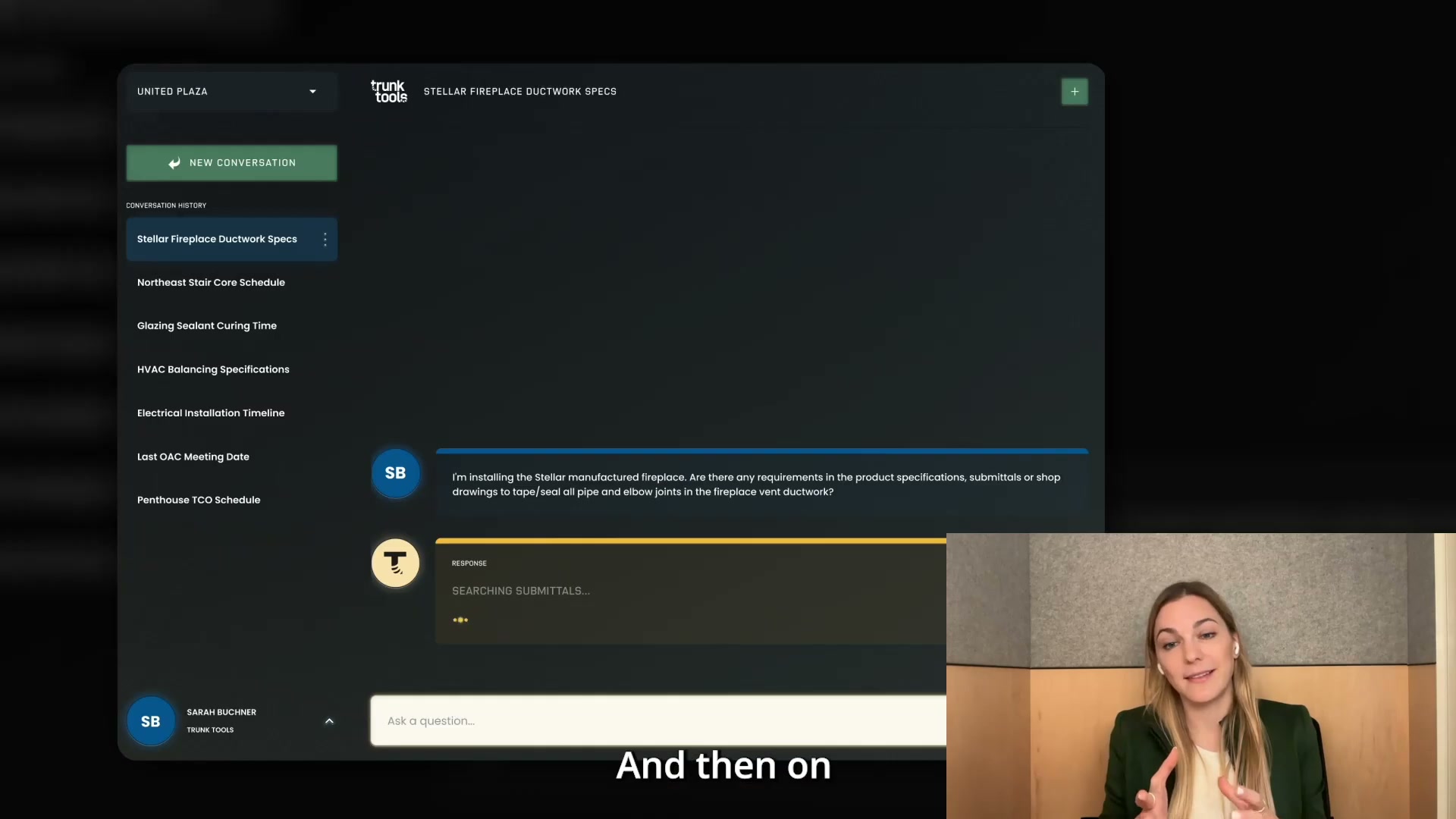
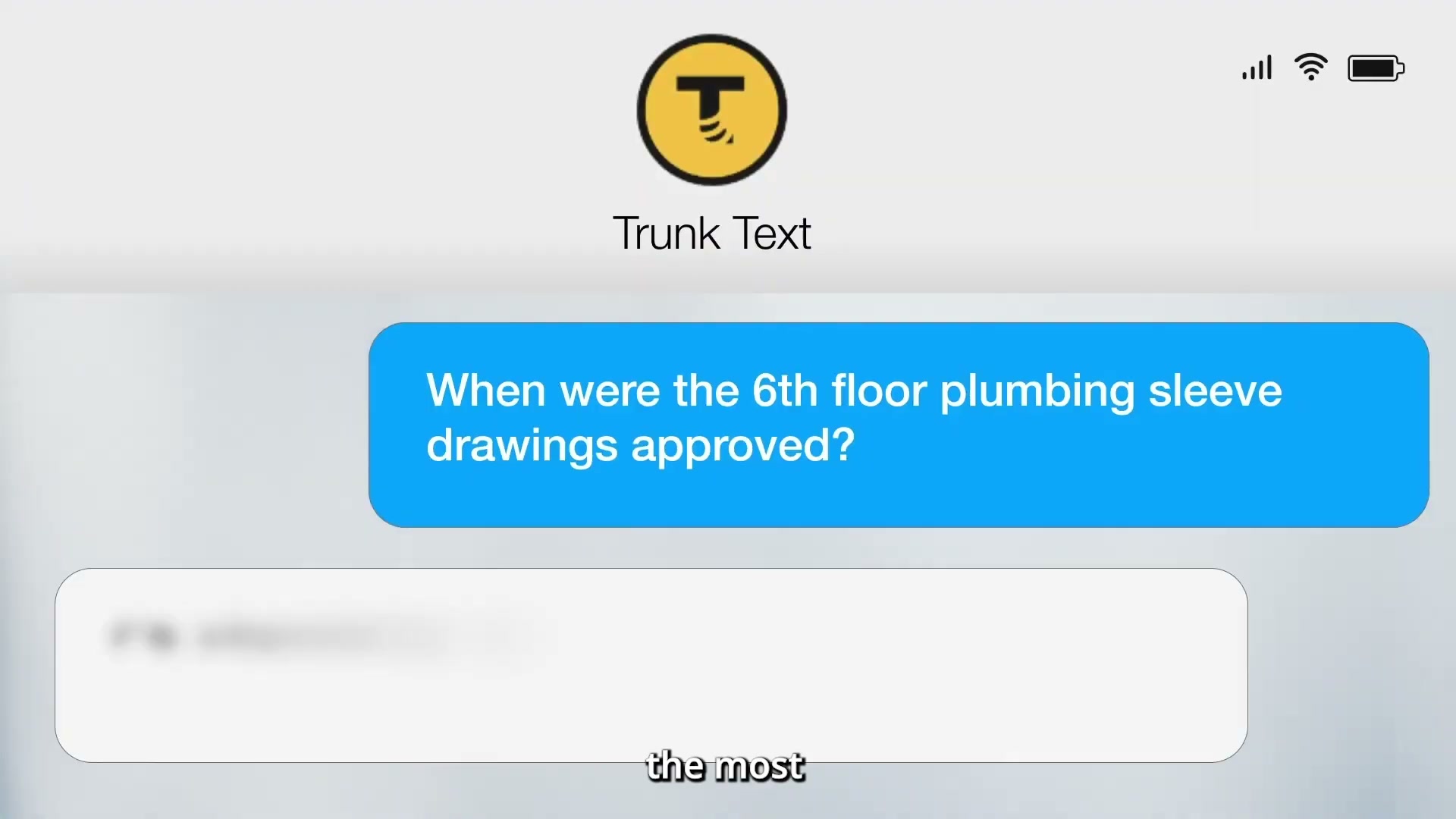
- What the field does: asks questions — by web, by text message, or inside Microsoft Teams — and gets a sub-30-second cited answer. There is no daily-log, photo or timesheet capture, and no consumer mobile app; the field surface is “ask a question,” not “fill in a form.”
- Friction (from reviews/press): value depends on document volume and on curated, well-organised source data — “works best with curated data only.” A firm without high doc volume gets less. Some agents are described as beta. Accuracy is self-reported (87% “verified field accuracy”) and not independently audited.
The management side — what the office gets
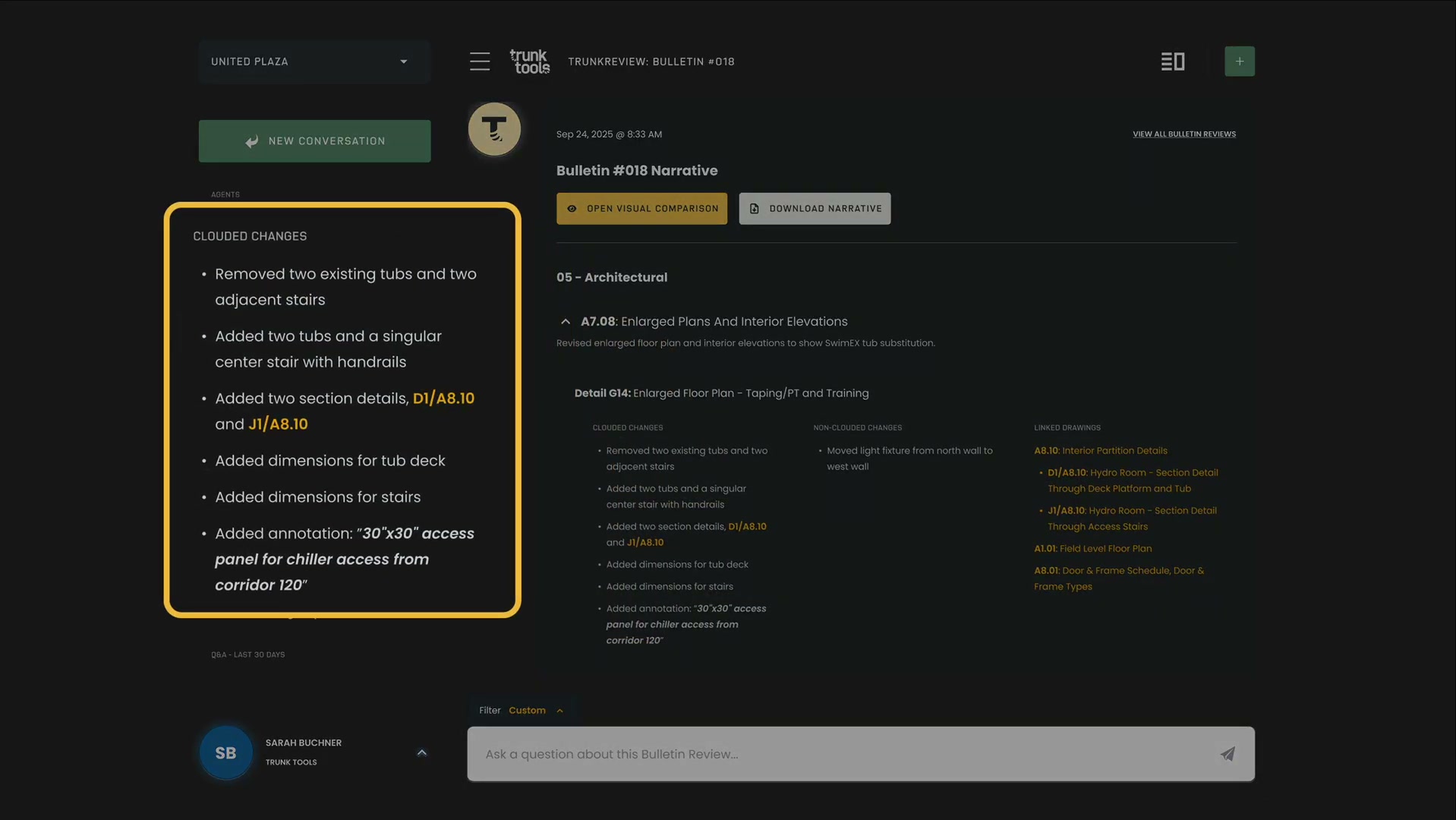
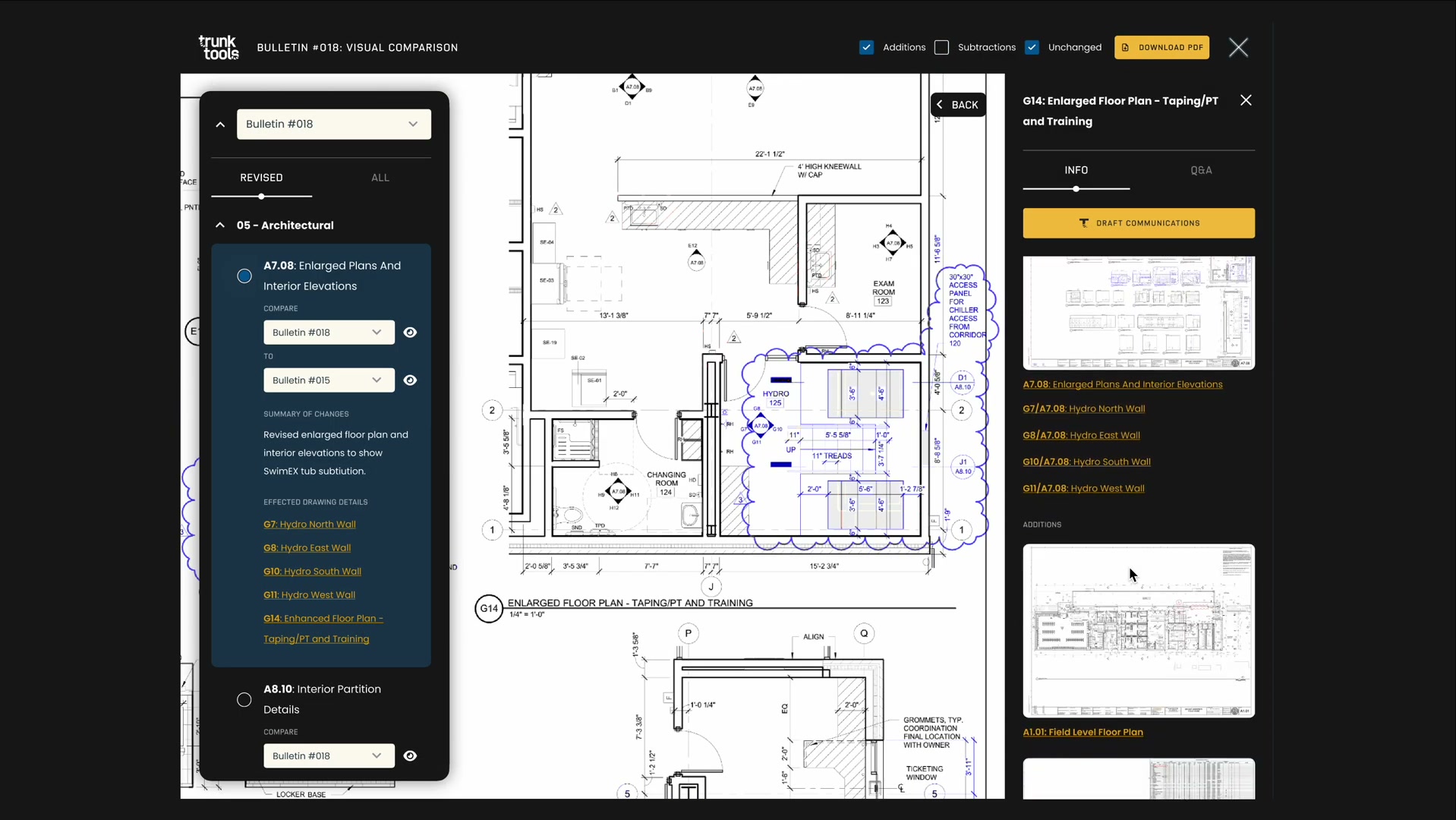
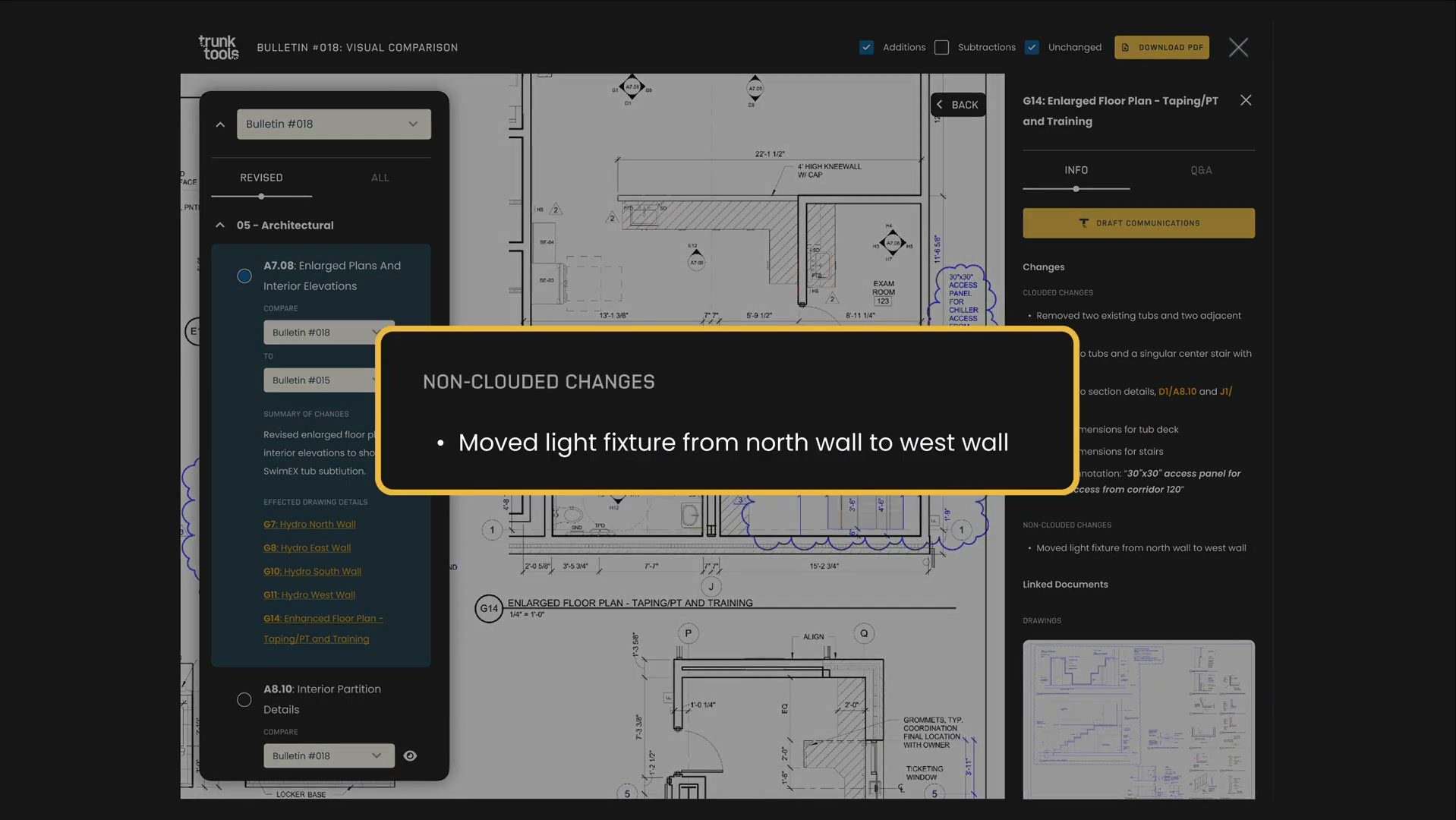
- What the office gets: a queryable, cited knowledge layer over the whole project, plus three review agents that produce structured output — TrunkReview’s clouded/unclouded drawing-change narratives with sheet links and visual overlays; TrunkSubmittal’s discrepancy flags and an auto-built submittal register published back to the PM system; TrunkBid’s side-by-side bid comparison with scope-gap and exclusion flags.
- Who consumes: superintendents and PMs in the field (the headline persona — “draft a spec with Trunk, walk the site, ask questions as I go”), and project engineers running submittal/RFI/bid review in the office.
- Valued most: time reclaimed (vendor claims 20–40 min per field question, 1–2 hrs/day per field member) and rework avoided by catching discrepancies early (claims of $100k+/month rework avoided, $375k–$750k savings over six months).
- Structural gap (evidenced): the output is answers and discrepancy flags, not money. The platform can tell a PM that a drawing changed and a spec conflicts — the raw material of a variation or delay claim — but it does not assemble the change-order, build the entitlement narrative, price the impact, or track the recovery. It converts documents into knowledge, not knowledge into recovered cost. That boundary is the whole of our interest.
Where the value actually comes from
| Sales story (what wins the trial) | Real source of stickiness (what makes it hard to leave) |
|---|---|
| “Stop hunting through documents — ask a question, get a cited answer in 30 seconds; catch the discrepancy before it becomes $10k of rework” | The agents are trained per-jobsite on the contractor’s own corpus, and answers are consumed daily in the field via Teams/SMS; the longer it runs the more the index and the team’s habit lock in, and it sits on the contractor’s existing Procore/Autodesk data |
- Do not attack: the document-Q&A experience itself, the per-jobsite training loop, and the enterprise-GC relationships (Suffolk, Gilbane, Consigli) — this is their strong, well-funded ground and they are moving fast on it.
- Where value stops: Trunk Tools turns documents into answers and discrepancy flags. It does not turn them into recovered money (structured change orders, delay/disruption narratives, entitlement claims), and it does not reuse cross-project history to price the next job. The commercial layer and the benchmarking layer are both outside the product.
What users say — both sides
Credibility first — this is an early-stage, thin-evidence read. There is no Capterra/G2 review corpus to segment: the company is young (founded 2021, scaled in the last ~18 months) and the third-party directories that list it carry essentially no organic reviews. So unlike an established field app, the picture here is built from vendor case studies, press coverage of the funding rounds, and a handful of third-party tool-review write-ups — sources that skew positive and are not independently verified. Treat the metrics below as vendor claims, not audited results. The honest signal is directional, not statistical.
| Praised (case studies / press) | Criticised / cautioned (third-party reviews) |
|---|---|
| Saves real time hunting documents; cited answers trusted in the field | Value is thin if a firm lacks high document volume |
| Catches drawing/spec discrepancies early, avoiding rework | Carries a cost premium vs AI bundled inside Procore/Autodesk |
| Delivered where crews already are — SMS and Microsoft Teams | Accuracy self-reported; some agents in beta; data must be curated |
| Founder credibility (carpenter→superintendent→PhD) lands with builders | No public API docs; Procore cut off its API access in Sept-2025 (see below) |
| Named enterprise GCs (Suffolk, Gilbane, Consigli, Granite, Haskell) | No mobile app; English-only |
- Representative positive (Chris Force, Sr. PM, Suffolk): “Now I can draft a spec with Trunk, walk the site, and ask questions as I go” — the field-knowledge use case, exactly as pitched.
- Signal for us: the praise is entirely about finding and checking information faster. Nobody is quoted recovering money. The one recurring caution — “premium vs AI bundled inside the platform you already own” — is the strategic risk that defines this whole space (below).
The opportunity for AI in this space
- This space IS the AI opportunity — and Trunk Tools is the proof. Document Q&A, RFI/submittal review and drawing-change detection are exactly the LLM-shaped, document-heavy, generative work the thesis says cheap AI now eats. Trunk Tools being a venture-funded, fast-growing standalone built on precisely this is strong validation that an AI-native entrant can take ground from incumbents in construction docs. That is the encouraging read.
- But they have parked on the knowledge layer, not the money layer. Their agents make people faster at understanding documents. The higher-value, harder, more defensible job — turning those same documents (RFIs, drawing changes, contracts, schedule slips) into recovered money via structured change-order and delay/disruption claims — is generative, document-heavy AI work too, and they do not do it. The data that feeds a claim already passes through their pipe; they stop one step short of the P&L line that matters most.
What we would build:
- Baseline to respect: reliable cited document Q&A is now table-stakes for any AI-over-docs product; an entrant cannot be worse at it.
- The job they skip: the commercial/entitlement layer — drafting change-order narratives, building delay and disruption claims from the project record, pricing the impact, tracking recovery — plus, over time, historical-cost benchmarking that reuses the accumulated record to price the next job.
- Niche to target first: the commercial and entitlement layer for UK/mid-market commercial and fit-out contractors, where recovering money from variations and claims is a board-level concern and where Trunk Tools is both US-enterprise-focused and commercially absent.
How open the platform is
- Integrations / delivery: reads from Procore, Autodesk Build/Forma, SharePoint, Box, Dropbox, Egnyte; delivers answers via web, SMS and Microsoft Teams. No public developer API is documented, so building on top of Trunk Tools is not currently a path.
- The defining fact — they build on rented land. In September 2025 Procore removed Trunk Tools’ API access after tightening its developer terms, and refunded the Trunk Tools booth at Procore’s Groundbreak conference; at that same event Procore unveiled Agent Builder, a beta for agentic AIs that overlaps directly with Trunk Tools’ agents. Trunk Tools’ own data pipe runs through platforms it does not control, and the largest of those platforms is now both gatekeeper and competitor. This is the central strategic risk of this whole layer — “don’t build your house on rented land” — and it cuts two ways: it is a real threat to Trunk Tools, and it is a caution to us that any build-on-top AI layer must own a job the platform owner does not want to do (which is exactly why the commercial/claims layer, not generic doc-Q&A, is the right wedge).
Trunk Tools’ own AI — claims, shipping, and how durable the lead is
Unlike most competitors, their AI is the entire product — there is no legacy system underneath it. The question is not “can they ship AI” (they have) but “how durable is the lead, and how far does it extend.”
| Agent | What it does | Status |
|---|---|---|
| TrunkText | Plain-language Q&A over the full project corpus with cited answers; via web/SMS/Teams | Shipped (GA) |
| TrunkReview | Reads drawing revisions, flags clouded/unclouded changes, builds change narratives with sheet links and visual overlays | Shipped (GA) |
| TrunkSubmittal | Flags missing/conflicting/noncompliant info across specs and submittals; auto-builds and publishes a submittal register | Shipped; register noted as newer |
| TrunkRFI | Checks existing docs to prevent duplicate RFIs and strengthen design-team communication | Shipped |
| Schedule Agent | Links scheduled activities to supporting documents and flags discrepancies | Shipped (Series-A era) |
| TrunkBid | Side-by-side trade-bid comparison surfacing scope gaps and exclusions during buyout | Shipped; some review sources note beta |
- This is a genuinely AI-native, fast-shipping team with real product in users’ hands — there is little talk-vs-ship gap on the doc layer. Treat them as a capable mover, not a slide deck.
- But the lead is durable mainly on the doc-knowledge layer, and that layer is the most contested. Two forces cap it: (1) the exact same agentic doc-Q&A is what platform owners are now bundling — Procore’s Agent Builder is the warning shot, and an incumbent that owns the data and the distribution can offer “good enough” answers for free inside the tool the contractor already pays for; (2) Trunk Tools’ own access to that data runs through those platforms, as the Procore cutoff showed.
- Confidence they extend into the commercial/claims layer themselves within ~2 years: low-to-moderate (about 1 in 3). They have the AI capability and the document pipe to attempt it, which makes them more likely than a legacy field-app vendor to wander into our ground — that is the real watch-item. But three things pull them away from it: their funded momentum and customer love are anchored in field-knowledge for enterprise GCs; claims/entitlement is a different buyer (commercial/contracts, not the superintendent), a different sales motion, and a more adversarial, judgement-heavy product; and their platform-dependency fight is consuming attention. Main risk to this read: a Series-B-funded team can hire into an adjacency fast, and they already touch every input a claim needs.
Who actually uses Trunk Tools
No review-corpus segmentation exists, so this is from named customers and press rather than a firm-size distribution.
- Firm profile: mid-to-large and enterprise general contractors with high document volume — Suffolk, Gilbane, Consigli, Granite, Haskell, Cleveland Construction, Doka, Sto, Baker, Charps, AMLI Residential. US-centric. The Series-B stated aim is to push down into mid-market and the “long tail.”
- Role / persona: the superintendent and project manager in the field are the headline users (information access on site); project engineers run the submittal/RFI/bid review in the office. The economic buyer is the GC’s operations/innovation leadership, not the field.
- What they replace: manual document search — page-by-page drawing reviews, spec hunts, scanning RFIs/submittals. They displace human admin time, not a named incumbent product; the closest competitive frame is “AI inside Procore/Autodesk” rather than another standalone.
Our read — can we enter and win?
Yes, and this is the most important competitor to get right, because Trunk Tools is the closest thing in the market to what we would build — an AI-native team putting agents over construction documents — and it is succeeding, which validates the thesis. The mistake would be to copy them. Their ground is generic document-Q&A and review for enterprise GCs, which is (a) where they are strong and fast, and (b) exactly what platform owners like Procore are now bundling for free — a fight we would enter as the third party on rented land. Instead, take the half of the opportunity they have left open: they convert documents into knowledge, we convert the same documents into recovered money. Enter as the commercial/entitlement layer — agents that draft change-order and delay-claim evidence from the project record and, over time, benchmark historical cost — for UK/mid-market commercial and fit-out contractors. That is a different buyer, a higher P&L line, a more defensible (judgement-heavy, outcome-data-compounding) job, and one neither Trunk Tools nor the platform owners are doing today. Relate to Trunk Tools as a fellow AI-native rather than an incumbent to displace: ride the validation, flank the money.
| Question | Our read |
|---|---|
| Where is Trunk Tools strong and off-limits? | Document Q&A and drawing/submittal/bid review for enterprise GCs; the per-jobsite training loop; enterprise relationships |
| Where is the verified gap? | The commercial/money layer — change orders, variations, delay/disruption claims, entitlement, recovery tracking (area 15) — and historical-cost benchmarking (area 21); both confirmed absent from the product |
| How hard for them to follow us? | Moderate. They have the AI skill and the document pipe, so more able than a legacy vendor — but it is a different buyer, motion and product, and their platform-access fight distracts |
| How much can cheap AI do here? | A great deal — the claims/entitlement layer is document-heavy and generative, the same shape they have proven works |
| Is there a cheap, narrow way in that grows? | Yes — an AI layer that drafts claim/variation evidence from the project record, expanding into historical-cost benchmarking; sold below procurement to a commercial persona |
| What would make us walk away? | A platform owner (Procore-class) OR Trunk Tools itself shipping a credible claims/entitlement agent and bundling it before we establish our data loop — the same distribution-beats-innovation risk Trunk Tools is living through with Procore |
| Overall | Build the commercial-entitlement layer Trunk Tools skips; ride the AI-over-docs validation, do not fight on doc-Q&A |
The product / availability — reach and reception
| Channel | Detail |
|---|---|
| Delivery | Web app, SMS, Microsoft Teams — no consumer mobile app, English-only |
| Third-party review corpus | Effectively none yet (listed but near-empty on G2/Capterra/Software Advice) — too early-stage to segment |
| Reach claims (vendor) | 500+ jobsites live, $50B+ construction volume, hundreds of active projects, revenue ~5x in ~6 months |
| Funding | ~$70M total (Series A $20M Redpoint Aug-2024; Series B $40M Insight Partners Jul-2025) |
The absence of a review corpus and a mobile app is itself the signal: this is a young, sales-led, enterprise-GC product delivered through channels the field already uses, judged here on press, case studies and vendor metrics rather than on aggregated user reviews.
Screenshots
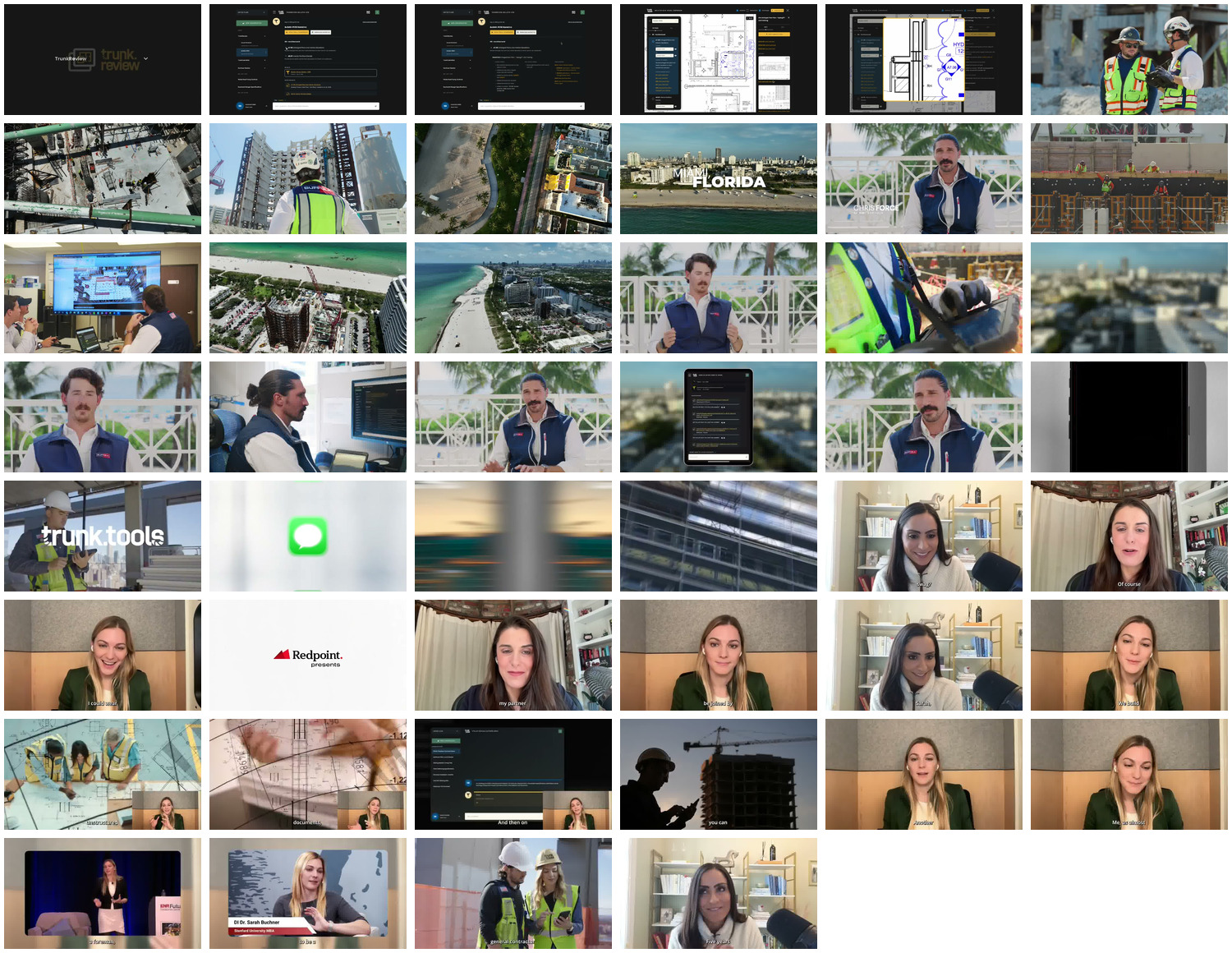
Grouped by theme, full-size and scrollable. These are frames from Trunk Tools’ own walkthrough and brand videos — there is no App Store gallery for this product. The contact sheet is linked at the end. Full set and gathering method: screens/README.
The product — the agent workspace
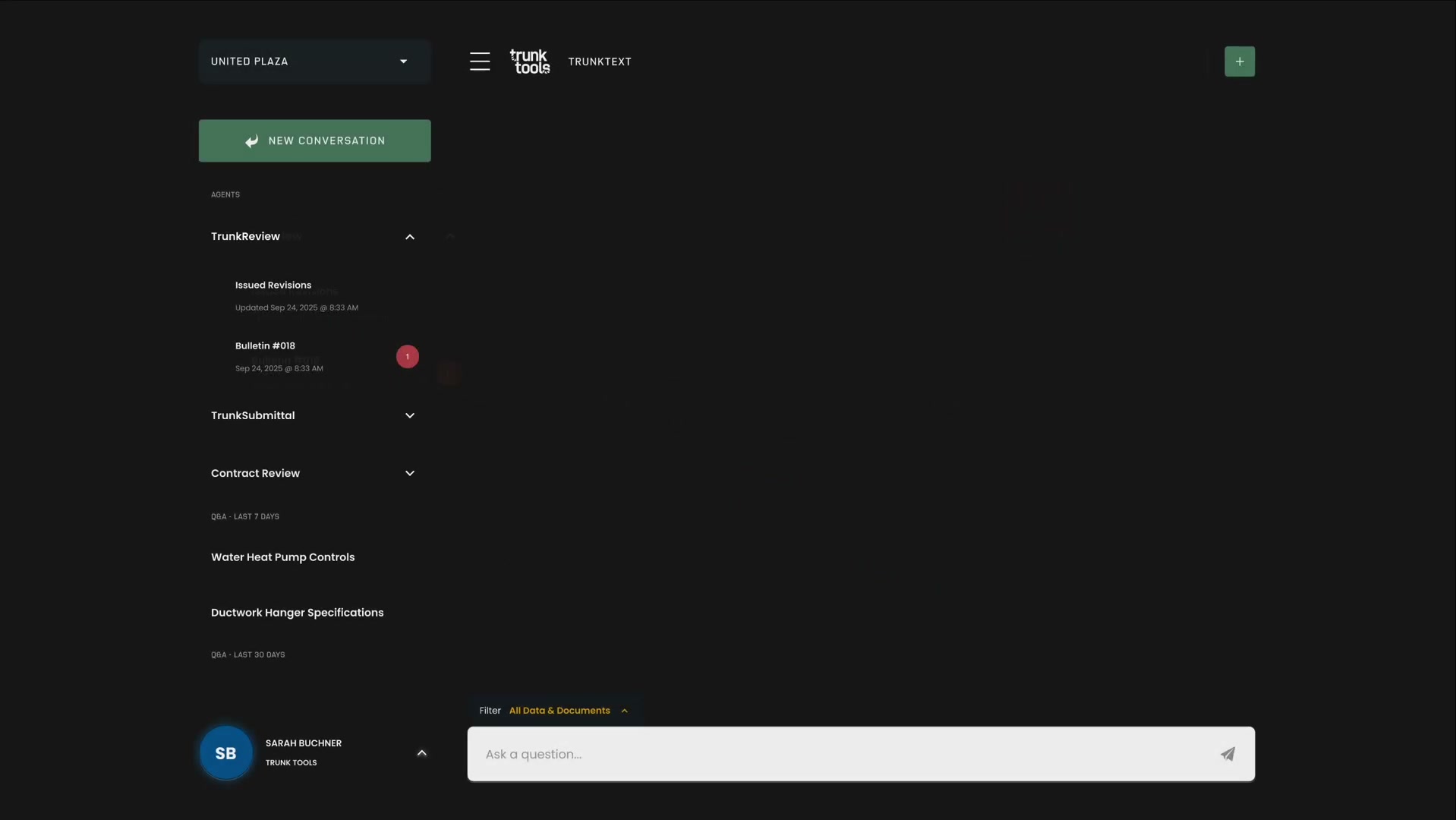
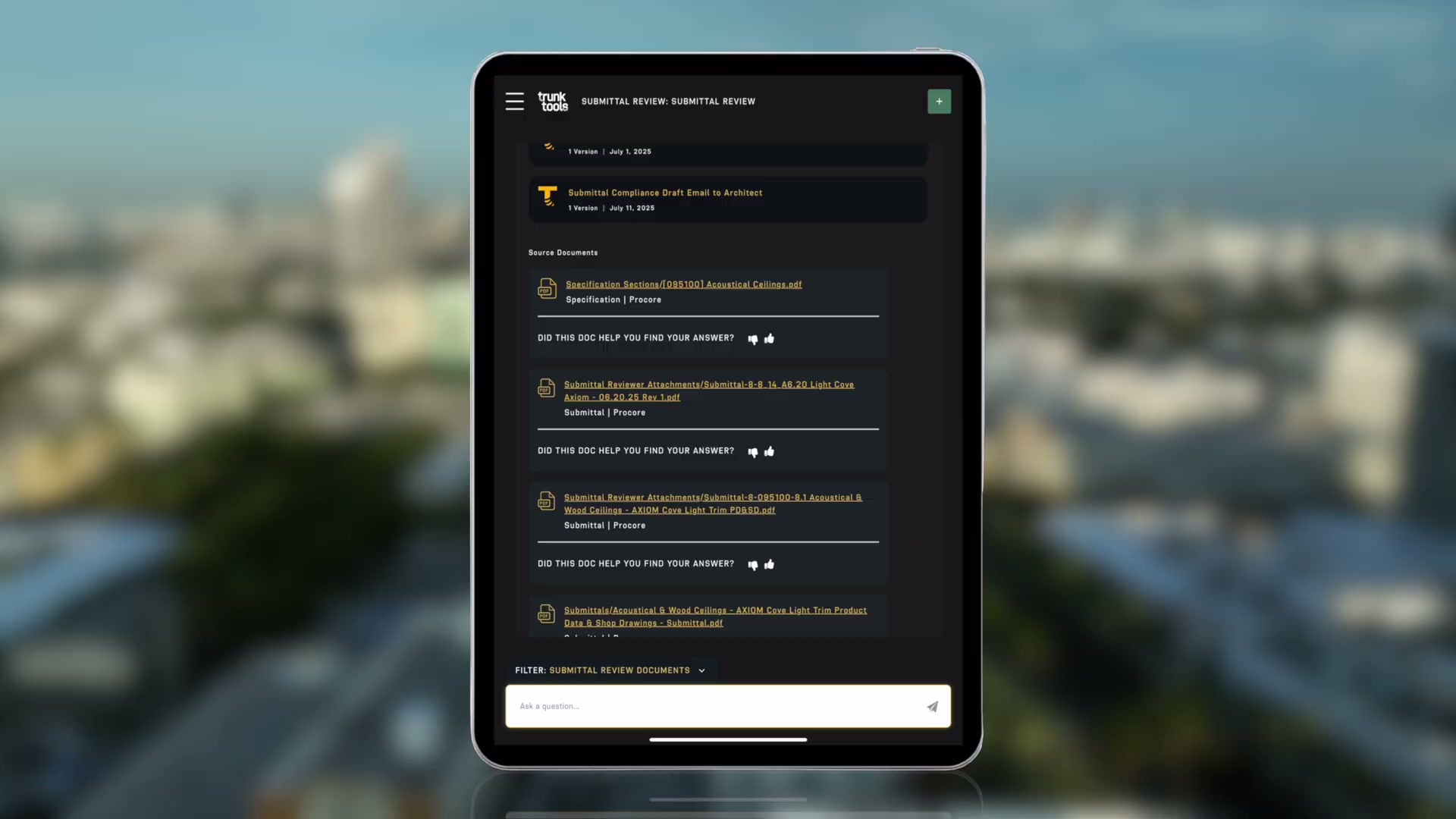
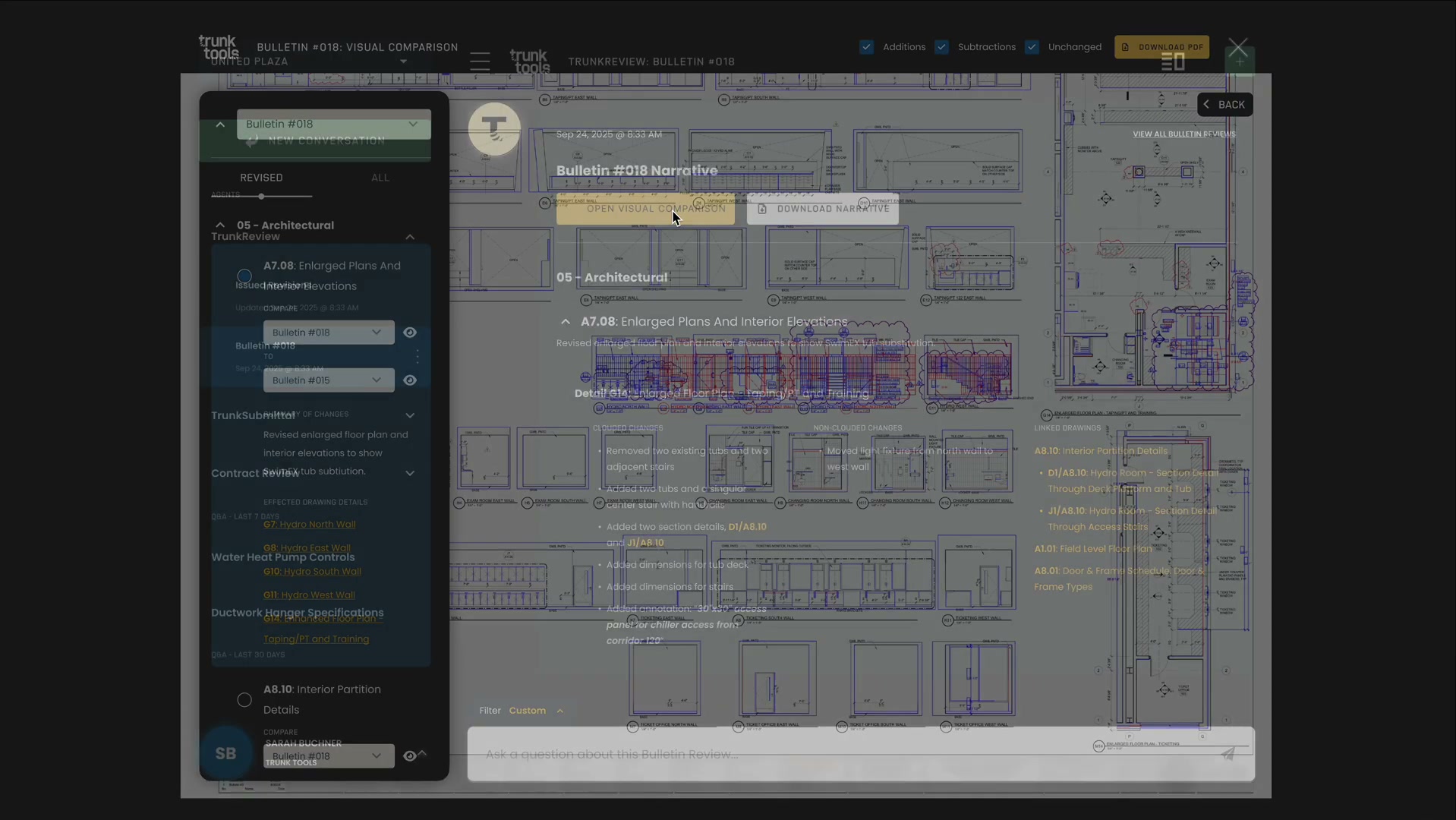
The Trunk Tools web app: a dark dashboard with the agents in the left nav (TrunkReview, TrunkSubmittal, Contract Review), a “Bulletin Narrative” view breaking a drawing revision into clouded / non-clouded / linked changes by detail, “Open Visual Comparison” and “Download Narrative” actions, source-document links, and an “Ask a question about this Bulletin Review” chat box at the bottom. This is the agent-plus-Q&A pattern that defines the product.
TrunkReview — the drawing-revision agent
The visual-comparison mode: the revised drawing with clouded changes highlighted, a left panel listing revised sheets by discipline with summary-of-changes bullets and effected-drawing-detail links, and a zoom overlay on a specific clouded revision. This is the AI reading drawing revisions and explaining what changed.
In the field — who it is for
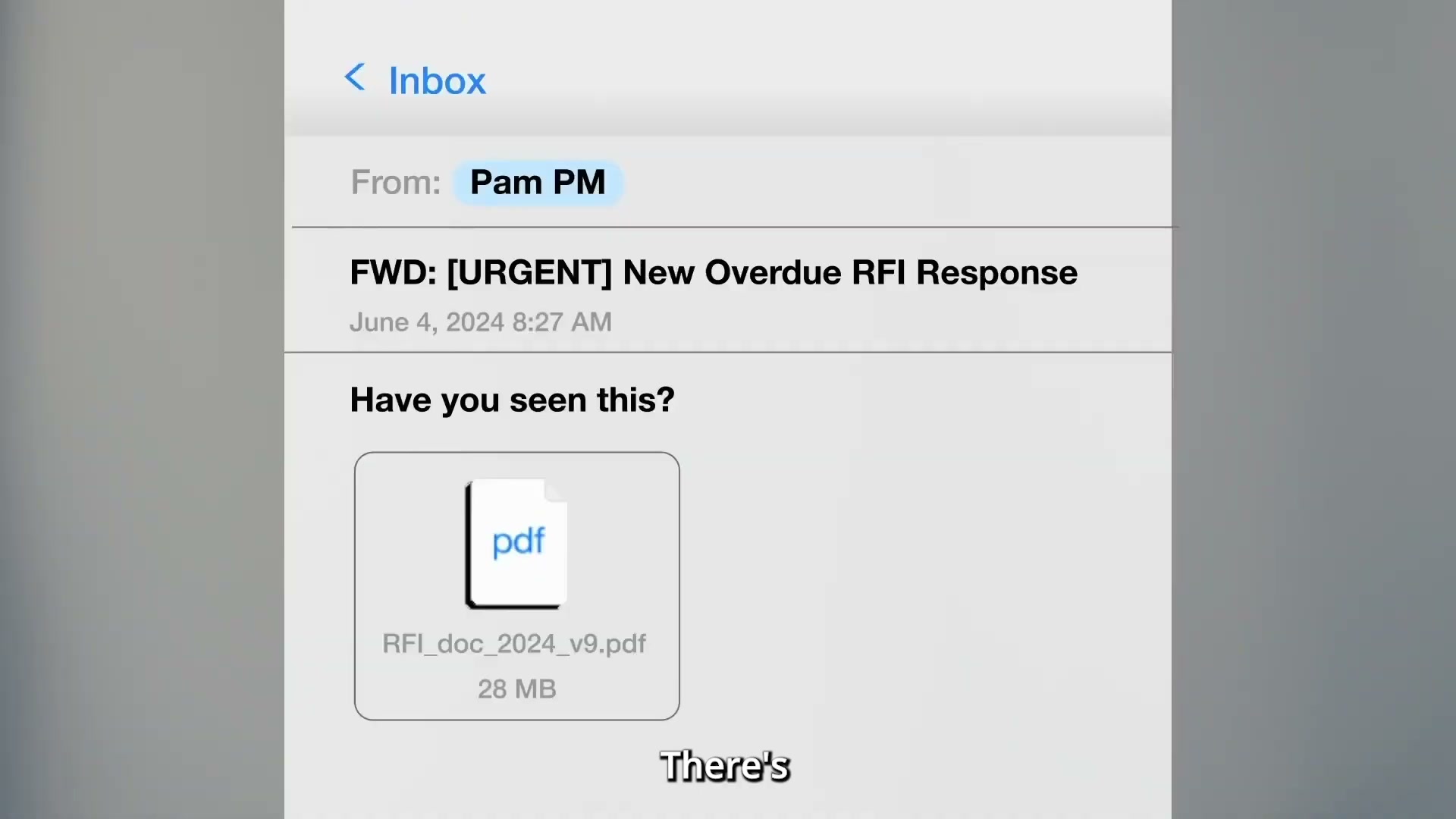
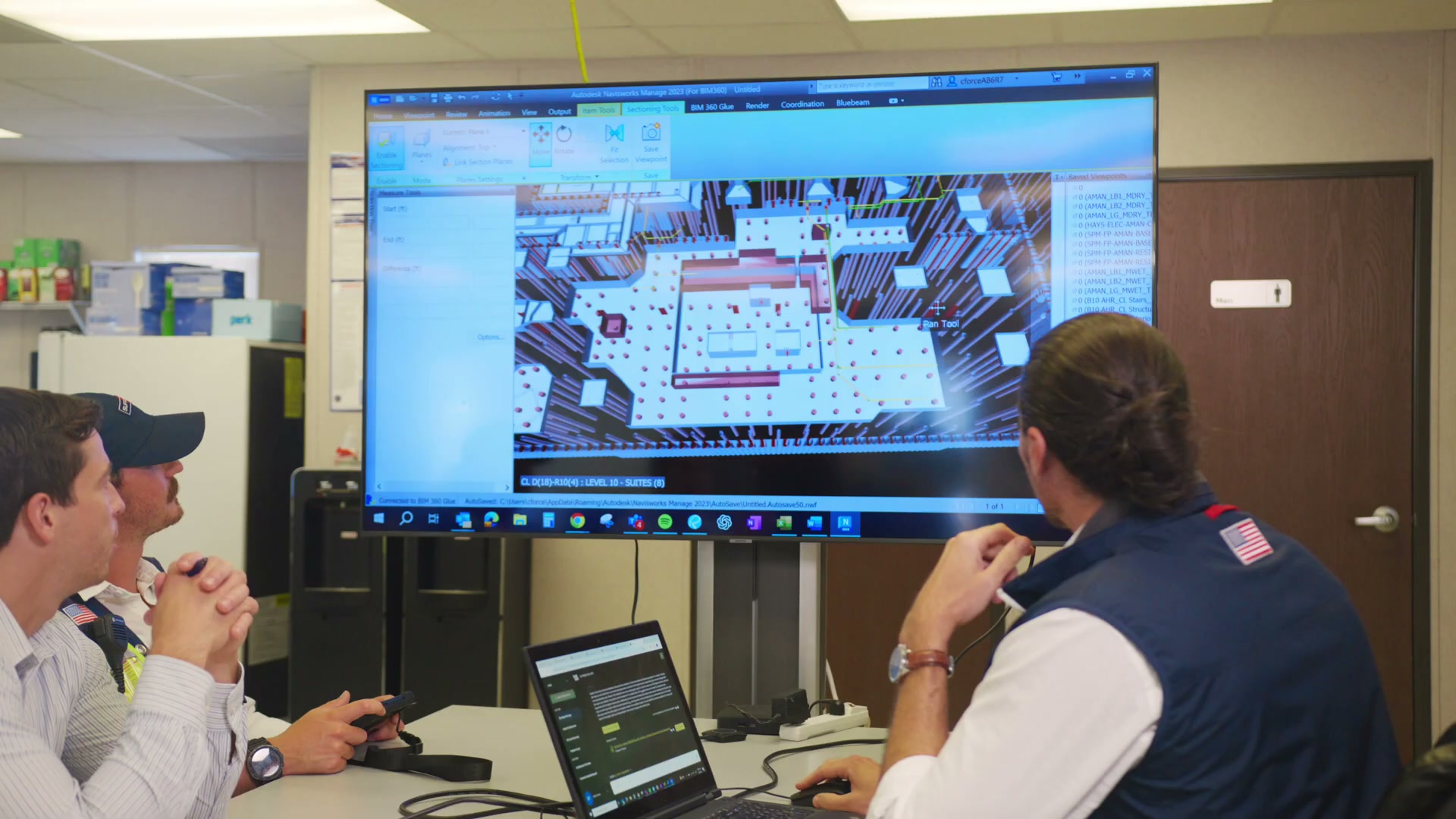
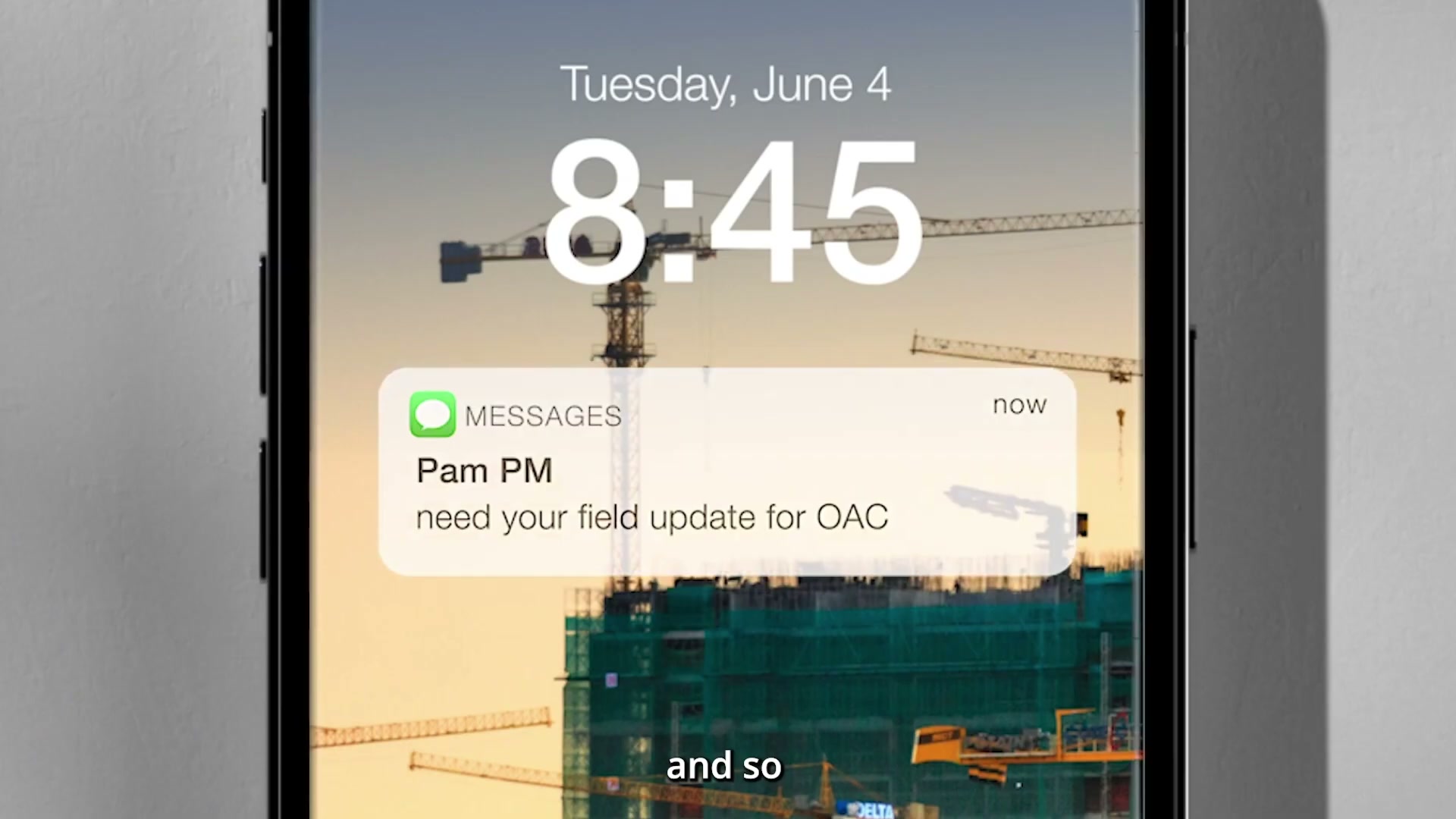
The brand framing: a superintendent on a tablet on a high-rise floor, and Suffolk crews on a Miami jobsite — the field-knowledge persona Trunk Tools sells to.
The team and the raise
The funding-round interview (founder/CEO) — the Series-B story that funds the roadmap.
Whole-set contact sheet
For a single-glance overview of every harvested frame: contact_video.jpg (all walkthrough/brand-video frames). There is no App Store contact sheet — Trunk Tools has no consumer app.
Sources and method
- Product surface / agents / integrations / metrics: vendor site read directly —
trunktools.com(/product, home, Suffolk case study) corroborated byraw/exa_answer.jsonand third-party reviews (DataDrivenAEC, softwarefinder, B2BSalesTools) inraw/exa_search.json. - The change/claims-entitlement absence: confirmed against the vendor’s named-agent list (no claims agent) and independently by DataDrivenAEC (“Not covered: Change orders, variations, claims, or cost recovery”).
- Funding / founder / growth: Insight Partners Series-B announcement, Trunk Tools Series-A page, CNBC, ENR (via WebSearch).
- Platform-dependency / Procore API cutoff: ENR “Trunk Tools Removed From Procore API Access,” AEC-Business “Platform Power” analysis (via WebSearch/WebFetch) — central to the openness and durability read.
- Reception caveat: no Capterra/G2 review corpus exists for this early-stage vendor; reception built from press, case studies and vendor claims, flagged as such. App Store search returned only unrelated apps (“Junk In Our Trunk,” “Chippy Tools”), confirming no consumer app — the six auto-downloaded screenshots were deleted as not Trunk Tools.
- Screens: walkthrough/brand-video frames in
screens/video_frames/(TrunkReview UI, brand B-roll, funding interview); method and gaps in screens/README. - Stages skipped: hi-res App Store harvest (no app); Capterra DOM scrape and
aggregate_dom.py(no corpus — AI-native thin-data competitor). Method and the discipline of not asserting an absence without evidence: _RESEARCH-METHOD.