Dashboard: Dashboard · method: _RESEARCH-METHOD · market grid: _MARKET-PROBLEM-MAP · opportunity lens: _OPPORTUNITY-LENS · landscape: competitor-landscape-report
Purpose: decide whether we can enter the part of the market Pype occupies and build a profitable, defensible product. Pype matters less as a target than as a warning. It was, until 2020, exactly the thing we are contemplating building — an independent AI document tool that read construction specifications and drawings and generated the submittal log automatically. Then Autodesk bought it and folded it into Autodesk Construction Cloud. This brief explains what Pype does, then reads the acquisition as a live precedent for our single biggest walk-away risk: an AI document tool absorbed by the platform that owns distribution. Evidence (24-review Capterra sample, 48 walkthrough frames, vendor and acquisition sources) is at the end.
Snapshot
| What it is | AI that reads construction specifications and drawings and auto-generates the submittal log, plus a closeout document-collection tool. Four products: AutoSpecs, SmartPlans, Closeout, eBinder |
| Core job it does | Replaces the weeks of manual spec-reading a submittal manager does to build a submittal register; collects and indexes closeout documents at handover |
| Who buys | General contractors (submittal/VDC/project managers) and specialty subs; US-centric; mid-to-large GCs are the heartland (a third of reviewers are 1,000+ staff) |
| Business model | Was a standalone startup; now an Autodesk product sold through Autodesk Construction Cloud / Forma. Quote-based, ~US$2,500 floor; bundled into ACC tiers |
| Openness | No public Pype developer API; lives inside ACC, integrates with Autodesk Build and (historically) Procore via export |
| Public ratings | Capterra ~4.3 (24 reviews, ~92% vendor-solicited); no standalone consumer app |
| Strongest areas | Submittals / spec-to-log extraction; closeout/handover document assembly |
| Weakest areas (our interest) | Everything commercial — cost, change/variation/claims, benchmarking-for-pricing; it is a document tool, not a money tool |
| Our verdict | Not a target — it is the precedent. The platform owner already bought the standalone AI tool. Treat as a caution: do not build a feature an Autodesk-class incumbent can absorb |
Where Pype plays across the market
Scored 0 (not addressed) to 100 (best-in-class) against the 21 areas in _MARKET-PROBLEM-MAP, sorted by coverage. Pype is deliberately narrow: it does one document workflow extremely well and almost nothing else.
| Problem area | Coverage | Note |
|---|---|---|
| RFIs / submittals / document control | 88 | The product. Spec-to-submittal-log extraction, the submittal register, version compare |
| O&M / handover / golden thread | 62 | Closeout + eBinder: collects, indexes, hyperlinks the turnover package |
| Quality / QA-QC / snagging | 40 | Extracts QA/QC submittals, tests and inspections from the spec; flags potentially missing ones |
| Project management (system of record) | 25 | Not a SoR itself; now feeds Autodesk Build / ACC, which is |
| Prequalification / procurement | 25 | SmartPlans exports product/equipment/finish schedules to a procurement log |
| Historical cost / benchmarking | 25 | ”Suggest submittals” compares the spec to historical project data — but it benchmarks submittals, not cost |
| Insurance and risk | 18 | Missing-requirement detection is sold as risk mitigation; no risk module |
| BIM / design coordination | 15 | SmartPlans reads PDF drawings (computer vision) but extracts data; it does not coordinate the model |
| Estimating / takeoff | 12 | Schedules pulled from drawings feed precon, not a takeoff engine |
| Progress / production tracking | 8 | Not addressed beyond submittal status |
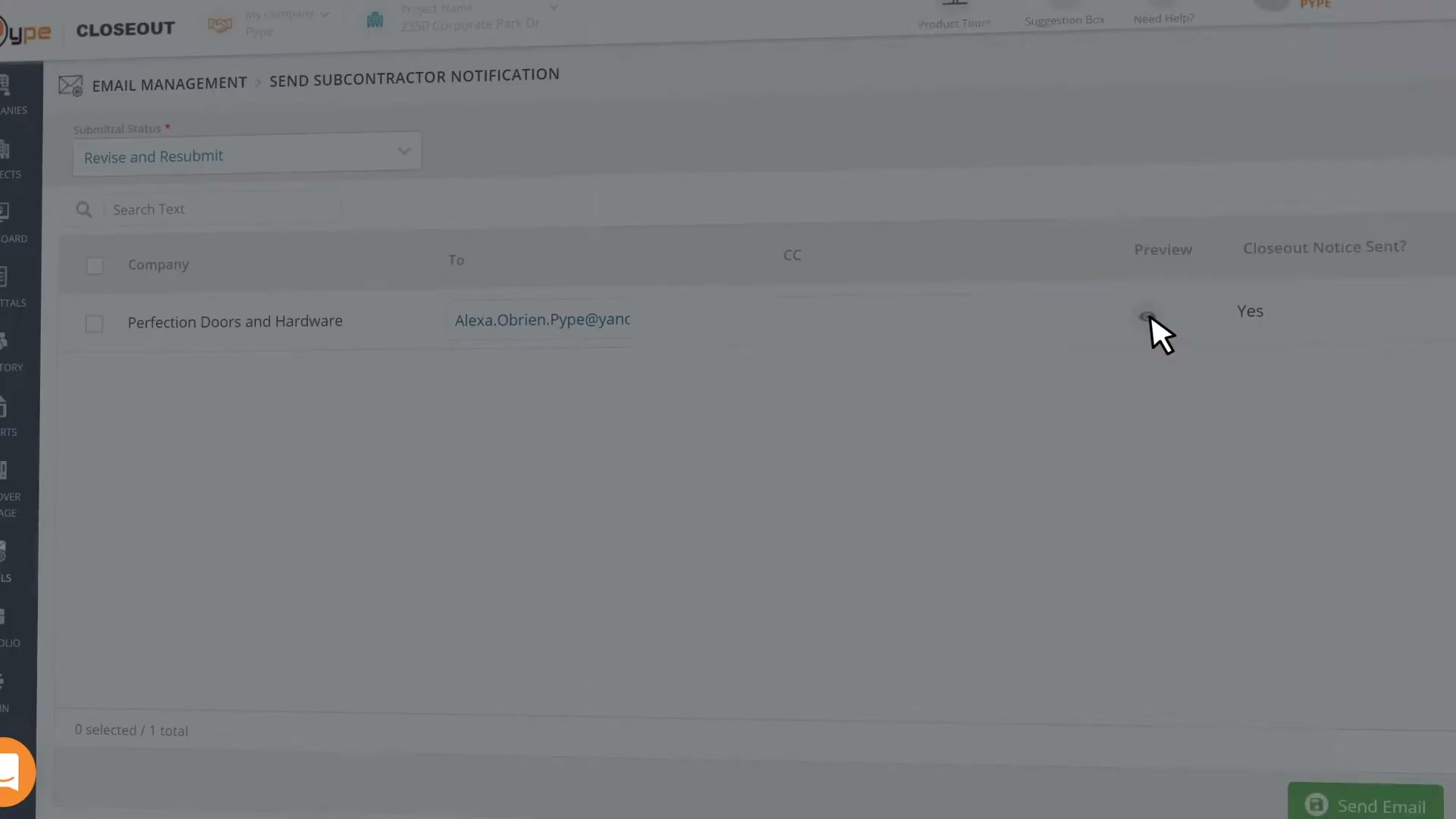
| Communication / client collaboration | 8 | Notifies trades to submit closeout docs; no portal |
| Cost management / forecasting | 5 | Not addressed |
| Change / variations / claims / entitlement | 5 | Not addressed |
| Field management / daily reporting | 0 | Not addressed |
| Time, labour and workforce | 0 | Not addressed |
| Safety and compliance | 0 | Not addressed |
| Scheduling / programme | 0 | Not addressed |
| Reality capture / drone | 0 | Not addressed |
| Accounting / AP-AR / payroll | 0 | Not addressed |
| Equipment / asset / material | 0 | Not addressed |
| Bid / tender management | 0 | Not addressed |
Takeaway: Pype is a single-workflow specialist on the document-control axis (area 11), with a real second leg in handover/closeout (area 17). It is the opposite of a platform: almost every operational and commercial area scores zero. That narrowness is the point — and it is also why it was acquirable. A one-workflow AI tool is a feature to a platform, and Autodesk bought the feature rather than letting it grow into a platform.
The input side — how work gets captured
Pype’s “input” is not a person filling in a form on a phone — it is a document. The contractor uploads the project’s specification book or drawing set, and the AI reads it.
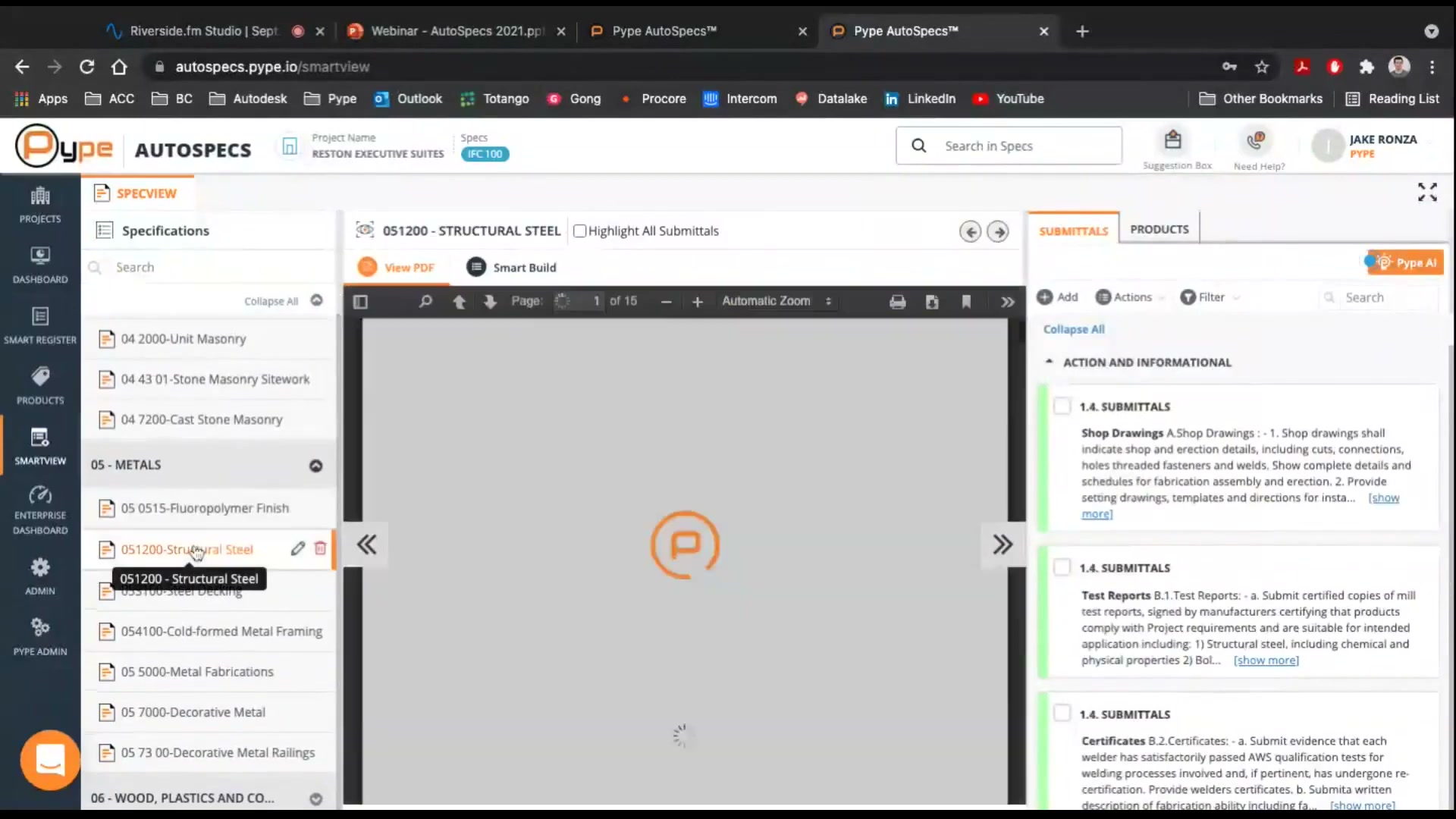
- Captured: the project specification book (AutoSpecs) and PDF drawing sets (SmartPlans). From these the AI extracts submittal requirements — action submittals, product data, manufacturer/product lists, QA/QC submittals, tests and inspections, mock-ups, and closeout requirements.
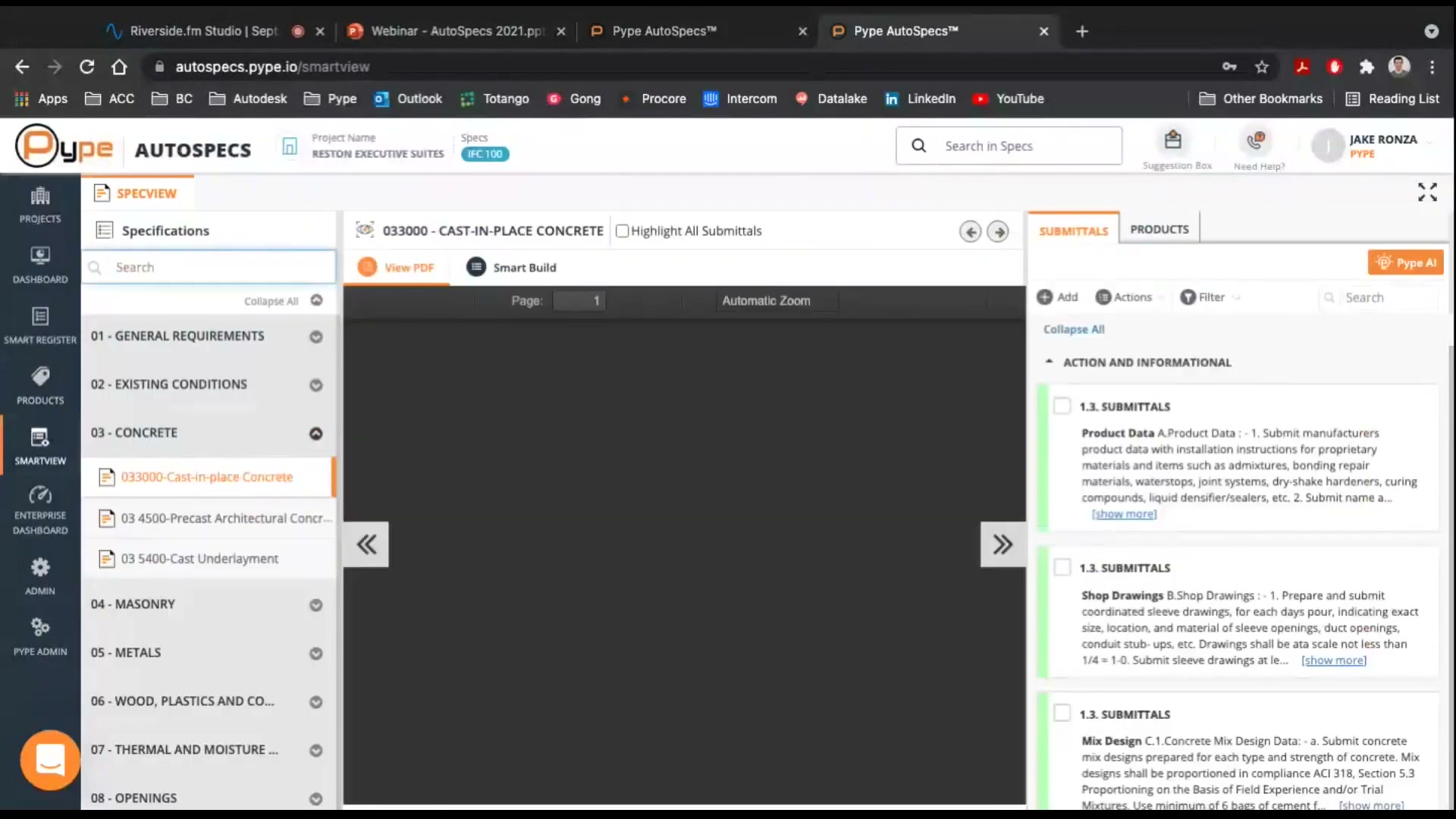
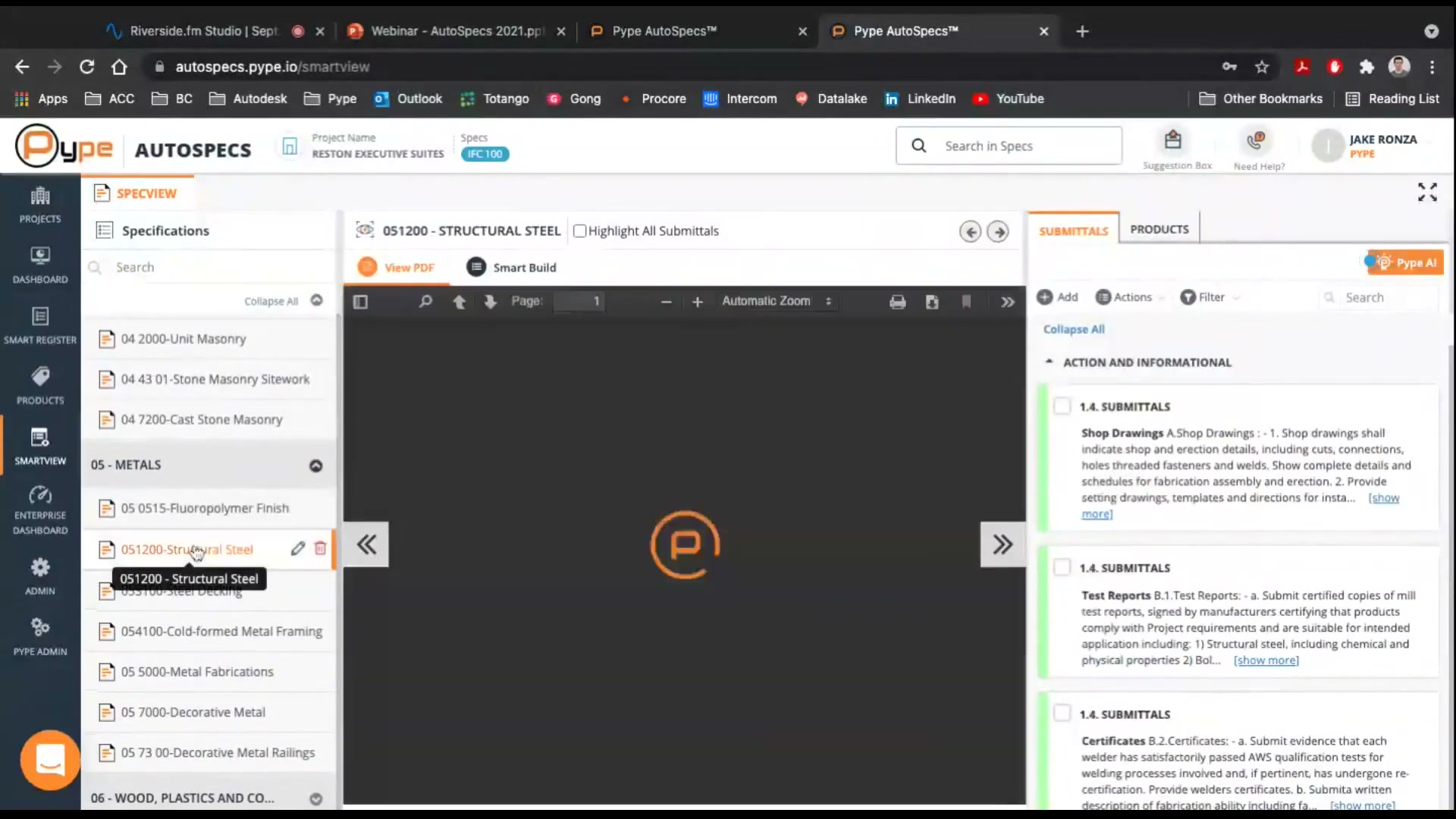
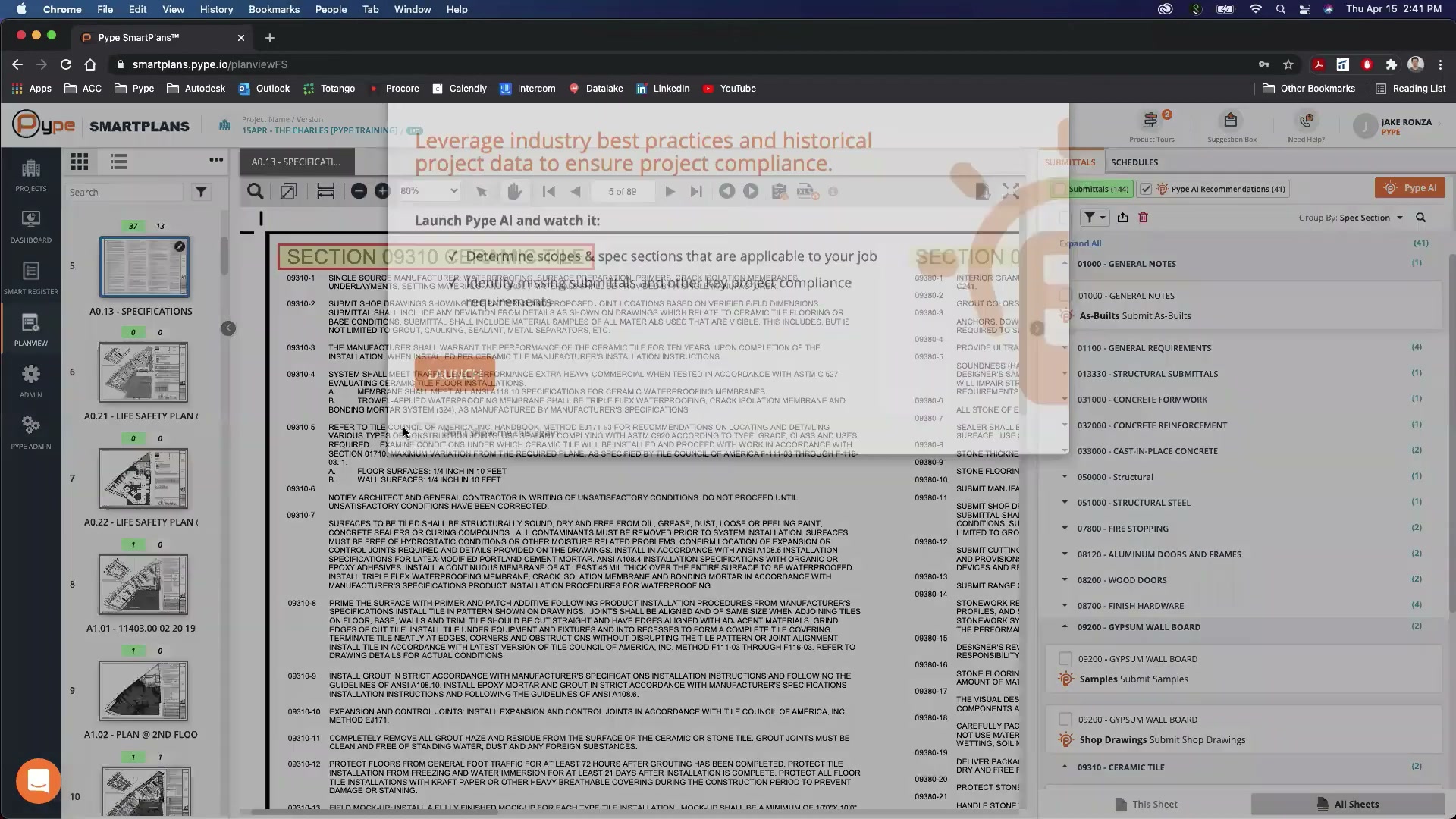
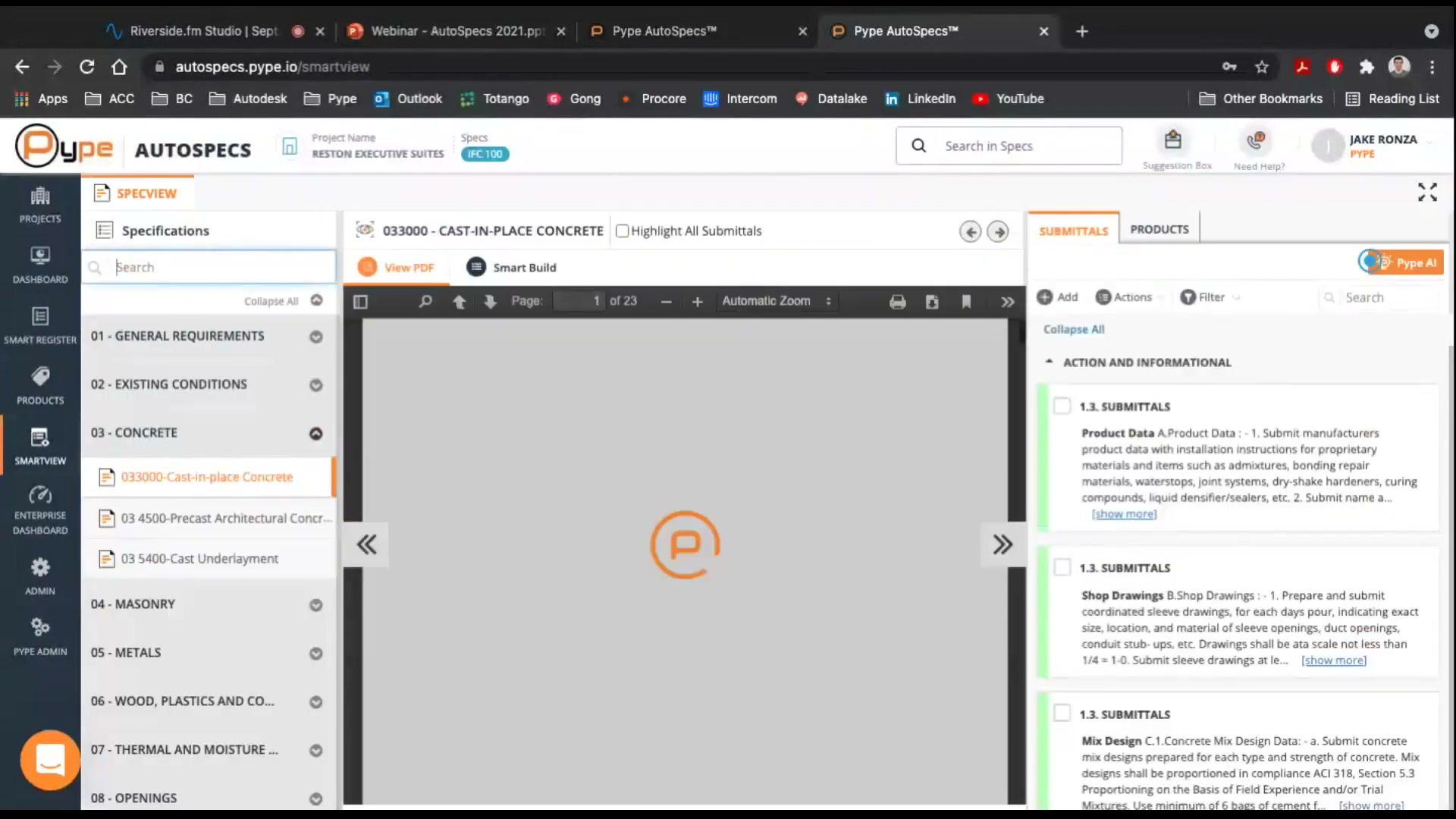
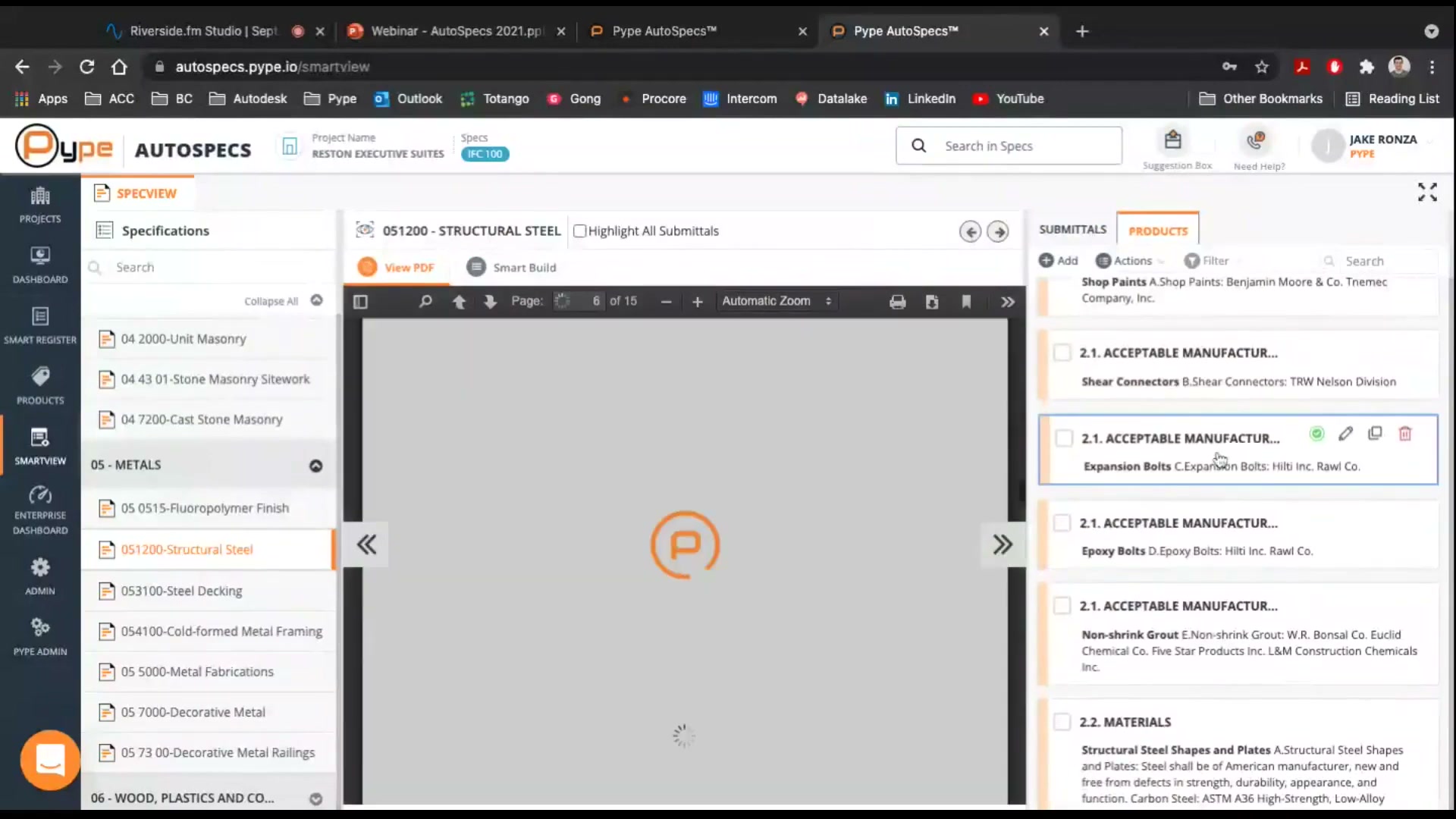
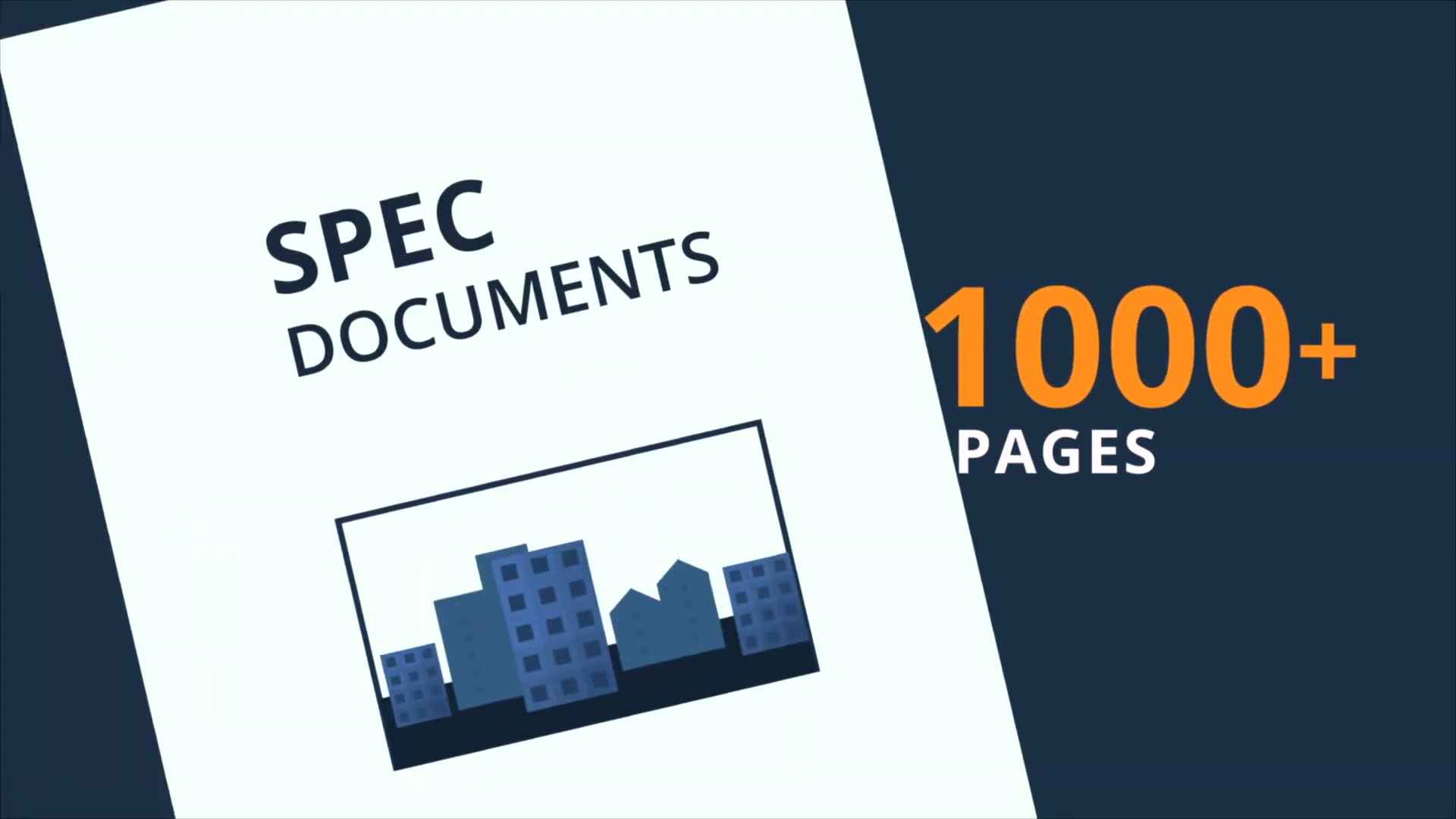
- Input methods: drag-and-drop upload of the spec PDF (often 1,000+ pages) or the drawing set; the AI then parses section by section (the CSI MasterFormat divisions — Concrete, Masonry, Metals, and so on are visible in the SpecView left rail).
- Onboarding / ease: rated well on ease (~4.4 in the sample) but with a consistent caveat — first-time users need training to use the product to its full value. The vendor has acknowledged the learning curve and points to UI updates.
- Friction (from reviews): the AI over-extracts. Reviewers repeatedly say the generated list is “too vast,” picks up non-submittal items, duplicates or over-splits entries, and that the Excel export has odd line breaks and formatting. It also misses some local/government (DOT) specs. The output is a strong draft, not a finished register — humans still review and prune.
The management side — what the office sees
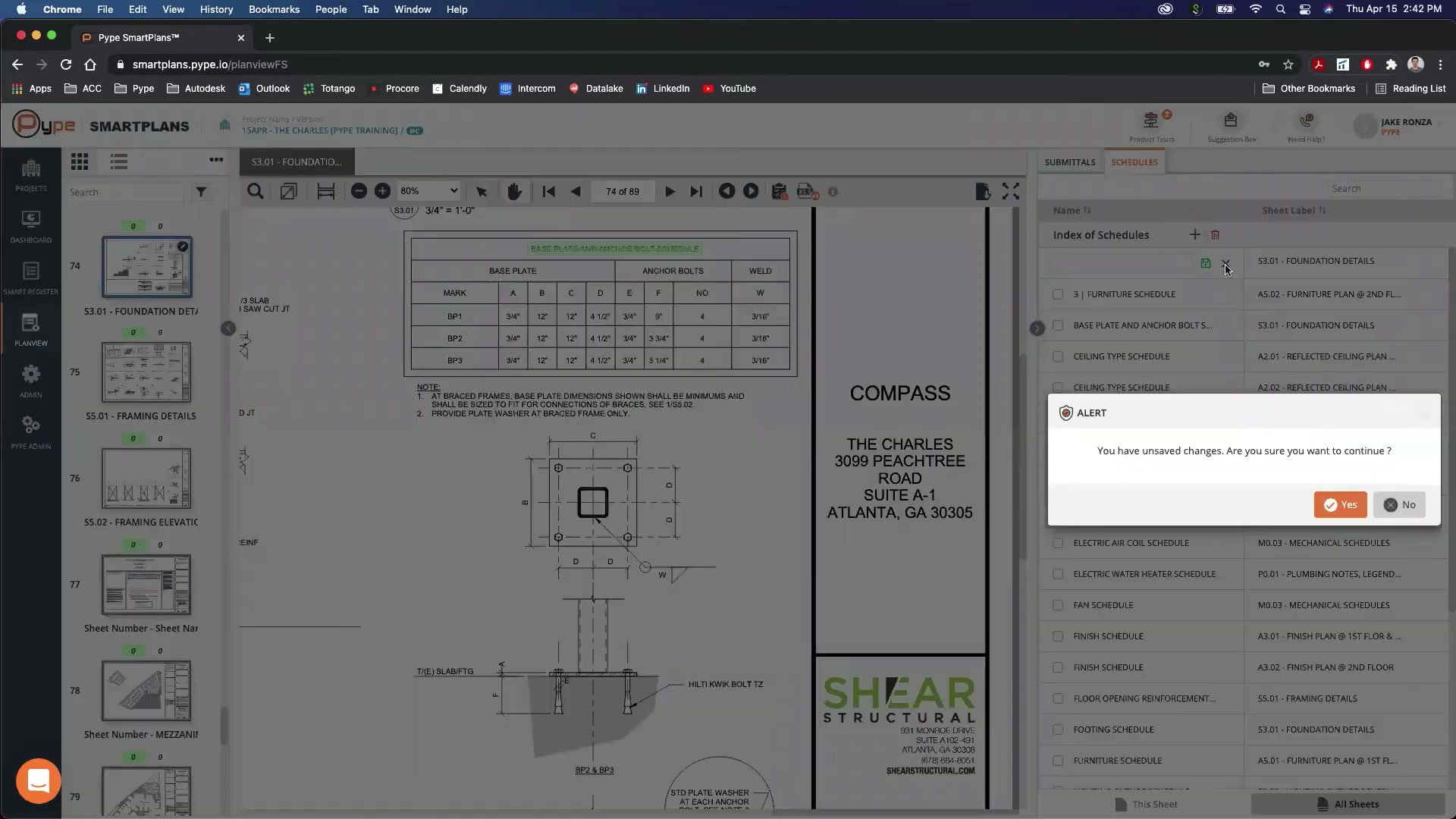
- Lands in the dashboard: the submittal register itself — every required submittal organised by spec section, filterable by type (action, product data, closeout, QA/QC). SmartPlans adds the same for drawings, plus exportable product/equipment/finish schedules. Closeout shows a turnover dashboard tracking which trades have submitted which documents, ending in an indexed, hyperlinked eBinder.
- Who consumes: the submittal manager / project engineer building the register at the start of a job; the VDC or project team; at the end of the job, whoever assembles the closeout package for the owner.
- Valued most: time. The single loudest theme in the reviews is “weeks to minutes” — what used to take a project engineer weeks of reading a spec book now takes minutes after upload. Accuracy of extraction is praised second.
- Pains: customising the generated log to the GC’s or owner’s own template is awkward; saved filters and bulk editing are weak; the export-to-Procore handoff was clunky. Several reviewers note the data still has to be cleaned before it is usable.
- The structural point (evidenced): Pype produces one artifact — the submittal log — and hands it to the system of record. Before the acquisition that system of record was often Procore (reviewers describe exporting Pype output into Procore). After the acquisition Autodesk made the obvious move: AutoSpecs publishes the log directly into Autodesk Build with no second login. The tool that used to feed everyone now feeds Autodesk first. That is the whole acquisition thesis in one workflow.
Where the value actually comes from
| Sales story (what wins the trial) | Real source of stickiness (what makes it hard to leave) |
|---|---|
| “Build your submittal log in minutes, not weeks; AI catches the requirements you would miss” | The proprietary extraction quality plus the historical-spec corpus behind “suggest submittals”; and, since 2020, being native inside Autodesk Construction Cloud where the submittal then lives |
| (Pre-acquisition: stickiness was thin — Pype produced a log and exported it elsewhere. The acquisition is what gave it durable stickiness, by wiring it into the platform of record.) |
- Do not attack: the spec/drawing extraction quality (it is genuinely good and built on a large training corpus), and the now-native ACC distribution. Both are hard to match — the first on data, the second because Autodesk owns the channel.
- Where value stops: Pype turns documents into a submittal log and a closeout binder. It does not touch cost, change, claims, entitlement, the daily field record, or any benchmarking that prices the next job. It is a precision tool on one slice of document control. Everything our commercial thesis cares about is outside its boundary — but, crucially, also outside the slice an Autodesk-class owner is motivated to defend with the same vigour.
What users say — both sides
Credibility first: the 24-review Capterra sample is ~92% vendor-solicited (22 of 24 vendor-referred-incentivized; 1 organic). Treat the averages as a near-best case. A caution on the raw aggregator: it computed value-for-money at 2.75 by counting blank ratings as zero. Excluding blanks, the real sub-ratings are ease 4.38, features 4.29, value 4.12 (n=16), support 4.88 (n=17), overall 4.29 — corroborated independently by GetApp (ease 4.4, features 4.3, value 4.1, support 4.9). Value-for-money is still the weakest axis, consistent with the ~US$2,500 floor and tens-of-thousands implementation cost cited for larger firms. Also note: most of these reviews predate or straddle the Autodesk acquisition and describe Pype as a standalone tool, frequently exporting to Procore.
| Praised | Criticised |
|---|---|
| Time saved: “weeks to minutes” to build a submittal register (the dominant theme) | Over-extraction: generated list “too vast,” picks up non-submittal items, duplicates/over-splits |
| Accuracy of spec extraction; “takes human error out of the equation” | Customising the log to a company/owner template is not straightforward |
| Easy import/export; integrates into other systems “like Procore” | Saved filters, mass edit, export formatting (odd Excel breaks) are weak |
| Strong, responsive customer support | Learning curve; first-time use feels overwhelming |
| Quickly identifies and prioritises required submittals | Misses some local/government (DOT) specs; “yet another software to use”; partners not all on it |
- Representative positive: “What used to take weeks creating a submittal register now takes minutes after you upload the spec. It is more accurate and takes human error out of the equation.”
- Representative negative: “While it scrubs the specs and pulls everything out, the list was too vast to be useful. We had to go back through the generated list to simplify it.”
- Signal for us: the praise is narrow and real (one document task, done fast). The criticism is the tell — the AI produces a noisy draft that a human still cleans, customises and reconciles to a template. That residual human judgement layer is where the next generation of this tool competes, and it is the kind of work cheap models now do better than 2019-era ML. But the buyer for it is the same submittal manager Autodesk already reaches.
The opportunity for AI in this space
- This space is the AI-amenable layer, and Pype proved it years ago. Reading a 1,000-page spec and a drawing set to extract structured requirements is exactly LLM-shaped, document-heavy work. Pype validated both the job and the willingness to pay. Modern models would do the extraction more accurately and far more cheaply than Pype’s 2018-vintage computer-vision/ML stack, and could close the very gaps users complain about (noise, over-splitting, template-fitting, government specs).
- But this is the worst possible place to attack head-on. The platform owner has already bought the category. Autodesk owns the distribution, owns the spec corpus, and has wired the output into its system of record. A better standalone AutoSpecs is a feature Autodesk can match or bundle, sold to a buyer it already has. This is the textbook “distribution-owner bundles you” situation — and Pype is not a hypothetical example of it, it is the completed transaction.
What this teaches us about what we would build:
- Do not build a better Pype. A standalone AI submittal/spec extractor is the exact shape of tool that gets absorbed: narrow, document-only, no field data loop, no commercial P&L line, and adjacent to a platform that wants it. Pype’s history is the cautionary template.
- If we build adjacent AI here, anchor it to a P&L line a document tool cannot reach — turning the same captured documents and field evidence into recovered money (change, variation, delay, entitlement) and into historical benchmarking that prices the next job. That work is also document-heavy and LLM-shaped, but it sits on the commercial axis where Autodesk’s submittal/closeout franchise does not, and where the buyer (commercial/QS, not the submittal clerk) is different.
- Niche to target first: the commercial-entitlement layer for UK/mid-market contractors — away from Pype’s US-GC submittal heartland and outside the document-control slice Autodesk defends.
How open the platform is
- API / integrations: there is no public, documented Pype developer API to build on. Pype now lives inside Autodesk Construction Cloud and Forma; AutoSpecs publishes submittal logs natively into Autodesk Build, and historically users exported to Procore by hand. Any programmatic access runs through Autodesk’s platform APIs (ACC/Forma), on Autodesk’s terms, not Pype’s.
- What it means: you cannot sit an AI layer on top of Pype the way you can on an open field tool — there is no open seam, and the seam that exists belongs to Autodesk. This is itself a lesson: once the standalone tool is absorbed, its data and its hooks become the platform’s, not the ecosystem’s. Build-on-top is not available here; the only plays are replace-on-a-different-axis or avoid.
Pype’s own AI — claims, shipping, and how far they can go
Pype is unusual among our targets: its AI is not a roadmap slide, it is the entire product, and it has shipped and been in users’ hands for years. The talk-versus-ship gap is essentially zero — which, for an entrant, is bad news, not good.
| Shipped feature | What it does | Where | Status |
|---|---|---|---|
| AutoSpecs spec extraction | AI reads the spec book and generates a draft submittal log (action, product data, QA/QC, closeout) in minutes | ACC / Forma | GA |
| Suggest submittals (Construction IQ) | Compares the current spec to historical project data to surface potentially missing submittals | ACC | GA |
| Version compare | Tracks changes between spec versions, flags modified submittal requirements | ACC | GA |
| SmartPlans drawing extraction | Computer vision + ML reads PDF drawings to pull submittals, product/equipment/finish schedules, compliance items; flags missing items vs a cloud corpus | ACC | GA |
| Closeout + eBinder | Automates collection of closeout docs from trades; compiles an indexed, hyperlinked, searchable turnover binder | ACC | GA |
- The AI is real, mature, and narrow — all of it serves the submittal/spec/closeout document workflow. None of it touches the commercial layer (no change narratives, no delay/claim evidence, no cost benchmarking), and Autodesk has no incentive to point it there when its commercial value is the data feeding ACC.
- The “how far can they go” question is different here than for other competitors. The constraint is not whether Pype/Autodesk can ship AI — they clearly can and did. The constraint, from our side, is that they have already shipped the AI we might build, own the distribution to sell it, and own the corpus that makes the suggest-missing feature work. Confidence that an Autodesk-owned Pype could extend its AI across the submittal/closeout document workflow it already owns: high. Confidence it extends onto the commercial/entitlement axis we care about: low-to-moderate, because that is a different buyer and product, not because they lack the capability. The window for us is the axis they are not pointed at, not the one they own.
Who actually uses Pype
From the 24-review Capterra sample (real, vendor-reported segmentation; small and solicited — treat as directional):
| Company size | Share | Avg overall |
|---|---|---|
| 11-50 employees | 8% | 4.5 |
| 51-200 employees | 17% | 4.5 |
| 201-500 employees | 12% | 4.33 |
| 501-1,000 employees | 12% | 4.33 |
| 1,001-5,000 employees | 33% | 4.12 |
| 5,001-10,000 employees | 12% | 4.33 |
| 10,001+ employees | 4% | 4.0 |
- The centre of gravity is large GCs — about 60% of reviewers are 1,000+ employees, the opposite of Raken’s small-contractor base. This is enterprise submittal management: big firms with big spec books and dedicated submittal/project engineers. Satisfaction dips slightly at the very top end, consistent with template-customisation and scale-editing complaints.
- Role: mostly project/office roles (project engineers, submittal/VDC managers); almost no field. The buyer and user is the office document manager, not the crew.
- Industry: overwhelmingly general construction; one architecture/planning reviewer.
- Alternatives considered / switched from: not captured in this small sample’s structured fields, but the review text repeatedly names Procore as the destination system Pype exported into — confirming Pype was, pre-acquisition, a best-of-breed AI front-end that fed whatever platform the GC ran (often a competitor’s). Autodesk buying it converted that neutrality into a captive feed.
Our read — can we enter and win?
Not here, not head-on — and the reason is the most useful thing in this brief. Pype is a worked example of our single biggest risk. It was an independent, well-built, AI-native document tool doing exactly the LLM-shaped extraction work we believe in. It had real users, real time-savings, and a willingness to pay. And it still got absorbed: in 2020 Autodesk bought it and wired it into Autodesk Construction Cloud, turning a neutral best-of-breed tool (that even fed Procore) into a captive feature of one platform. The standalone pype.io site now redirects to autodesk.com. This is the “distribution-owner bundles you” outcome, not as a hypothetical but as a finished deal — the precise event that should make us walk away from any fight on this axis.
The lesson is not “AI document tools are bad” — Pype proves the job is real and valuable. The lesson is where such a tool is defensible. A narrow document extractor with no field data loop, no commercial P&L line, and a workflow adjacent to a platform is acquisition bait. To be defensible, an AI document play must own a P&L line the platform does not (money recovery, not log generation), capture a compounding proprietary data loop the platform cannot easily replicate (claim outcomes, historical cost), and sit on an axis whose natural buyer is not the one the platform already sells to. That is the commercial-entitlement layer, not the submittal layer. Pype tells us to build one axis over from where it lived.
| Question | Our read |
|---|---|
| Where is Pype strong and off-limits? | Spec/drawing-to-submittal-log extraction and closeout assembly; now native to Autodesk Construction Cloud with Autodesk’s distribution and spec corpus behind it |
| Where is the verified gap? | Everything commercial — cost, change/variation/claims/entitlement, and benchmarking-to-price. Pype is a document tool, not a money tool |
| How hard for Autodesk to follow us on Pype’s own axis? | Trivial — they already own it. Do not compete there |
| How hard for them to follow us onto the commercial axis? | Moderate — different buyer, different product; their AI is pointed at documents-into-ACC, not money recovery |
| How much can cheap AI do here? | A great deal — extraction and drafting are LLM-shaped; modern models beat Pype’s older stack — but that capability advantage does not overcome Autodesk’s distribution on this axis |
| Is there a build-on-top seam? | No. No open Pype API; the seam belongs to Autodesk |
| What would make us walk away? | This exact scenario — and it has already happened here. So we walk away from the submittal/spec-extraction axis and build on the commercial axis instead |
| Overall | Pype is a caution, not a target. Do not build a better AutoSpecs; build the commercial-entitlement layer the platform owners are not absorbing |
The product / availability — ratings and reception
| Surface | Rating | Count | Note |
|---|---|---|---|
| Capterra | ~4.3 | 24 | ~92% vendor-solicited; mostly AutoSpecs, often pre/peri-acquisition |
| GetApp (mirror) | 4.3 | 24 | Corroborates sub-ratings (ease 4.4, value 4.1, support 4.9) |
| Standalone app | none | — | No consumer mobile app. Now part of Autodesk Construction Cloud, a web product |
There is no standalone Pype app to rate — it is a web product delivered inside Autodesk Construction Cloud / Forma. The App Store search for “Pype Autodesk” returns Autodesk’s own apps (AutoCAD), not a Pype app, confirming there is no separate consumer listing. Reach is therefore Autodesk’s reach: large and global, but mediated entirely by the ACC platform.
Screenshots
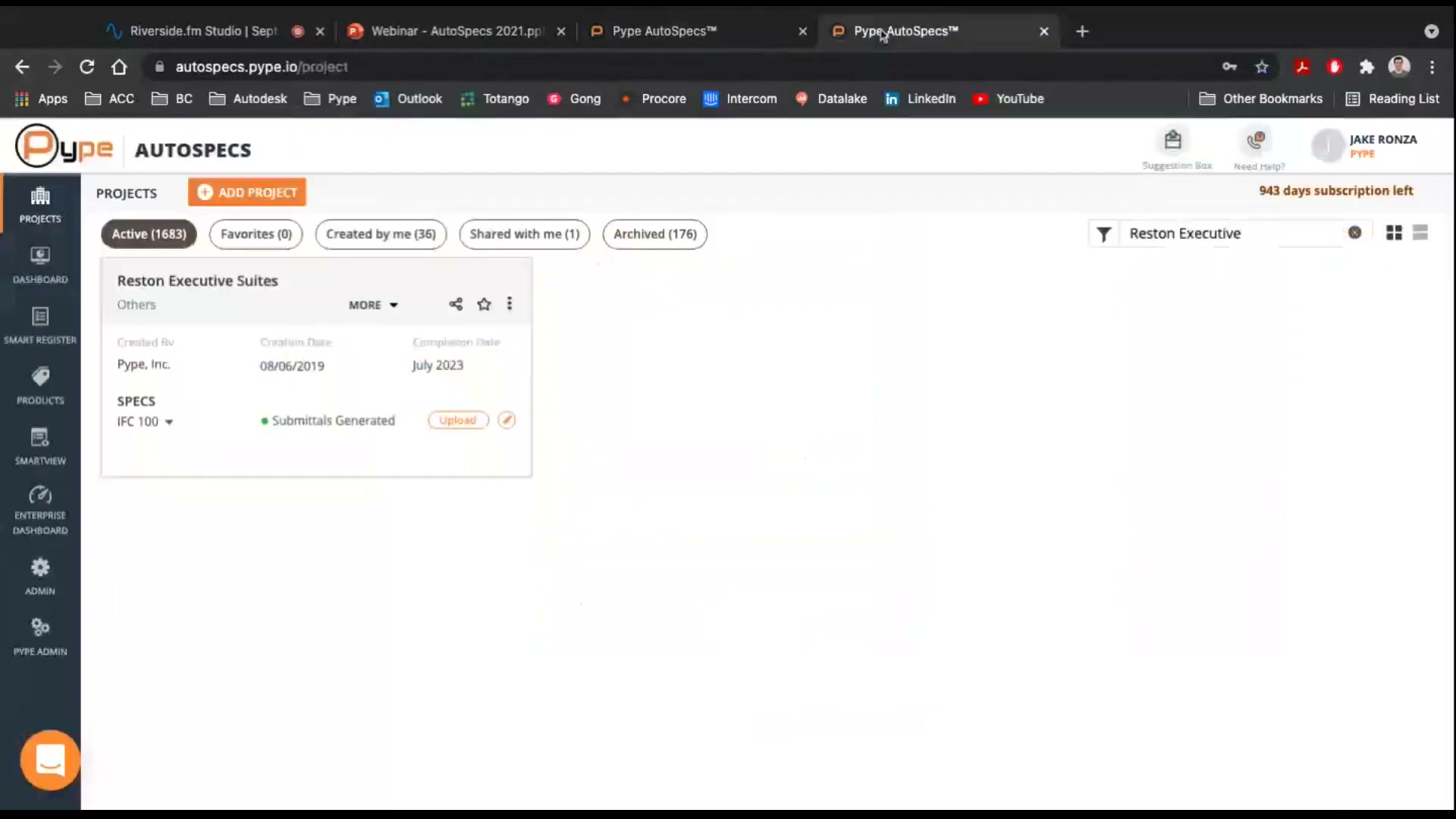
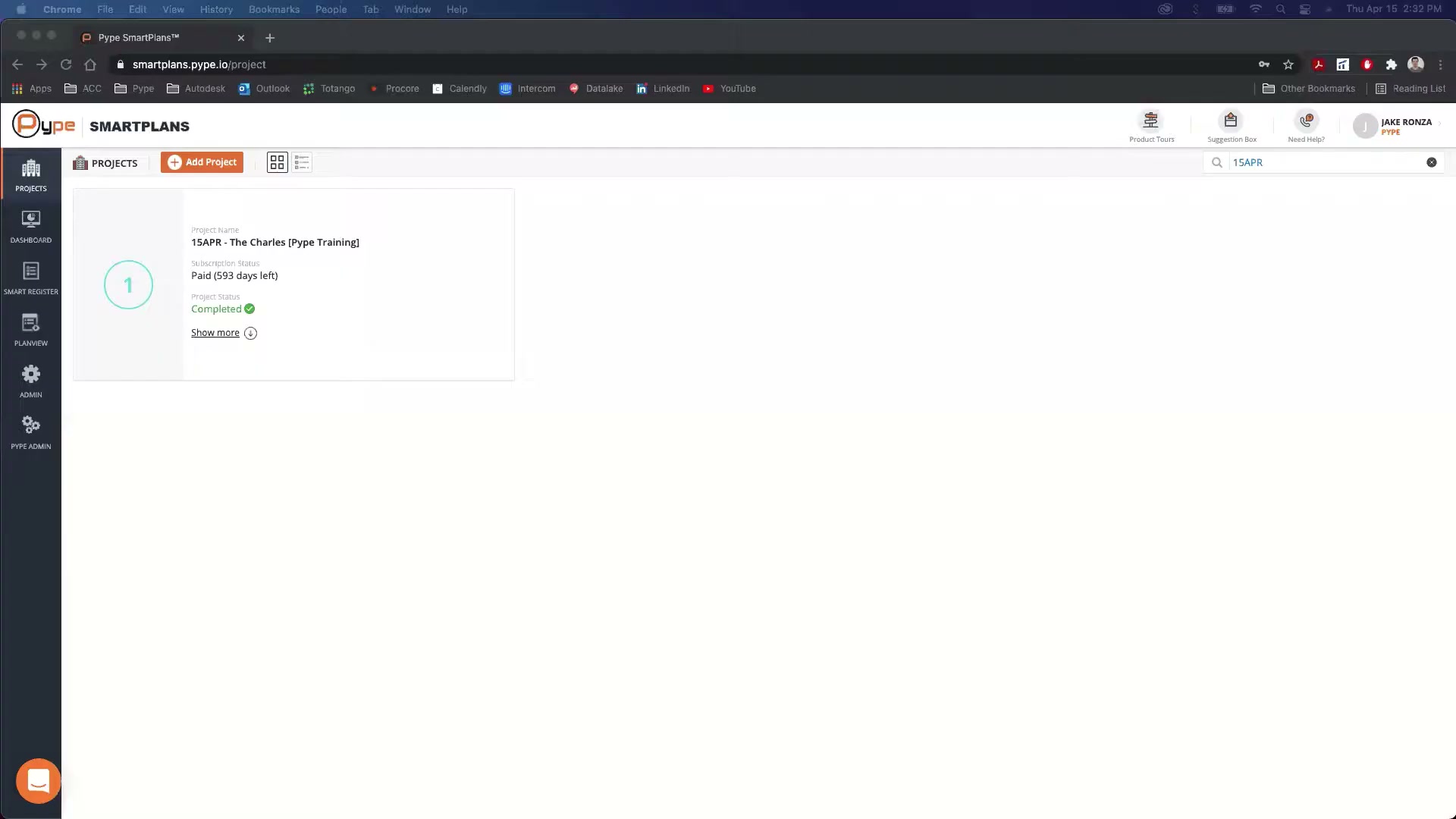
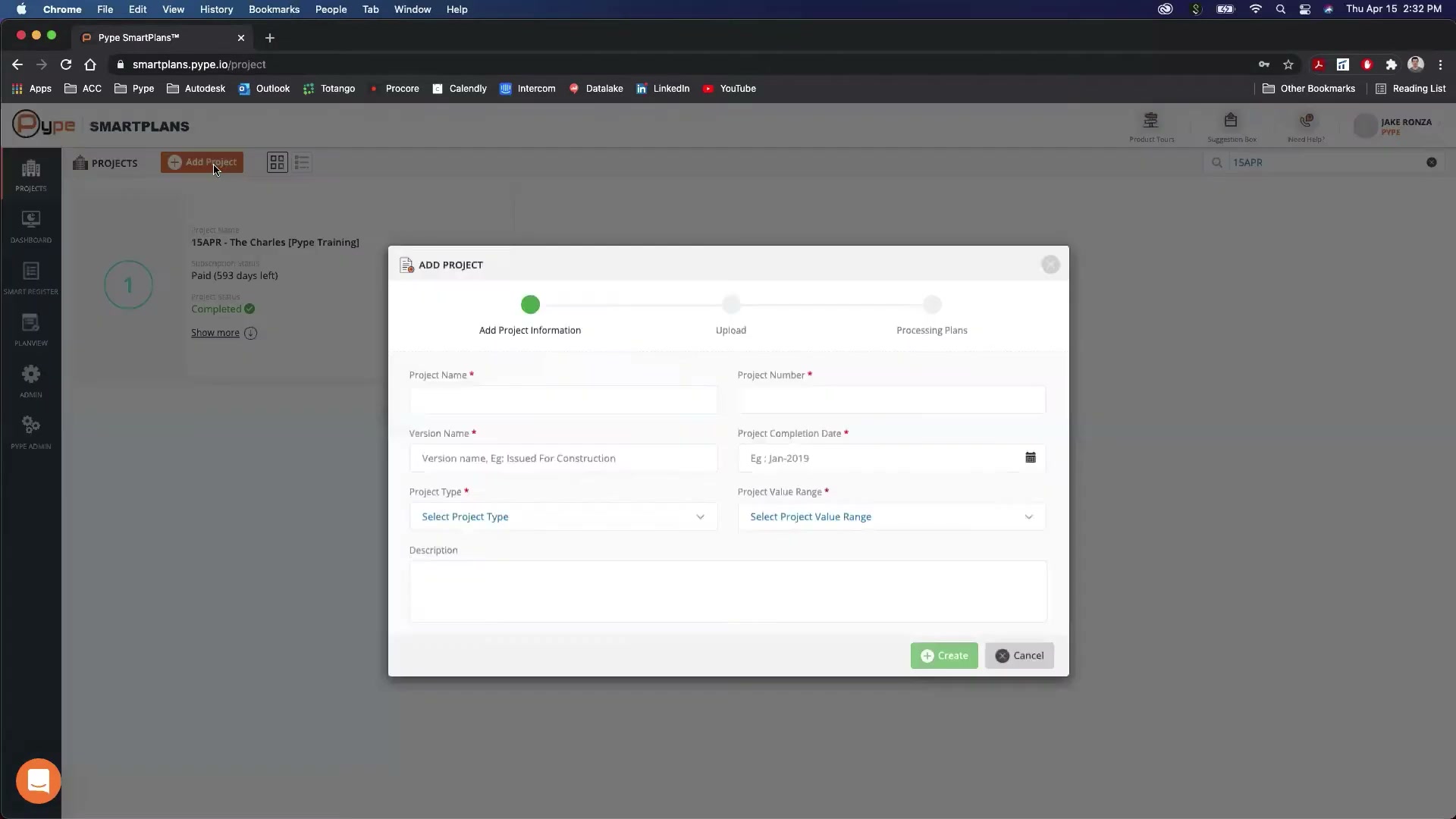
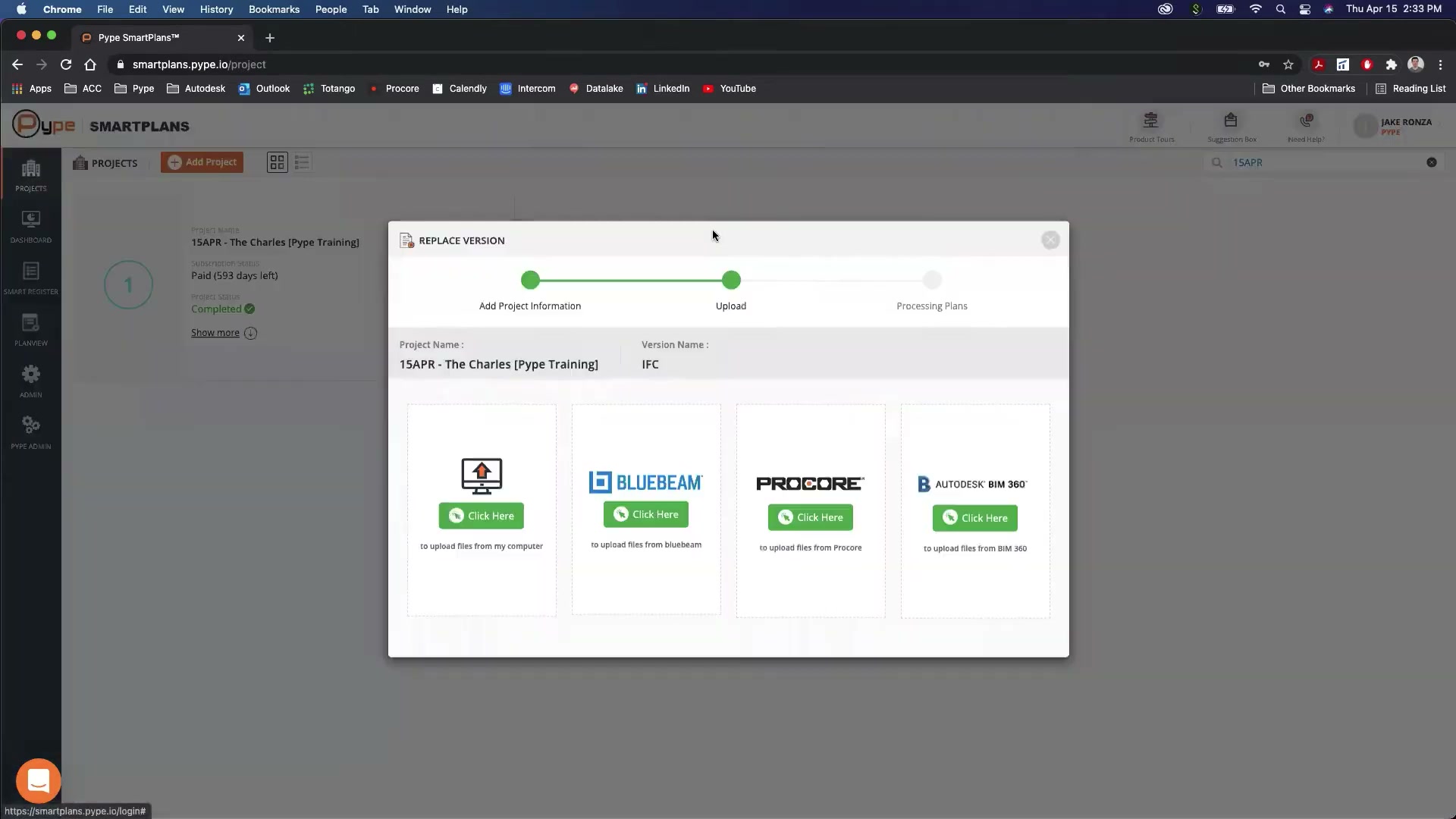
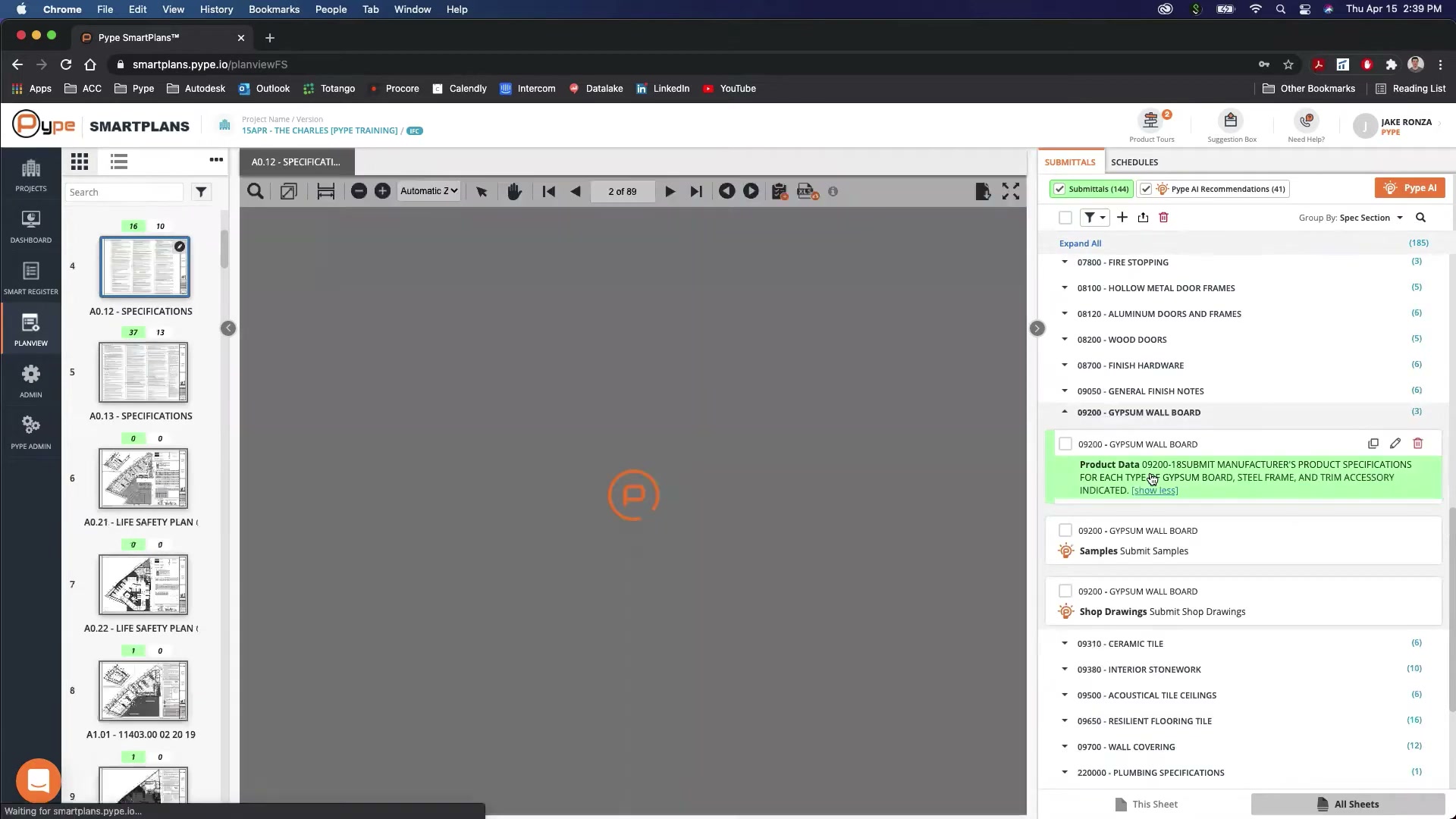
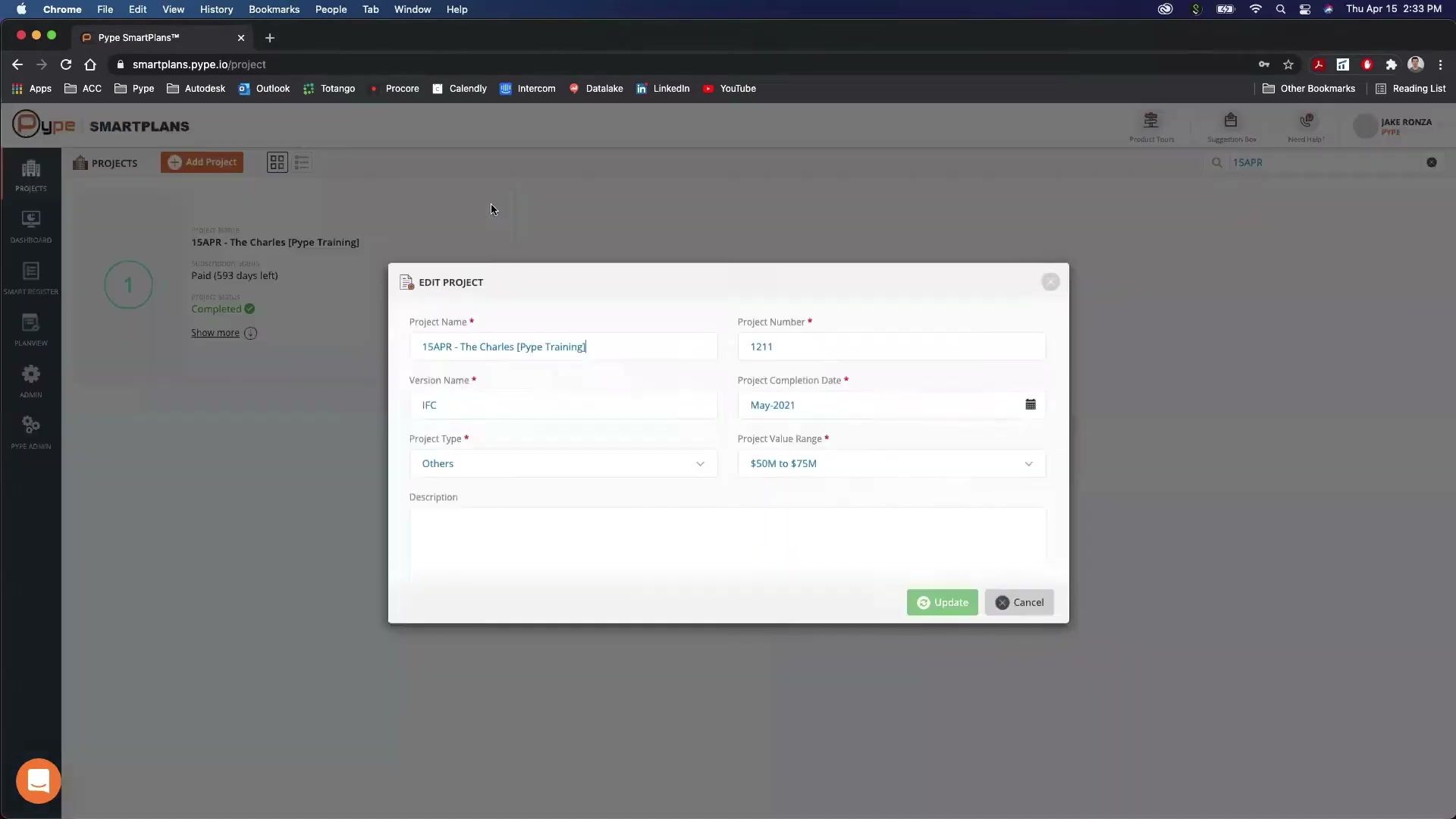
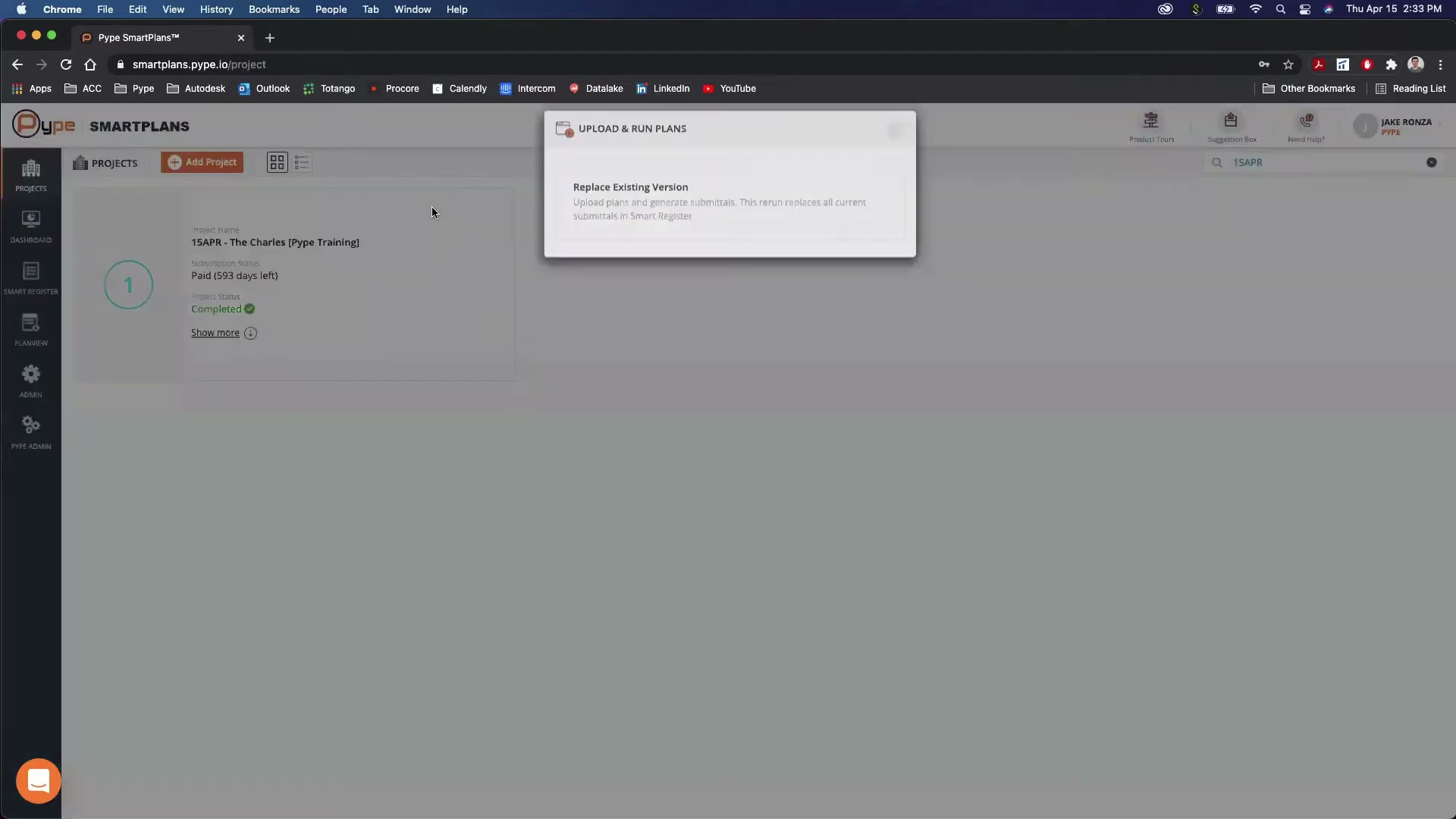
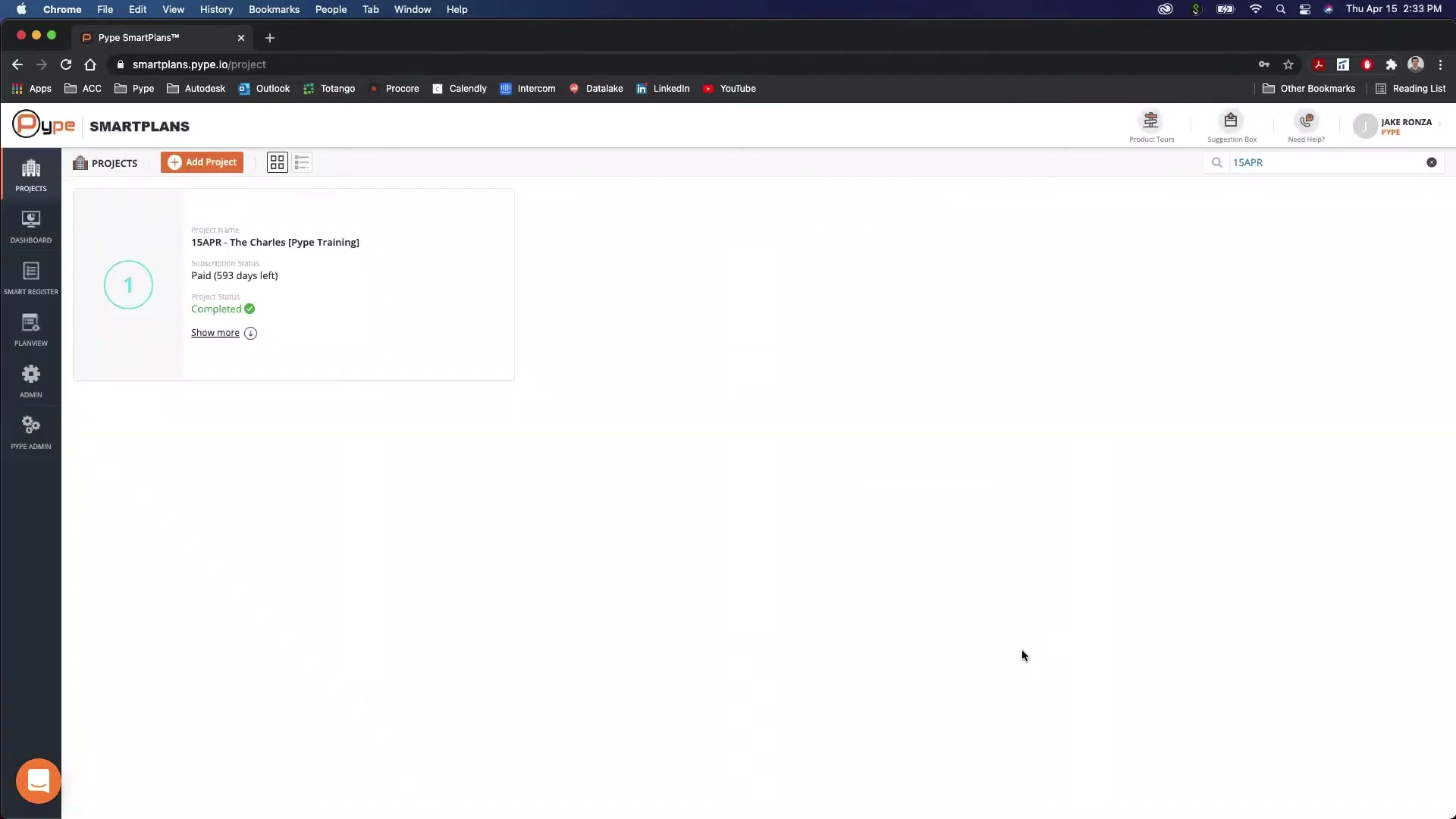
Grouped by theme, full-size and scrollable; images render in Obsidian and exported HTML through embeds (referenced, not copied). There are no App Store screens (no standalone app) and no hi-res marketing set — all UI below is sampled from Autodesk/Pype walkthrough and webinar videos. Full set and method: screens/README. The whole-set contact sheet is linked at the end.
The core workflow — AutoSpecs SpecView
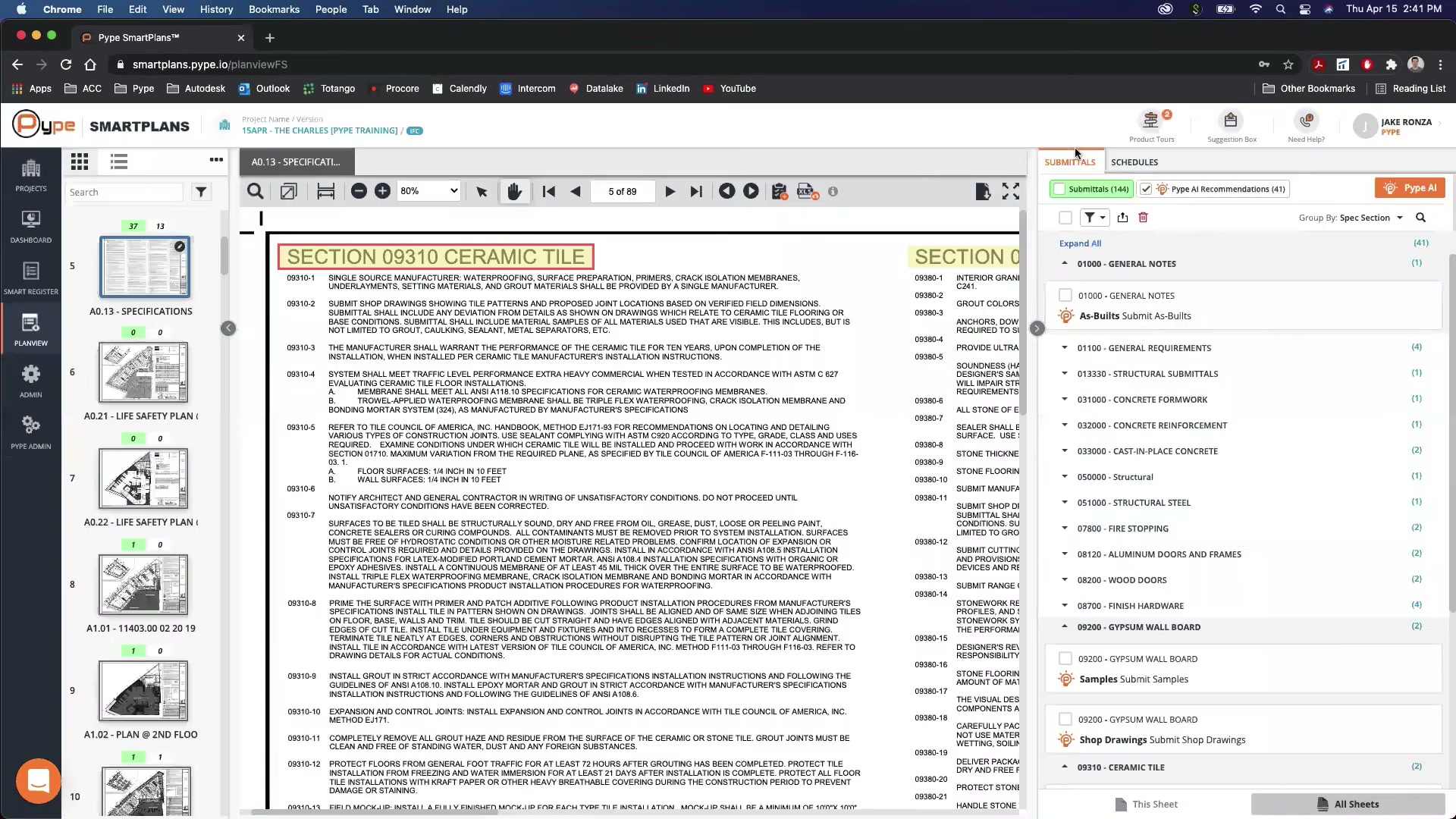
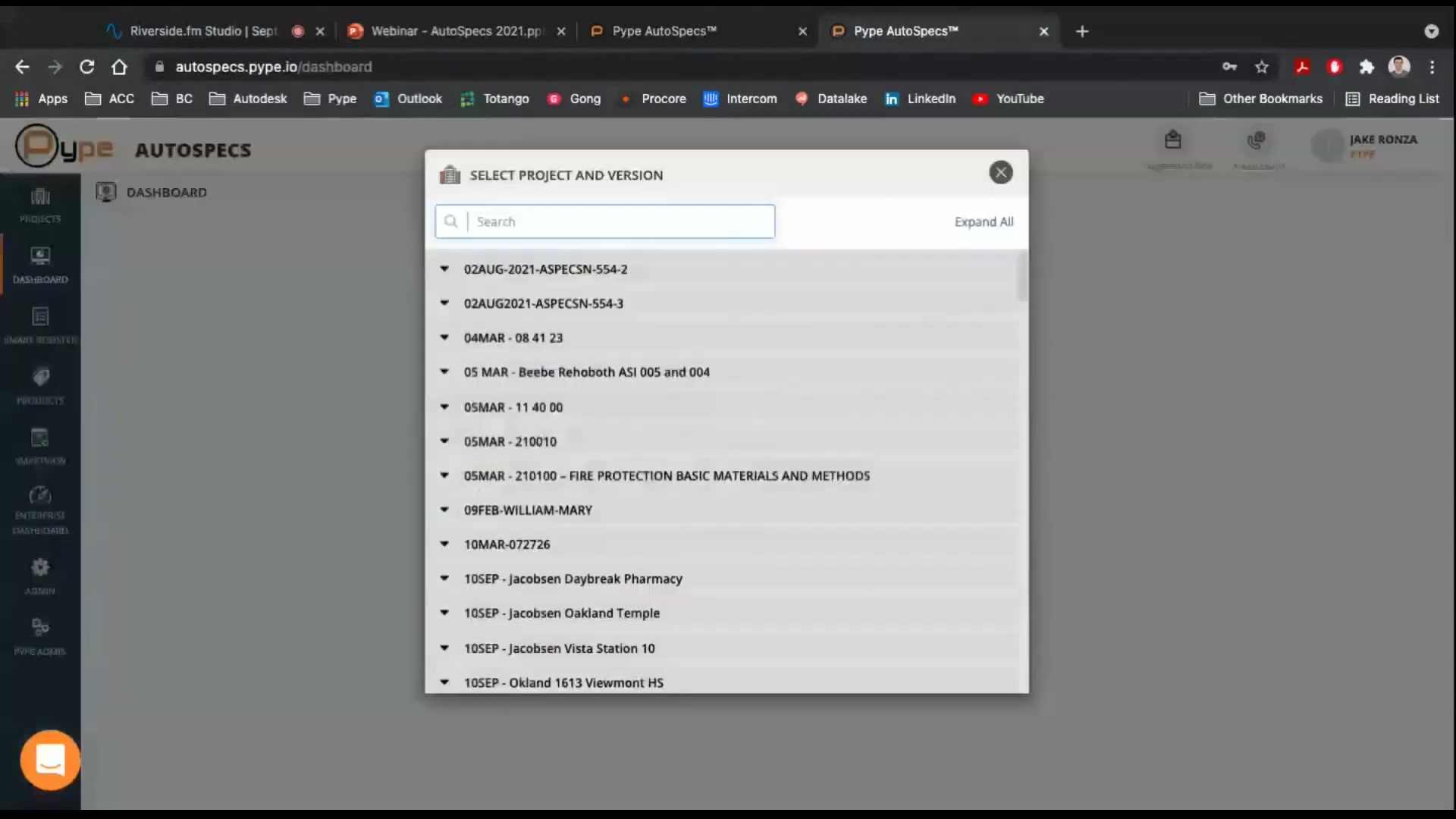
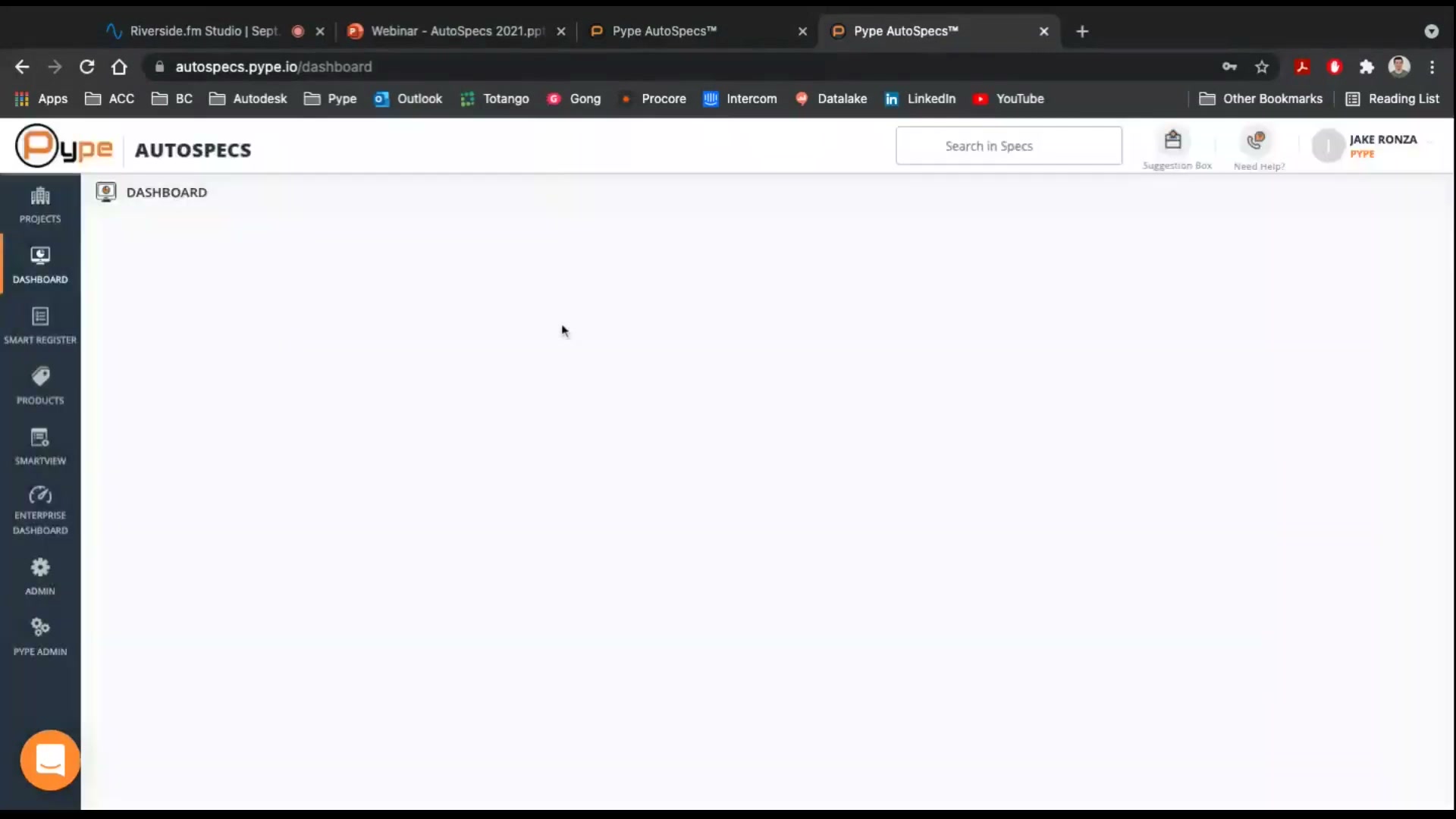
The product in one screen: the left rail is the spec book by CSI division (Concrete, Masonry, Metals, Wood, Thermal); the centre is the spec PDF; the right panel is the extracted Submittals and Products for the selected section, with the orange Pype AI action that runs the extraction. This is the “weeks to minutes” workflow.
What the AI pulls out — submittals and product data
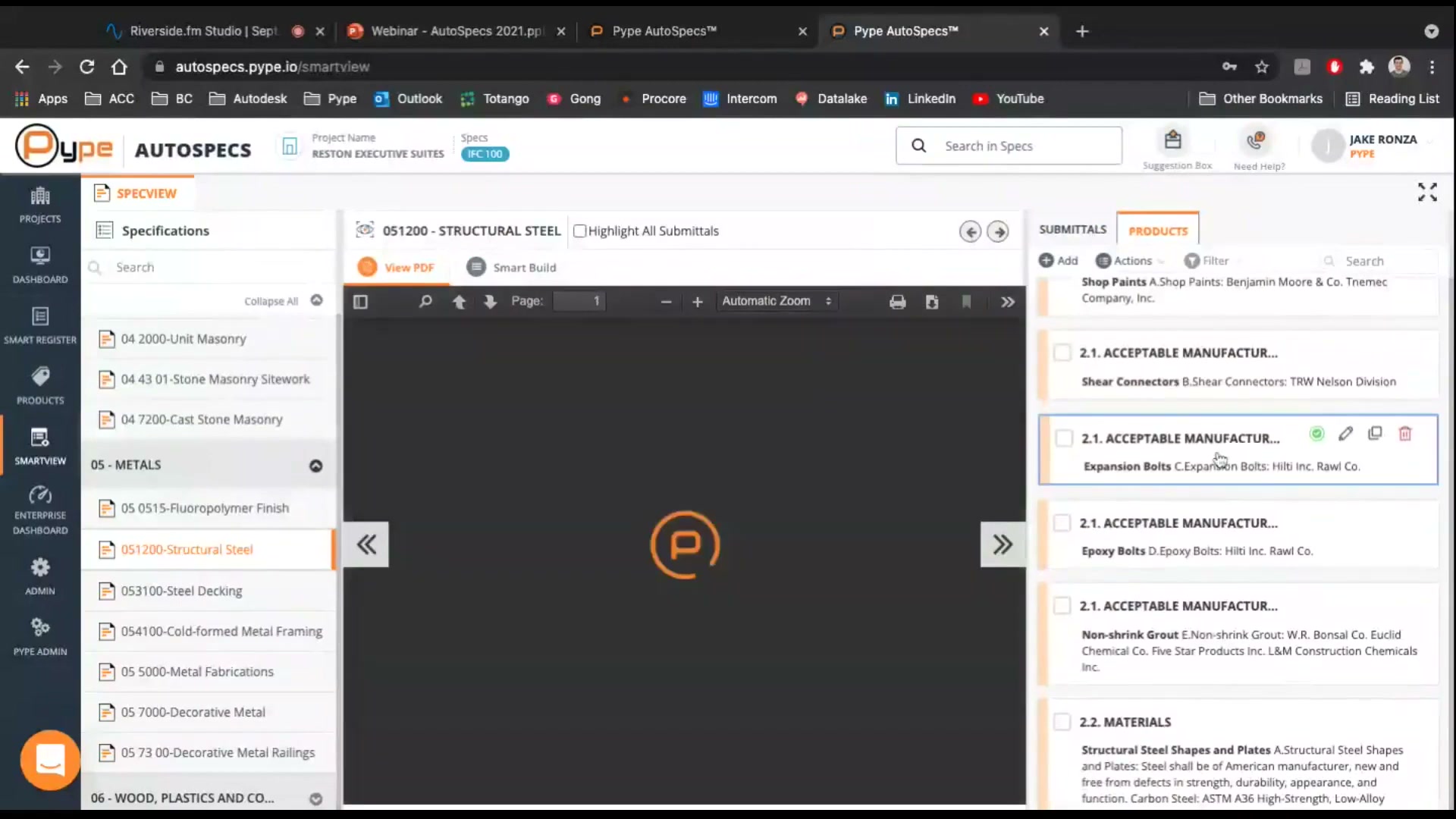
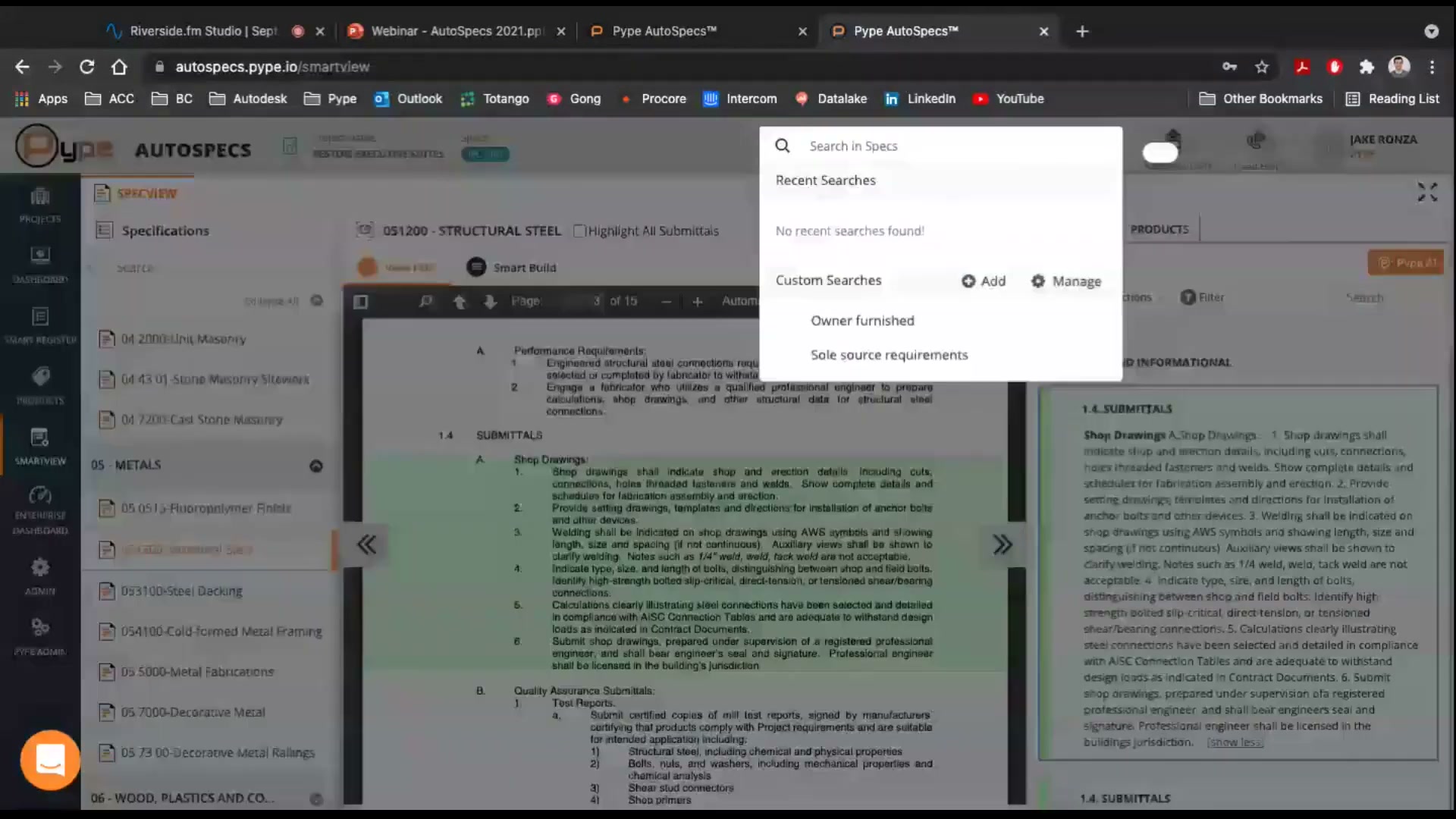
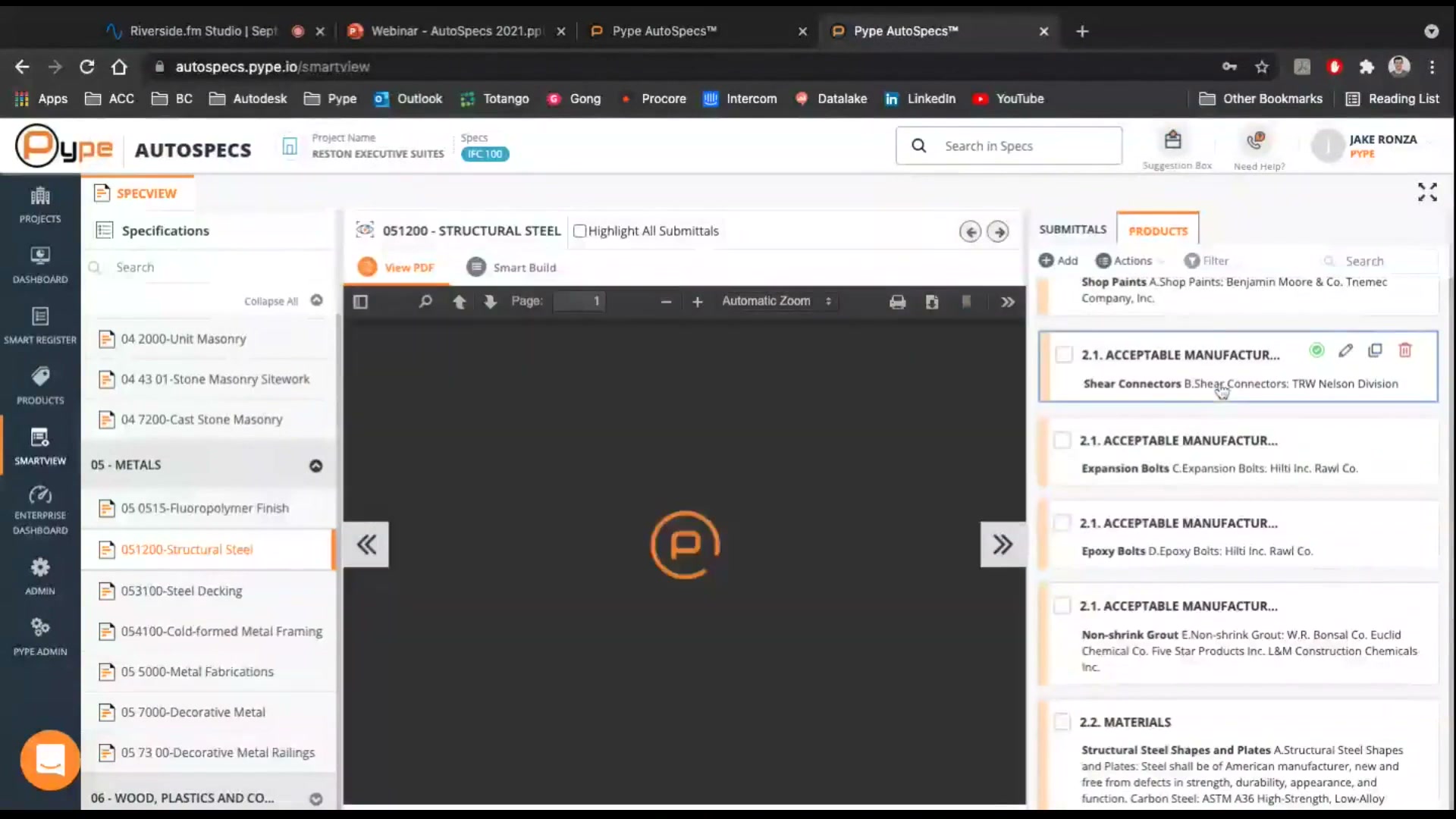
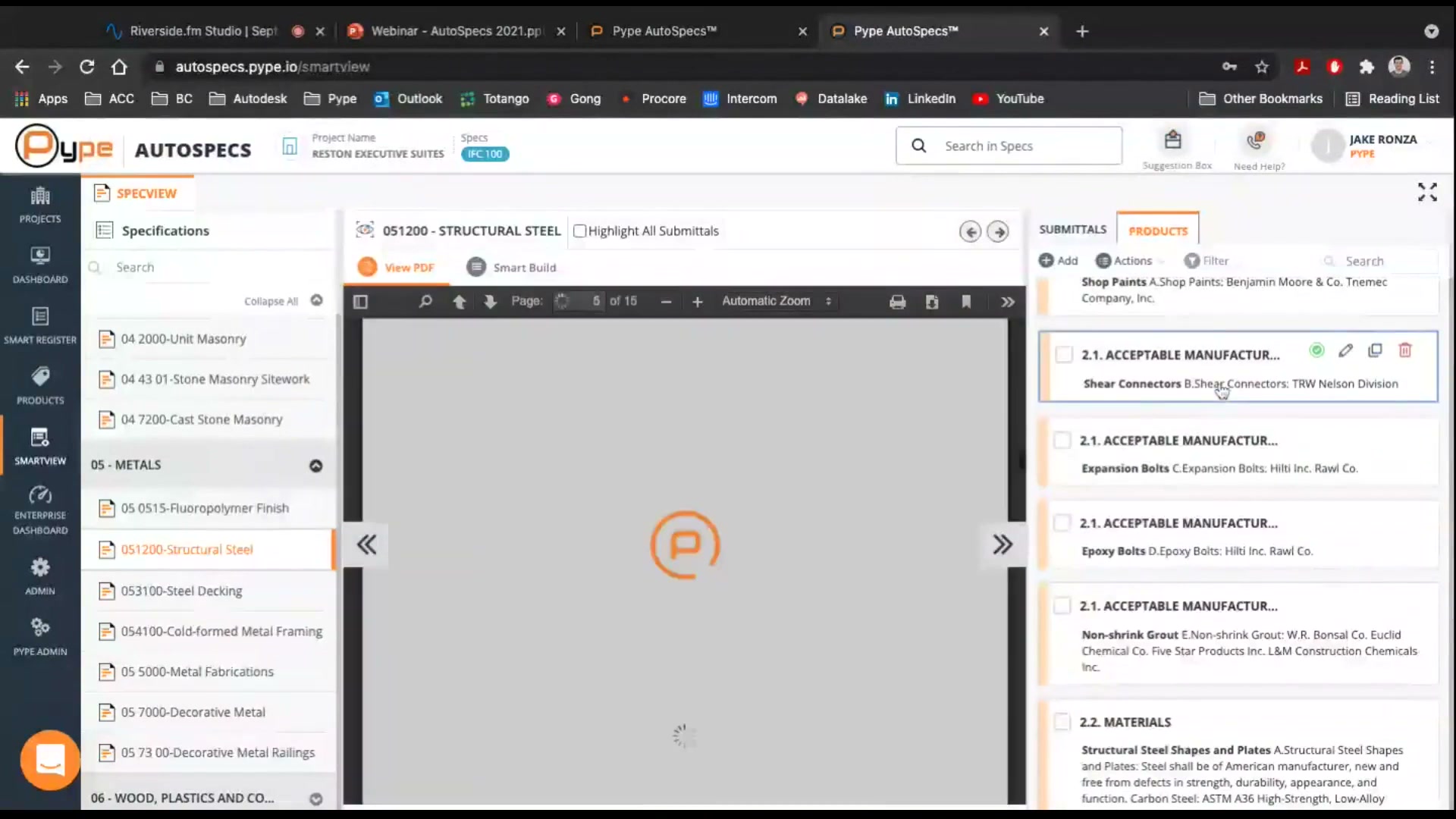
The extracted register: submittal requirements grouped as action/informational, and a Products tab listing acceptable manufacturers and product data scraped straight from the spec text (Shop Paints, Shear Connectors, Expansion Bolts, Epoxy Bolts).
SmartPlans — reading the drawings
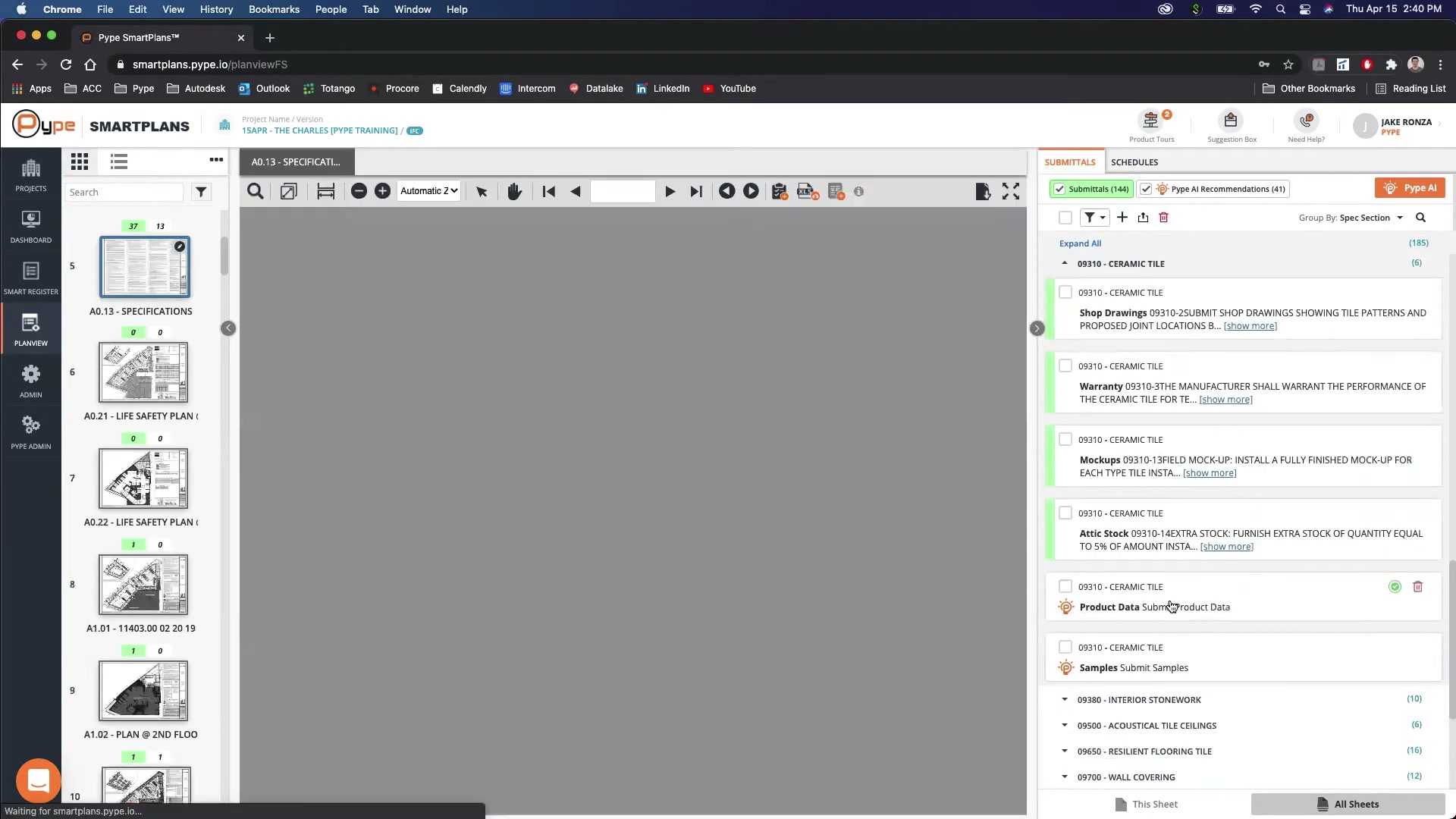
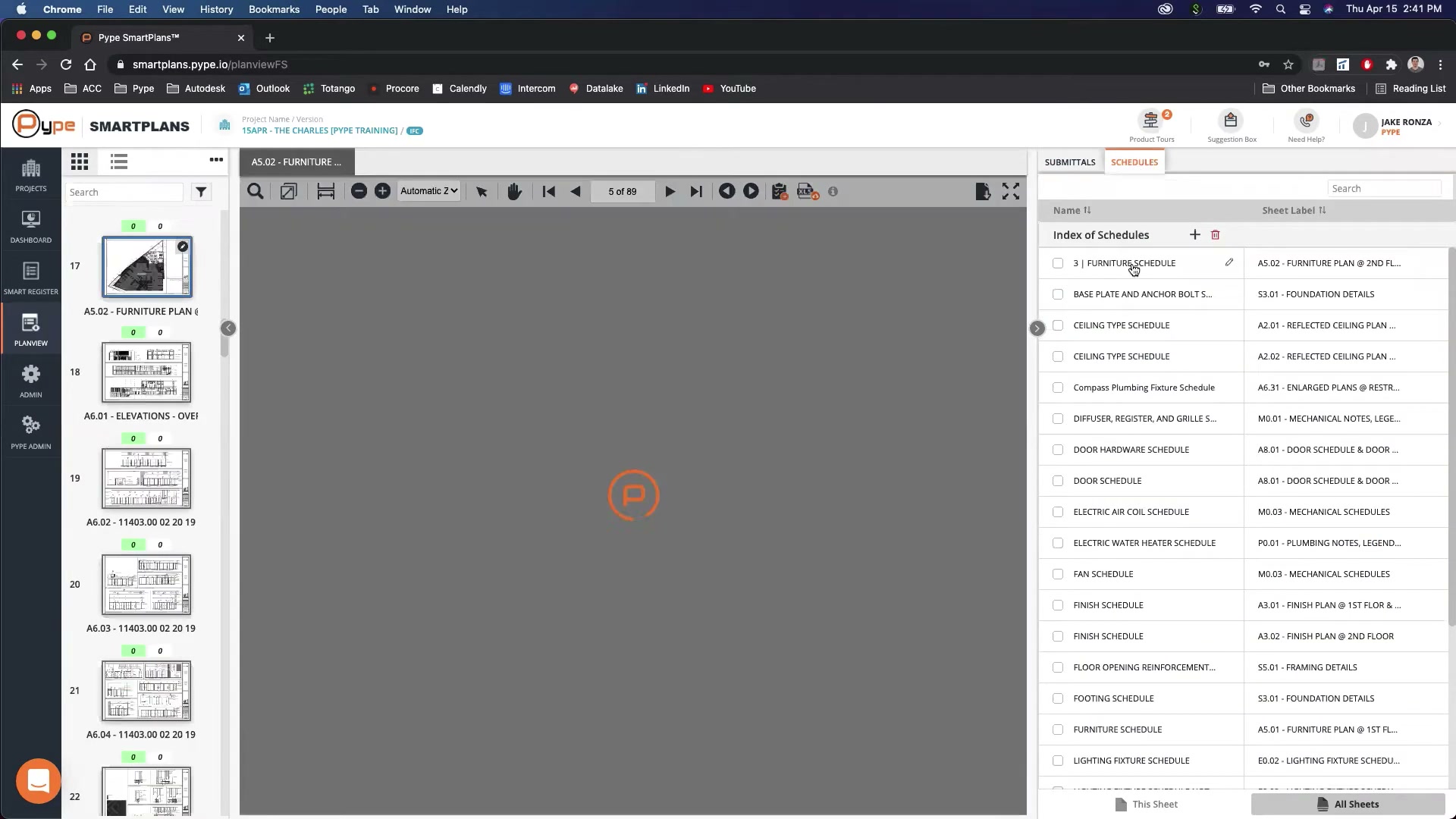
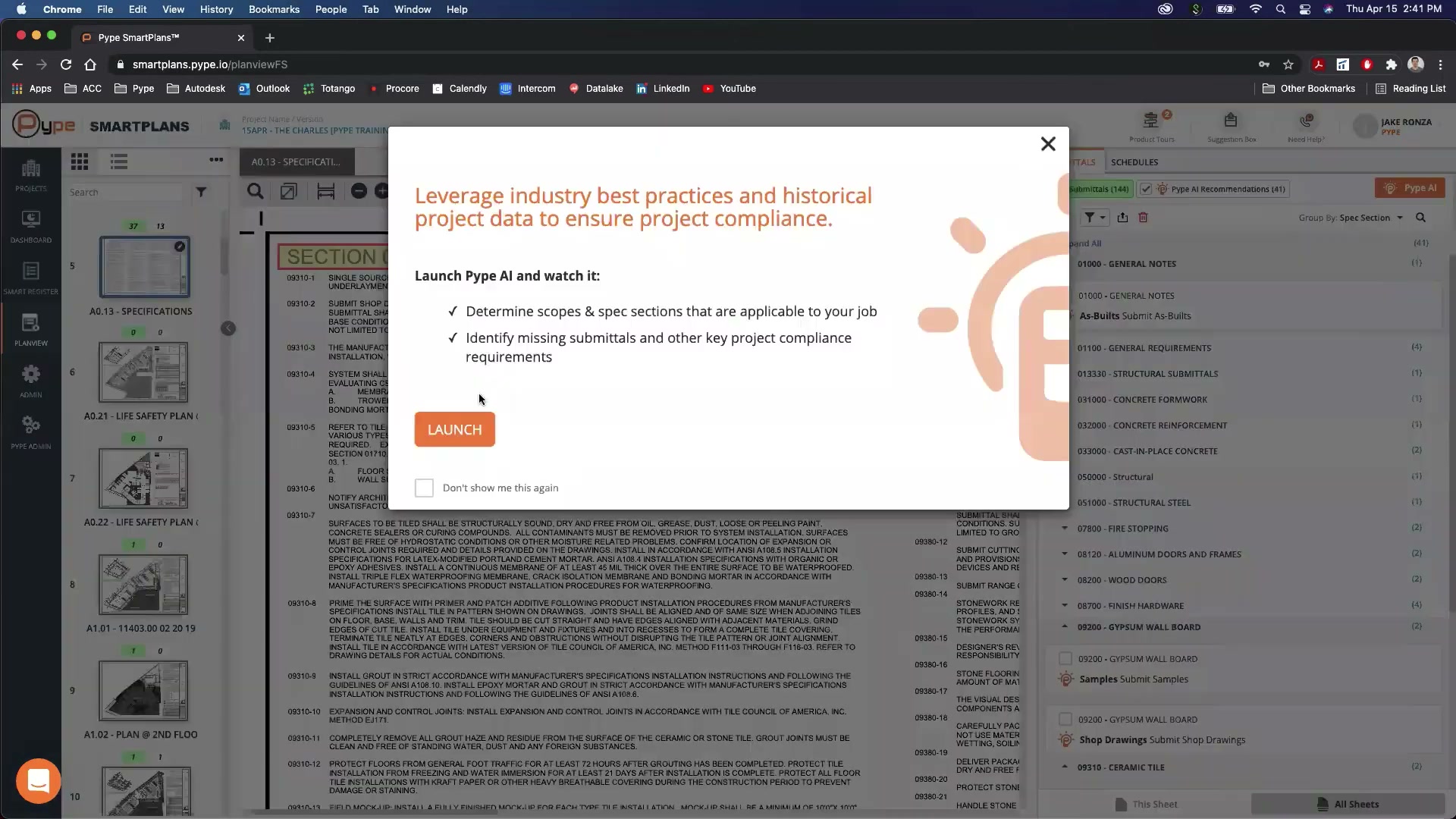
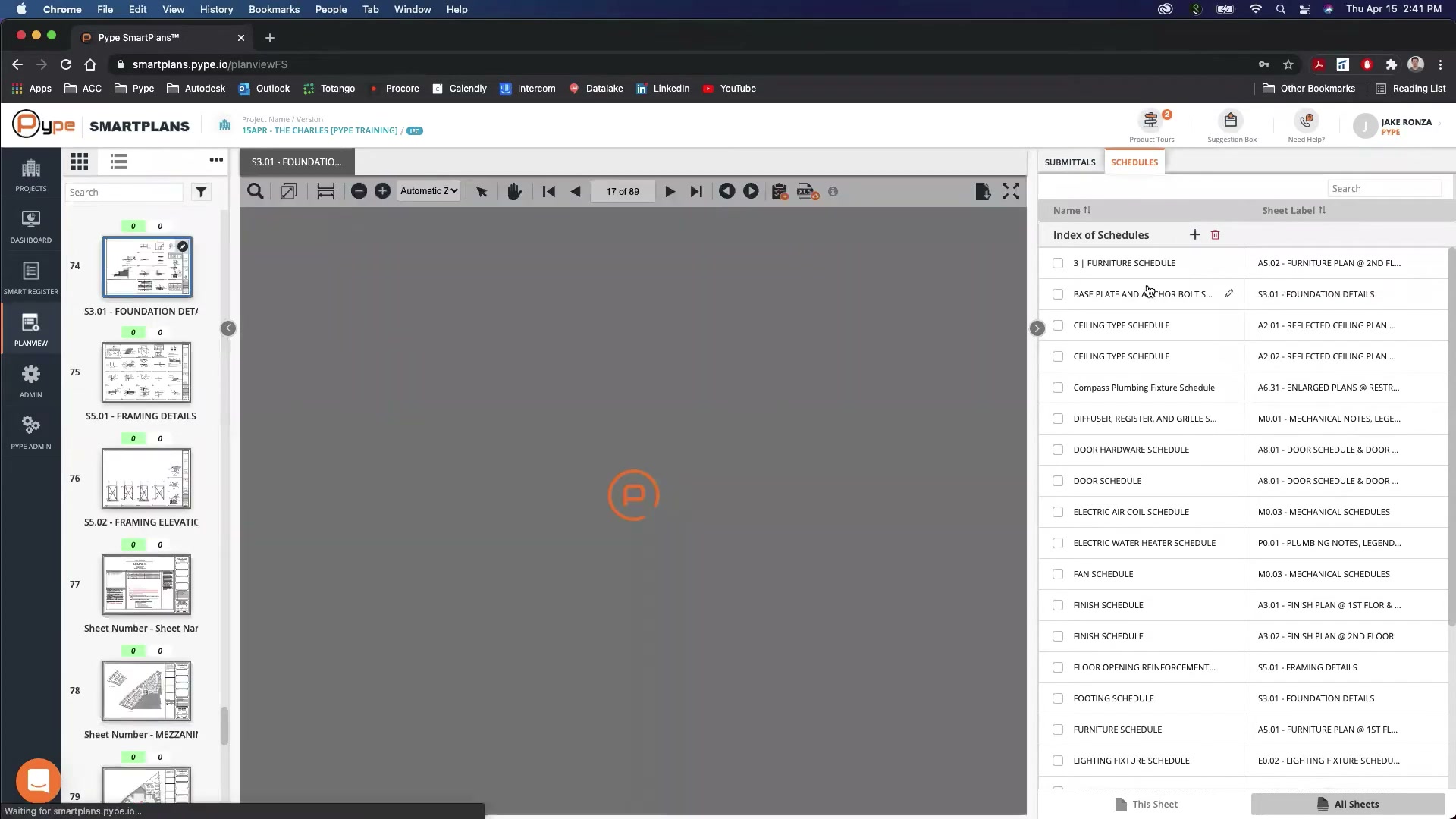
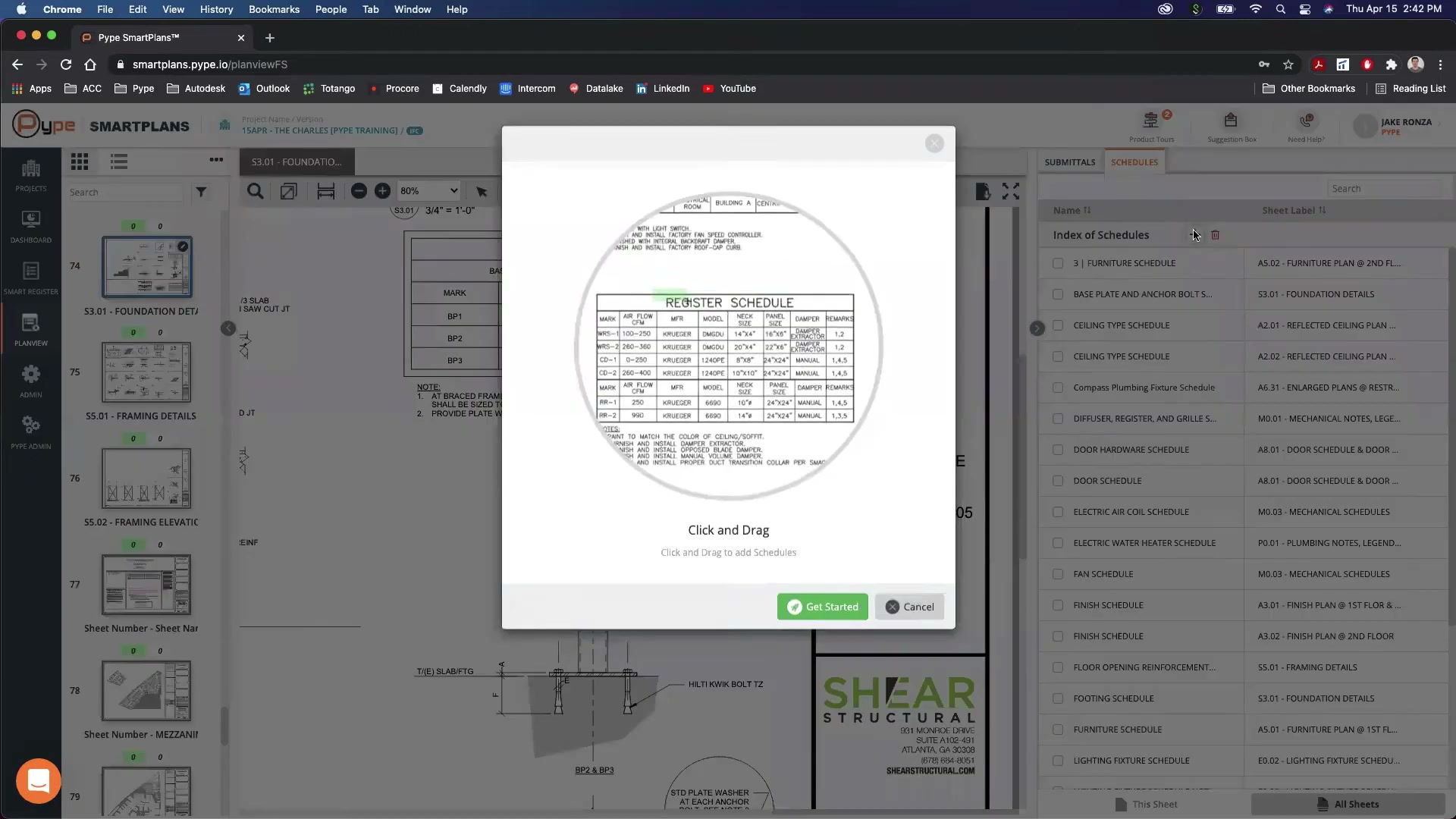
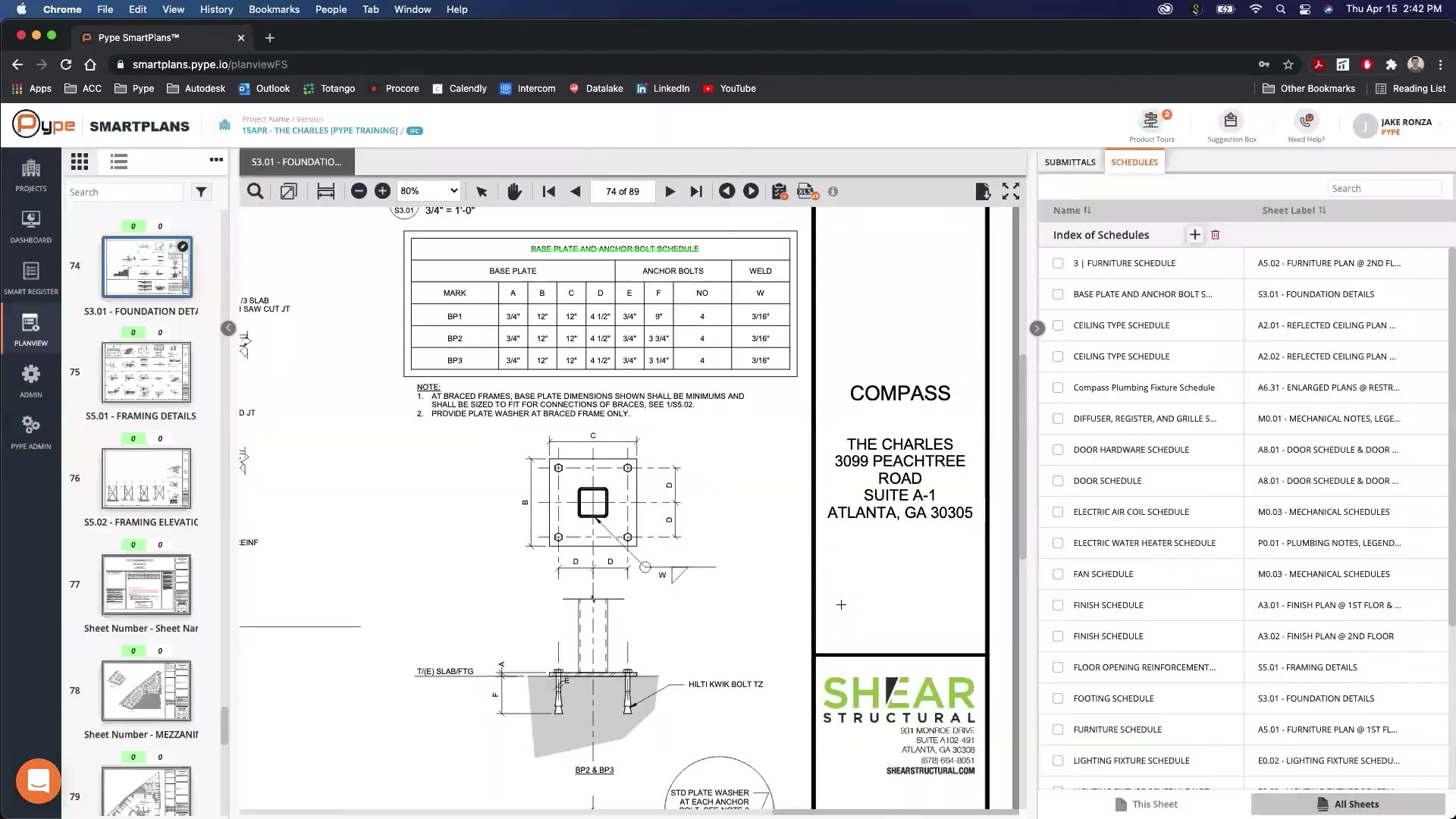
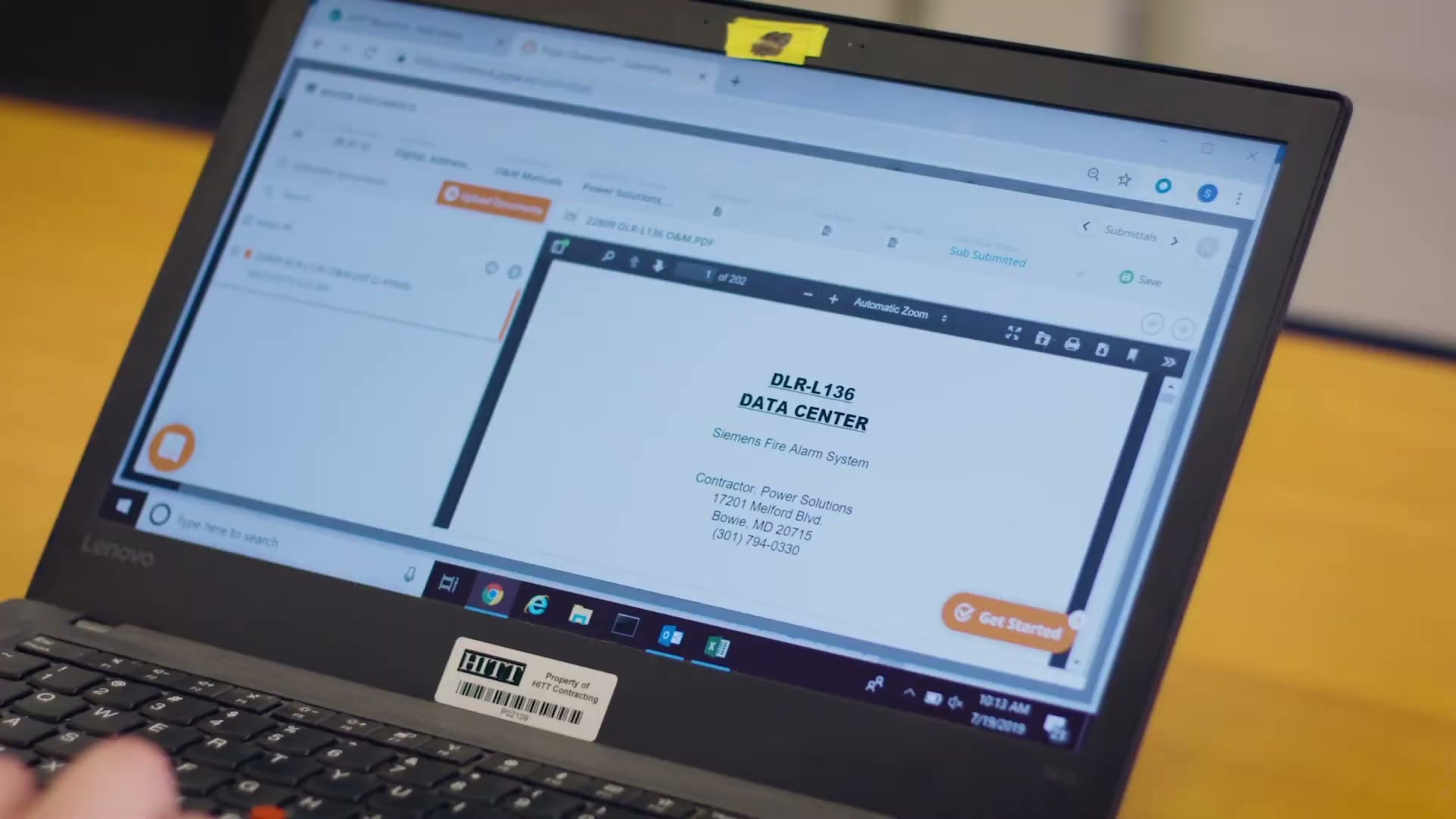
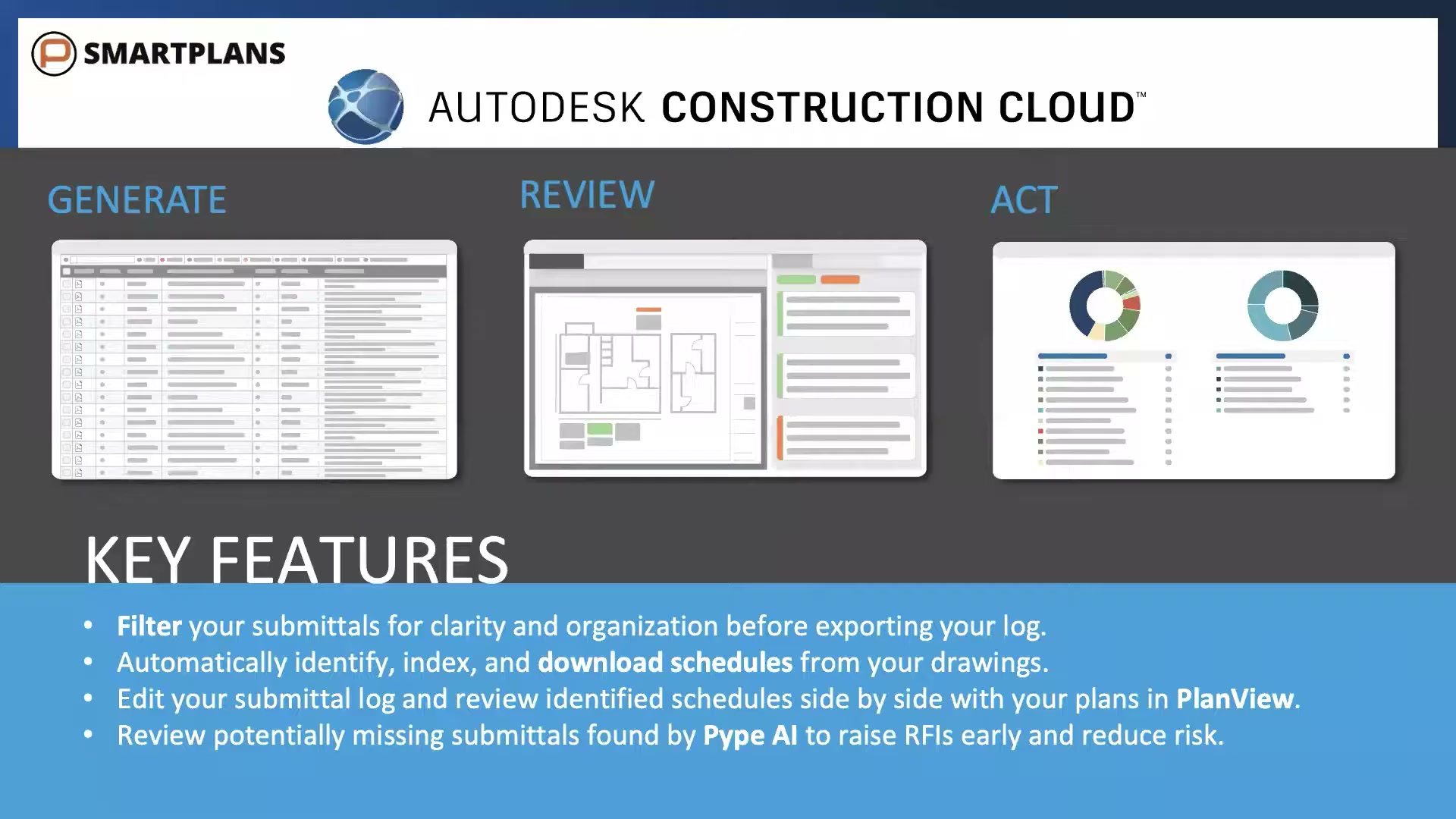
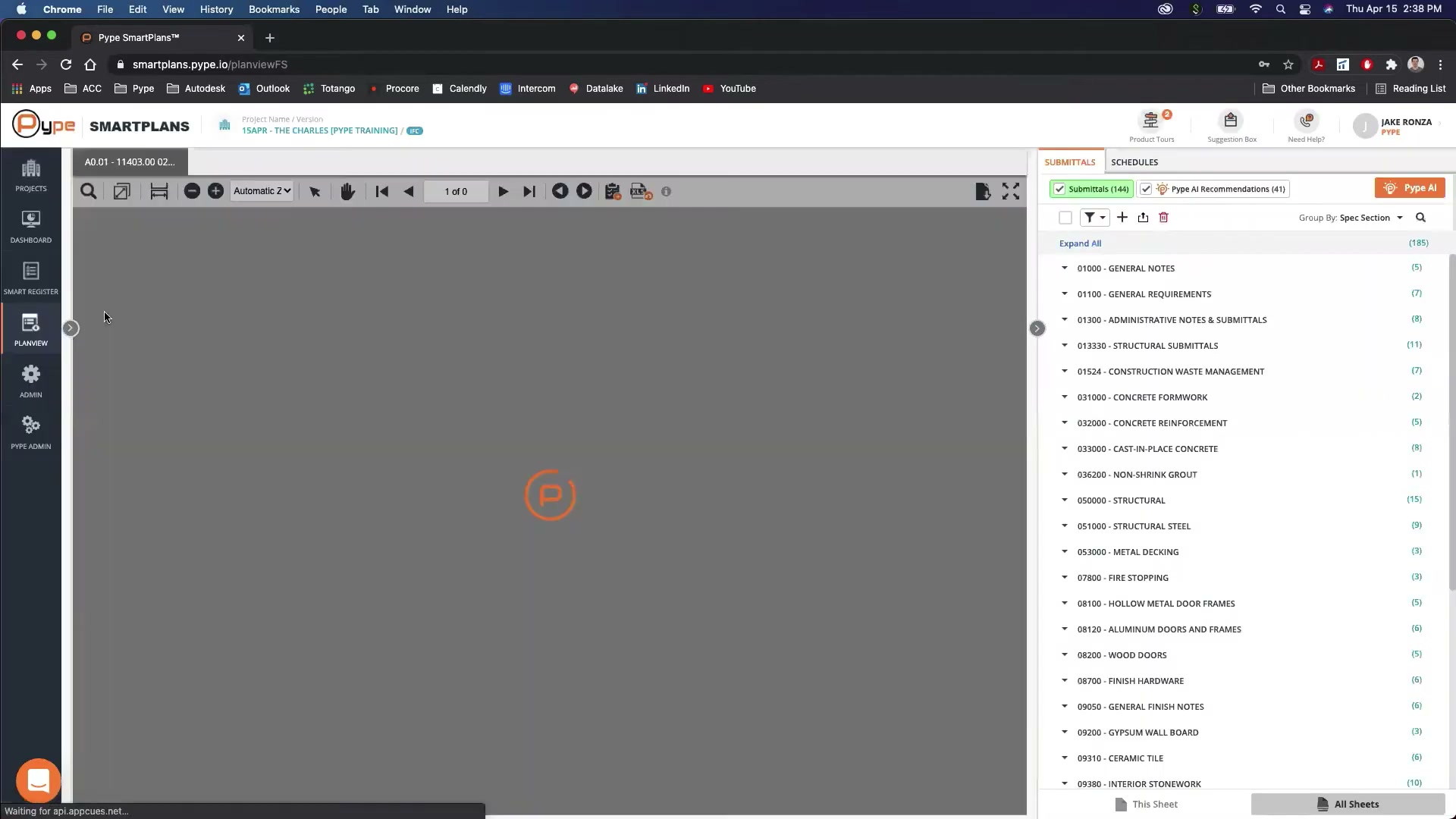
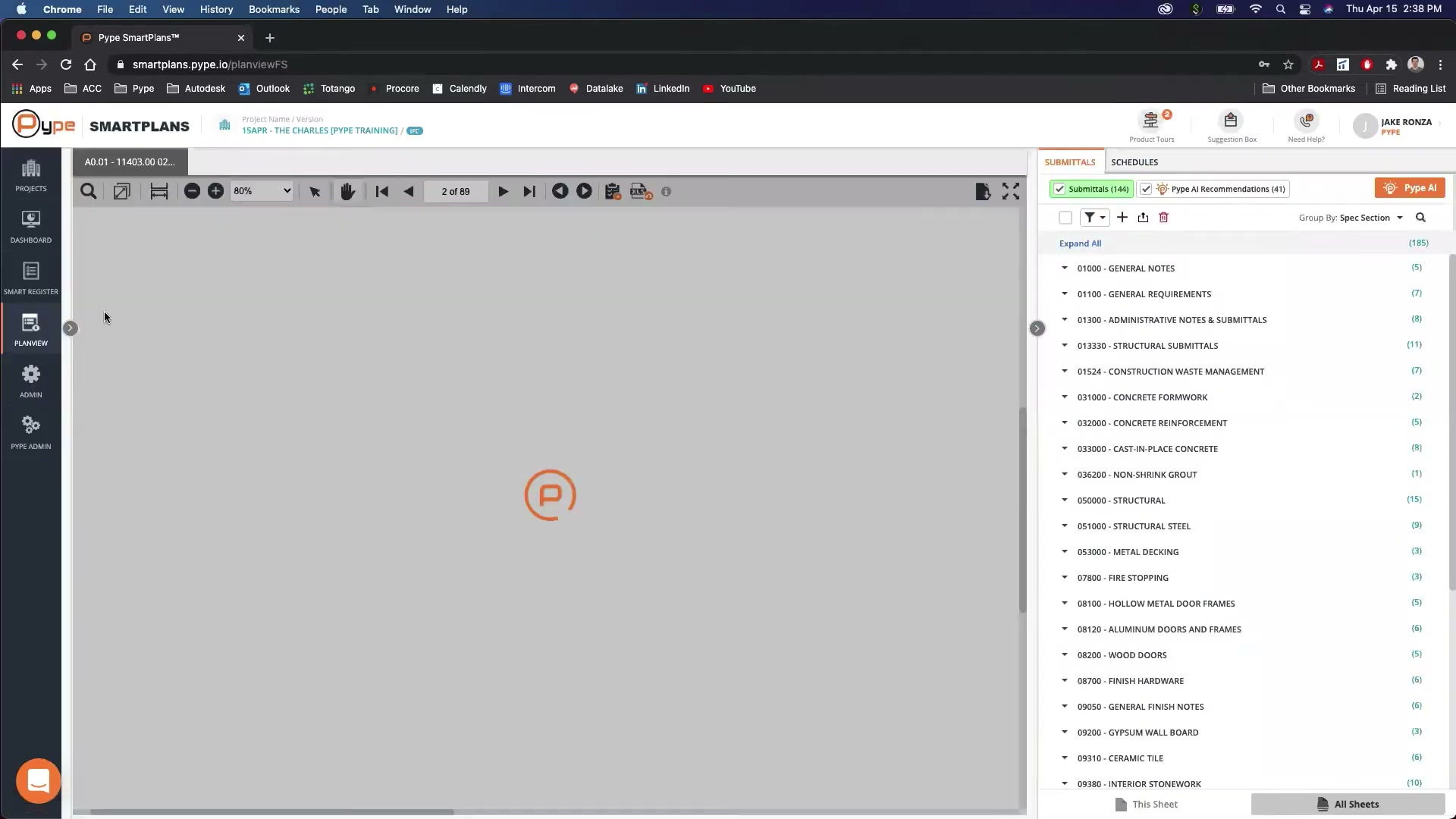
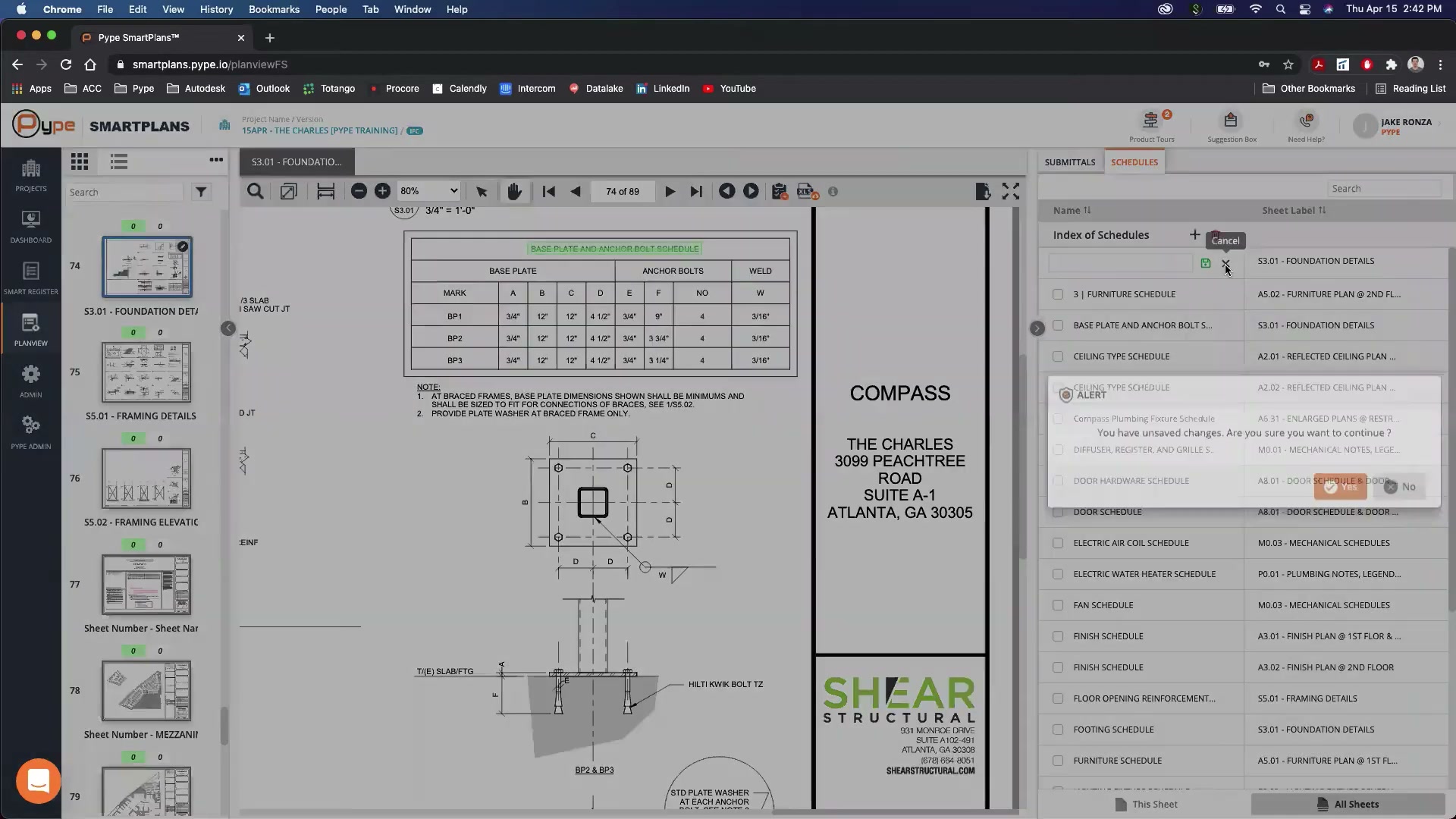
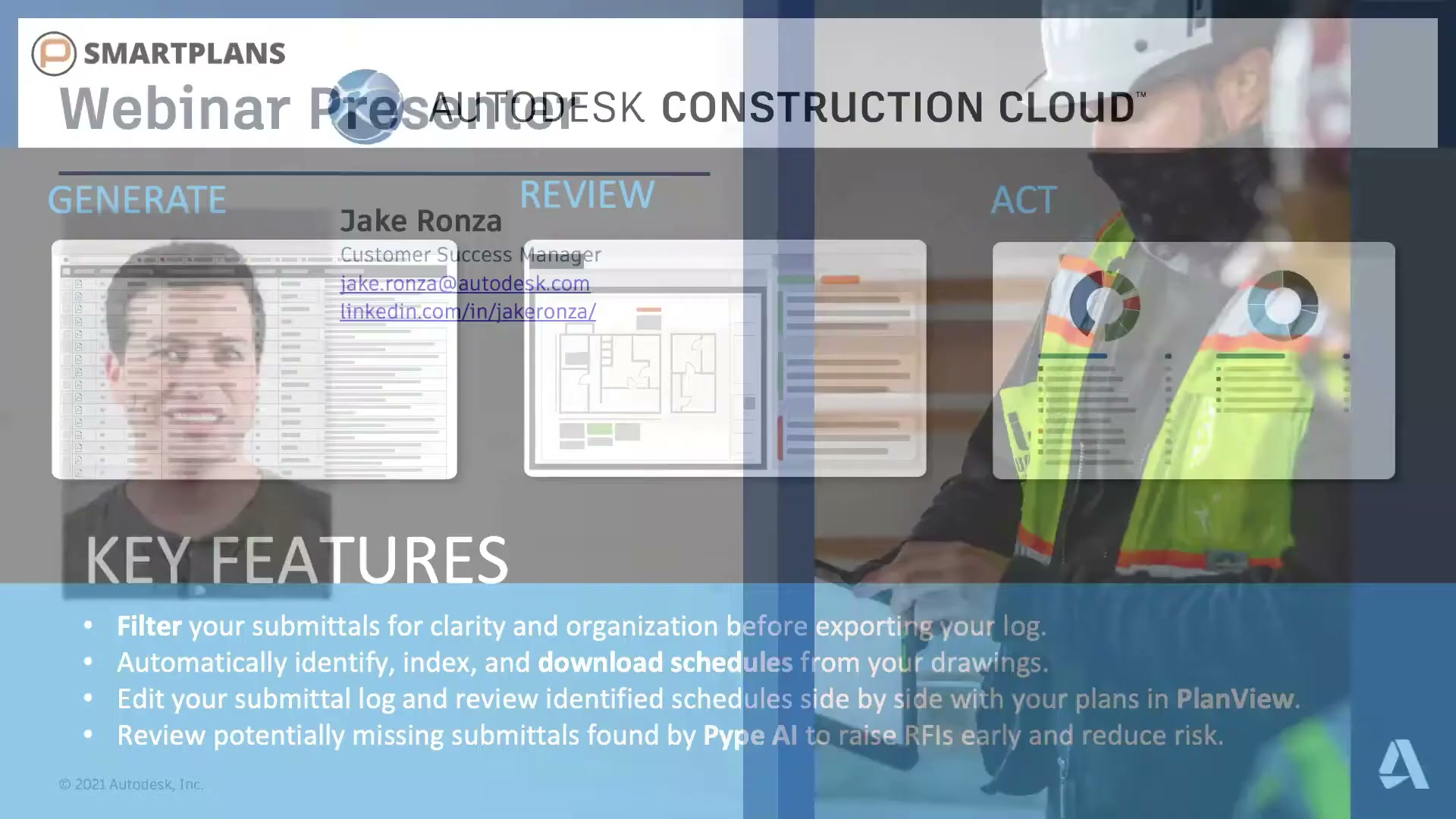
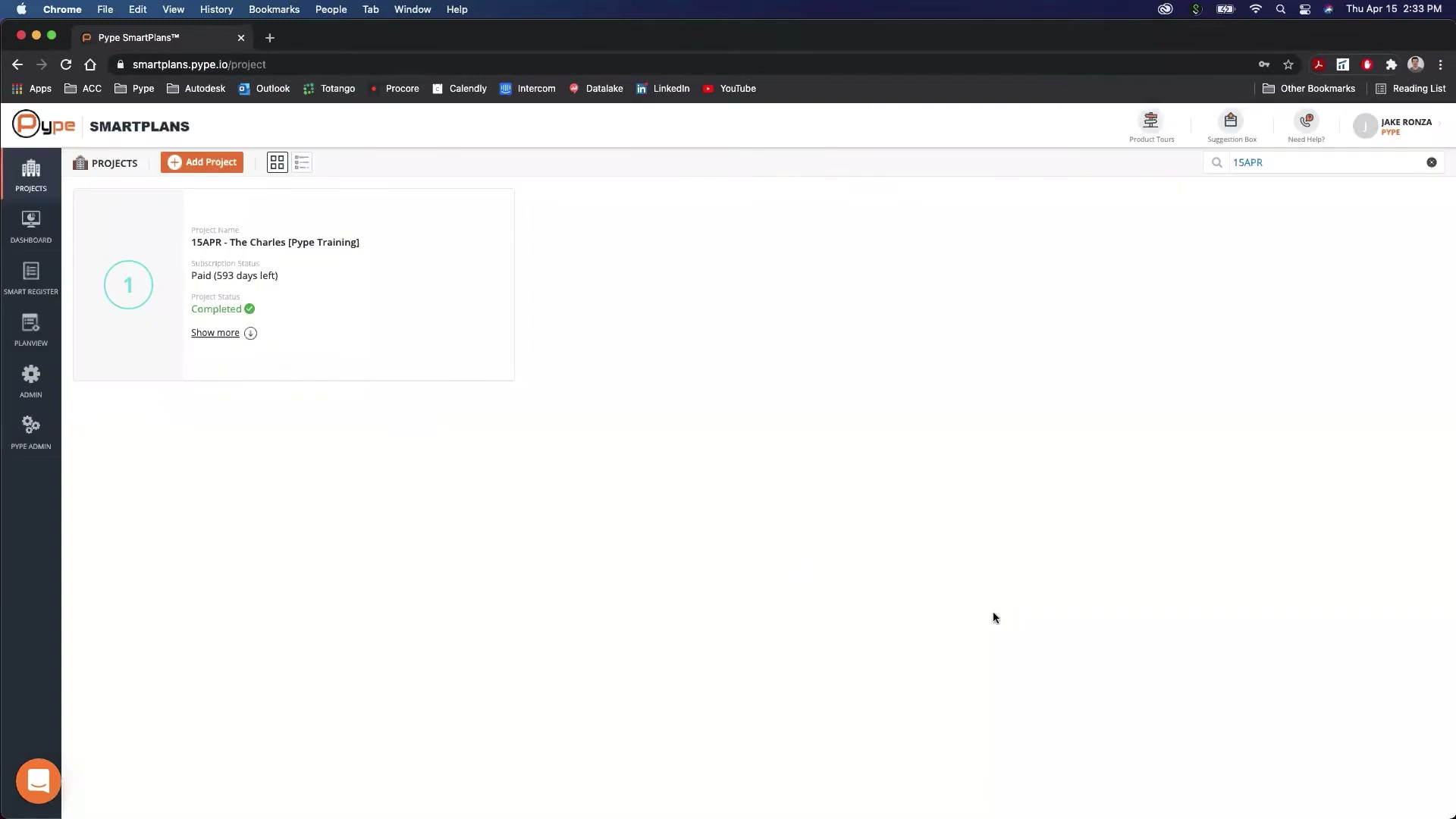
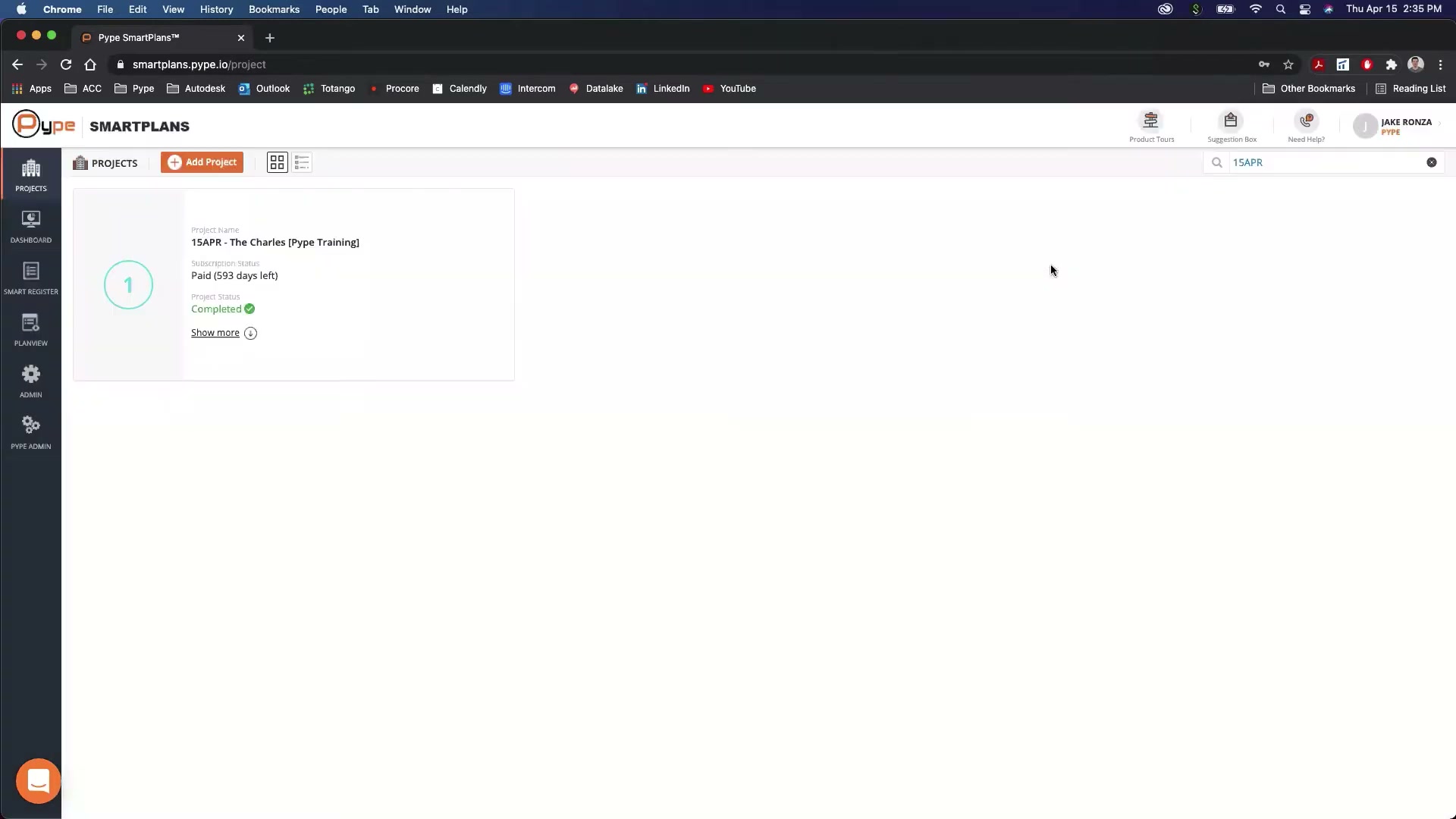
SmartPlans applies the same idea to PDF drawing sets: Generate (scan drawings, pull submittals and schedules), Review (side-by-side with the plans in PlanView), Act (raise RFIs early on potentially missing submittals found by Pype AI).
Closeout — the handover binder
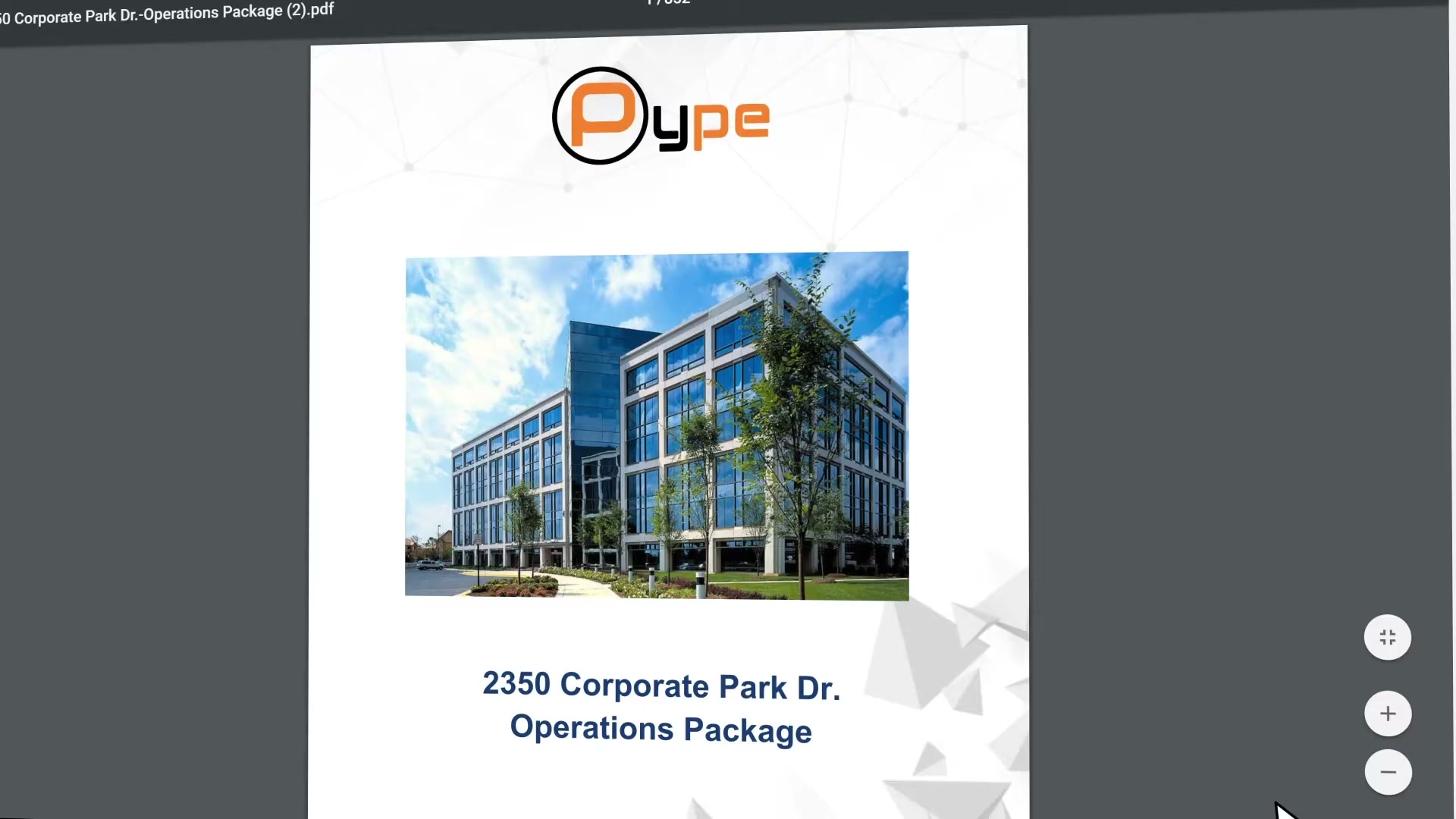
Closeout collects documents from trades and compiles the indexed, hyperlinked turnover package (eBinder); here a generated operations-package PDF for a completed building.
Whole-set contact sheet
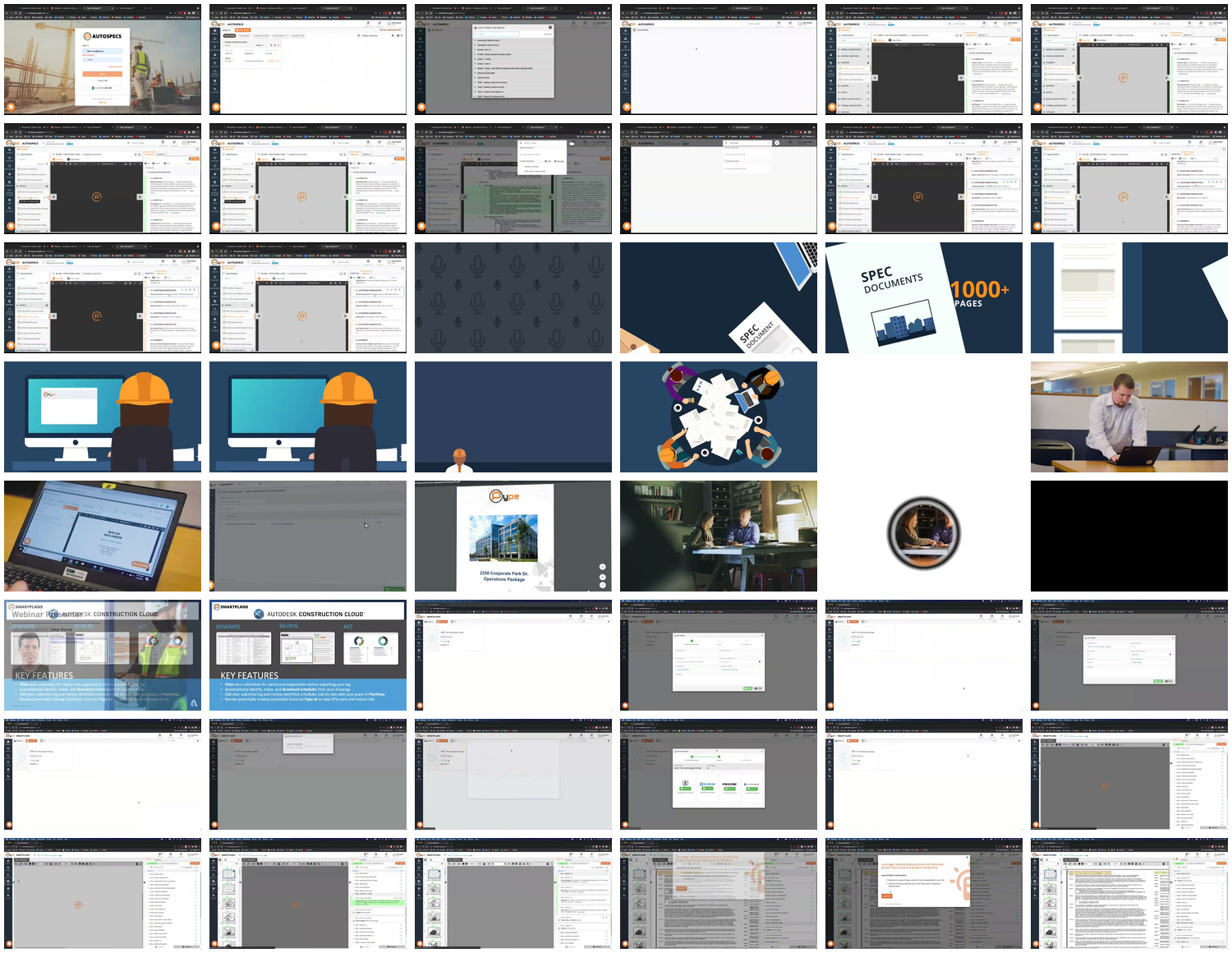
For a single-glance overview of every captured frame: contact_video.jpg (all walkthrough/webinar frames). There is no App Store contact sheet — Pype has no standalone app.
Sources and method
- Product surface (AutoSpecs / SmartPlans / Closeout / eBinder, AI features, ACC integration): Autodesk Construction Cloud product/tool pages and Pype brochures, corroborated by search —
raw/exa_search.json,raw/exa_answer.json, plus the AutoSpecs submittal-log page and SmartPlans/Closeout descriptions read live (construction.autodesk.com; pype.io now 301-redirects to autodesk.com). - Acquisition (the spine): Autodesk investor/press releases — announced July 2020, completed Q3 FY2021 (Aug 2020); Pype was Autodesk’s fourth construction acquisition after Assemble, PlanGrid and BuildingConnected. Quote: Jim Lynch, “Pype’s machine learning capabilities can be applied to multiple field and office workflows.”
- Reviews (real segmentation): 24-review Capterra DOM/RSC sample with real firm size, role, industry, sub-ratings and solicitation —
raw/capterra_dom_corpus.json, rolled up inraw/SUMMARY_DOM.md. Note: the aggregator’s value/support averages are depressed by counting blanks as zero; corrected per-rated figures used above and cross-checked against GetApp. - Pricing: ~US$2,500 starting, quote-based, implementation into tens of thousands for large firms — review aggregators (GetApp, ITQlick, SoftwareAdvice) via
raw/exa_answer.json. - Visuals: 48 walkthrough/webinar frames (
screens/video_frames/); no App Store screens or hi-res set (no standalone app —harvest_visuals --match pypereturned 0). Method: screens/README. - Method, limits, and the discipline of not asserting an absence without evidence: _RESEARCH-METHOD.